
Sportsbook Overrounds and Long-Term Betting Profitability
If you asked me to name one thing recreational UFC bettors don’t think enough about, the answer would be overround. Not specific fights, not picking systems, not bankroll management. The structural margin sitting in every price they take, eating about five pence on every pound of stake before the fight has even started. Beat the overround consistently and you can be profitable. Don’t beat it and you can’t, regardless of how good your picks are.
The frustrating part is that overround is invisible by default. UK sportsbooks display prices, not margins. You can stare at a 1/2 and a 13/8 all day and not see the 4.8% the book has built into the spread. The number doesn’t sit in your bet slip. It doesn’t appear on the in-play feed. You have to do small arithmetic to extract it, and most punters never bother.
This piece is about how to extract it, what typical UFC overrounds look like across UK operators, why some markets carry much higher margins than others, and what the long-run effect on your bankroll actually is. None of this requires a degree in finance. The maths is one division per side, but the understanding shifts how you read the entire UFC market.
The definition without the jargon
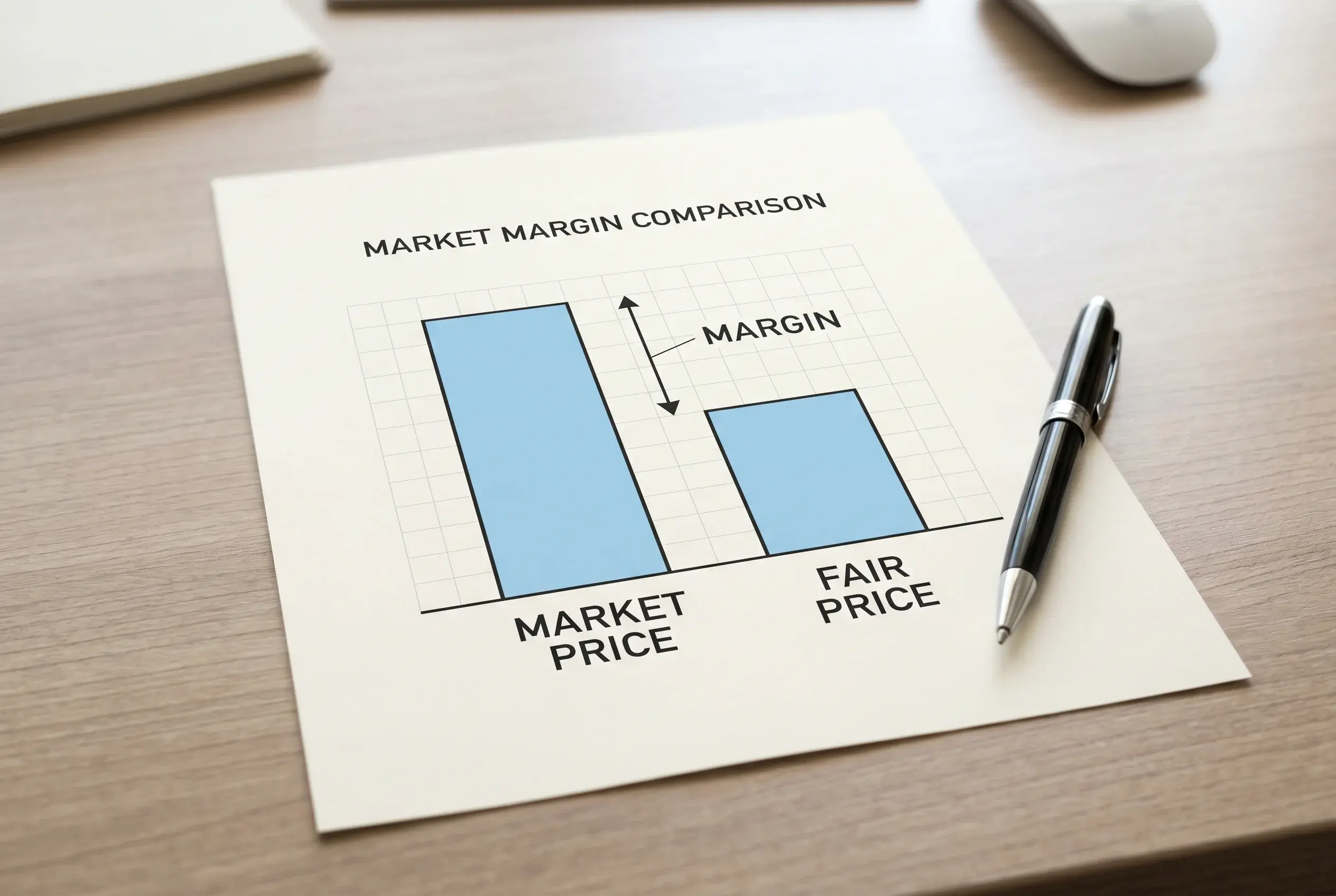
Overround is the amount by which the book’s implied probabilities on a single market sum to more than 100%. A perfectly fair market – zero margin, no built-in profit for the operator – would have all the selections summing to exactly 100% in implied probability. UK sportsbooks never offer that on UFC because they wouldn’t make money over the long run.
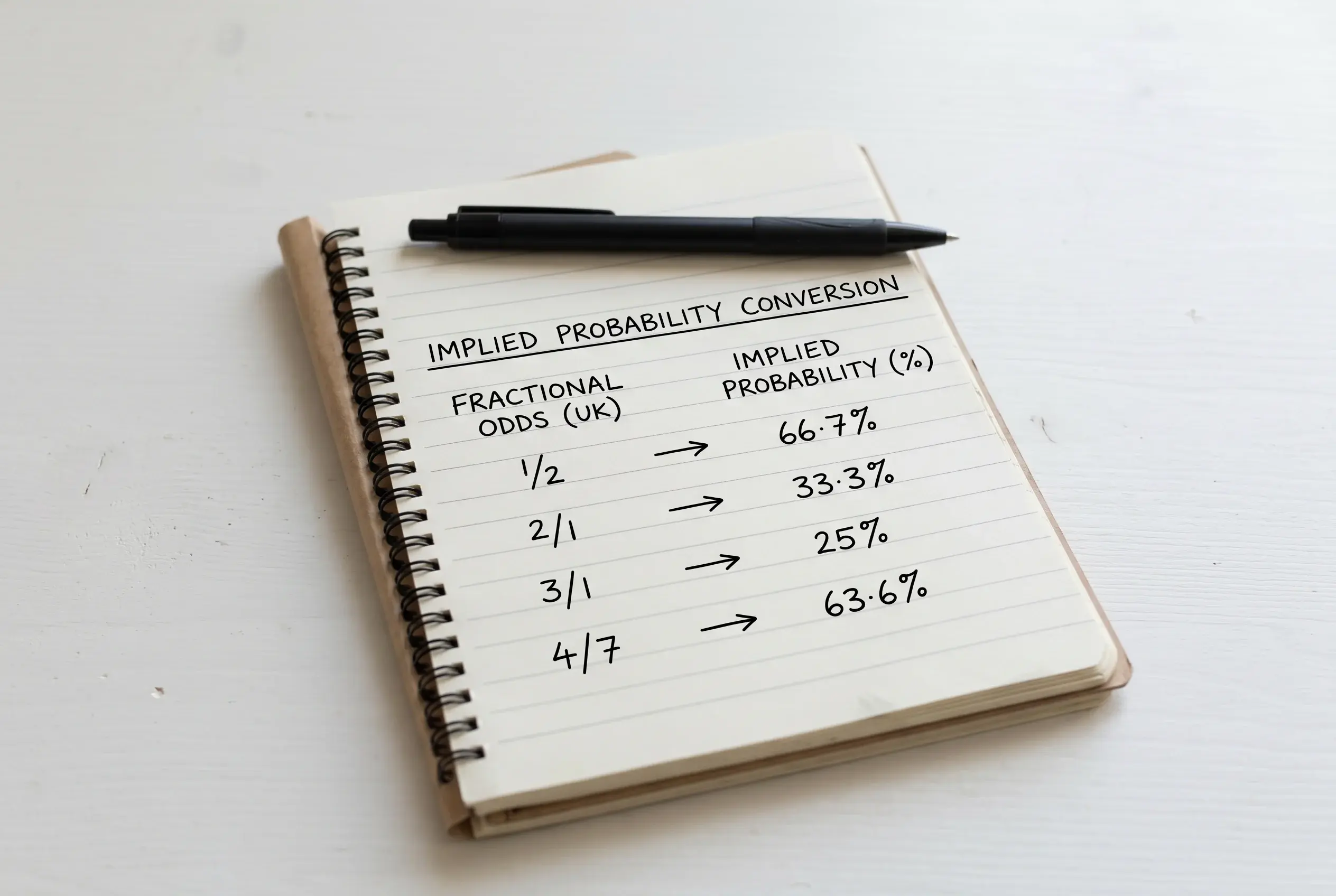
A typical UFC Moneyline market might price Fighter A at 1/2 (implied probability 66.67%) and Fighter B at 13/8 (implied probability 38.1%). Together that’s 104.77%. The 4.77% above 100% is the overround. It’s the book’s structural edge on this specific market – the percentage of stakes it expects to keep over thousands of similar bets.
The terminology gets fuzzy. Bookmakers, punters and journalists use overround, margin, vig, juice and book percentage interchangeably even when they’re technically slightly different things. The practical meaning is the same: the gap between displayed implied probabilities and a fair 100%. If someone says a UFC market has a 5% margin, they mean the implied probabilities sum to 105%.
One useful framing: overround is the cost of placing a bet on this specific market. If the overround is 5%, you’re effectively paying a 5% transaction fee for the privilege of betting. Some of that fee goes to the operator’s profit, some covers operational costs (regulation, technology, payment processing, customer service), some accounts for the book’s risk of being wrong about the underlying probability. The bigger the overround, the more expensive the market is to bet.
The arithmetic, worked through on a real-looking UFC price
Suppose a UK book is offering UFC main event Moneyline at Fighter A 4/7 and Fighter B 11/8. Converting each to implied probability: Fighter A is 7 / (4+7) = 63.64%. Fighter B is 8 / (11+8) = 42.11%. Total: 105.75%. Overround: 5.75%.
That’s a slightly higher overround than the typical UK main-event Moneyline market, which usually sits between 4% and 5% on major operators. The trader has chosen to take more margin on this fight, possibly because the matchup features two evenly matched fighters where small probability errors could be costly, possibly because the model has lower confidence in the underlying numbers.
For comparison, a tighter market on the same hypothetical fight might price Fighter A at 4/6 (60%) and Fighter B at 6/4 (40%) – that’s an exactly 100% total, which would be a zero-overround market and isn’t something UK books actually offer, but it shows what a fairly priced market would look like. Move toward 4/6 and 11/8 (60% and 42.11%, total 102.11%) and you’ve got a tight commercial market around 2% overround, which is approximately what offshore sharp books offer on UFC mains.
The wider you move from those numbers, the more margin the book is taking. Recreational UK operators sometimes price UFC main events with overrounds of 7-8% on three-way markets including Draw. That’s a meaningfully more expensive bet than a 4% market, even though the headline prices on Fighter A and Fighter B look similar at first glance.
What typical UFC margins look like across UK operators
I’ve tracked margins across UK UFC markets for years. The patterns are stable enough to be useful even though the specific numbers shift week-to-week. Here’s the typical range you’ll find at major UK operators, market by market.
Main event Moneyline: 3.5% to 5.5%. The most competitive market because it’s the most heavily bet – books that want UFC business have to keep this tight. Operators that price wider on mains are usually the casino-led books that treat sports as a secondary product.
Co-main and other main-card Moneylines: 4% to 6%. Slightly wider than the headline because volume is lower and the trader has less price-discovery pressure. Still tight by global market standards.
Prelim Moneylines: 5% to 8%. The early prelims often carry the widest Moneyline margins because the books are less confident in the underlying probabilities and less interested in attracting volume on these fights.
Method of Victory: 10% to 15%. A much wider margin because there are four selections (KO/TKO, Submission, Decision, Draw) and the book has to price each separately with less confidence. The margin is spread across the four selections, but the total exceeds 100% by considerably more than a Moneyline market.
Round Betting: 12% to 18%. Even wider, because the market has seven or eight selections (Fighter A in each round, Fighter B in each round, decision) and pricing each precisely is harder. The widest legitimate UFC market type on UK books.
Total Rounds Over/Under: 4% to 7%. Tighter than MoV because there are only two selections per line. Books generally price total rounds competitively because volume is healthy.
Prop bets and specials: 15% to 25%, sometimes higher. The highest-margin part of any UFC market. Specials like “method of victory and round” combine multiple uncertainties and books price defensively.
Why prop markets carry so much more margin
The structural reason prop markets have higher margins is twofold. First: smaller volume. A specific prop bet – say, “Fighter A by submission in Round 2” – gets a fraction of the action that the Moneyline does. Less volume means the trader can’t rely on the market pricing itself through balanced action; they have to price defensively to protect against being wrong.
Second: more uncertainty per selection. The Moneyline asks one question: which fighter wins. The trader has decades of fight data to model that question. The prop market asks compound questions: which fighter wins, AND how, AND when. Each layer of conditioning compounds the uncertainty in the model. The book widens the margin to compensate.
The third factor – and this matters more than people think – is mistake protection. A 4% margin on Moneyline absorbs small modelling errors gracefully. A 5% margin on the same Moneyline absorbs slightly larger errors. But on a prop market where the trader is genuinely uncertain whether the true probability is 8% or 14%, you need a much wider margin just to keep the bet profitable for the book on average. The trader might price the prop at 15/2 (implied probability 11.76%) – but the true probability might be anywhere from 7% to 14%, and the wide margin gives them room to be wrong by several percentage points.
The practical consequence for punters: prop bets aren’t bad to bet, but you have to be much more confident in your probability estimate to overcome the margin. A small edge that would be profitable on the Moneyline disappears entirely on a prop market with 15% overround.
Niche and exotic markets where the margin spikes
Beyond standard props, UK books offer a deeper menu of UFC-specific exotic markets where the margin can get genuinely punishing. Same-fight bet builders, multi-fight specials, exact-second markets – all carry overrounds that look reasonable in isolation but compound badly.
Bet builders are the modern face of this. A typical UFC same-fight bet builder might combine three legs – Fighter A to win, in Round 2, by KO/TKO. The book prices the builder using a correlated-legs model rather than just multiplying the individual prices. The margin on the builder is typically 12-20%, depending on how correlated the legs are. Heavy correlation reduces the implied probability – if A winning in Round 2 already implies A winning, the builder can’t pay the multiplied price of the two legs because that would double-count.
Multi-fight specials with three or more legs can carry effective overrounds of 30% or more once you account for the compounding of individual leg margins. A four-leg parlay on UFC fights with 5% margin per leg multiplies out to something like 1.05^4 = 1.216, meaning the effective overround on the parlay is around 21%. The longer the parlay, the more punishing the margin gets.
The temptation with niche markets is the headline price. A six-leg UFC parlay can pay 50/1, which feels enormous compared to backing each leg individually. The 50/1 reflects the combined probability of all six legs landing – but the implied probability of that combined event is already discounted by the multiplied overround. You’re paying for the package even when each individual leg seems fairly priced.
The long-run effect on your bankroll
Worth doing the maths on what overround actually costs over a year of UFC betting. Suppose you place 50 UFC bets in a year at an average stake of £20. Total turnover: £1,000. If you’re betting markets with an average 5% overround, the structural cost is £50. That’s your year’s worth of margin paid to the books, before any individual bet wins or loses.
To break even on those 50 bets over the year, you need to beat the implied probabilities by enough to overcome that £50 of overround. That’s a 5% edge on average – significantly harder than it sounds. The historic favourite win rate of 68.12% in UFC means the average Moneyline favourite is priced approximately fairly given the margin. Beating that consistently requires either superior information or genuinely sharp opinion, both of which are scarce.
For punters betting prop markets and bet builders, the maths is harsher. A 12% average overround on the same £1,000 turnover costs £120 of structural margin in a year. Now your average bet needs a 12% edge over the book’s implied probability just to break even. That’s an extremely high bar to clear consistently – most professional bettors don’t run prop strategies for exactly this reason.
The practical implication: if you bet for entertainment, overround is a cost of entertainment, and budgeting for it is reasonable. If you bet to profit, you have to either bet the lowest-margin markets (Moneyline, line-shop heavily, occasional total rounds) or accept that the prop markets are entertainment-priced and stake accordingly. The metric that tells you whether you’re actually beating the margin over time is UFC closing line value – a skill signal that often matters more than your raw win rate.