

Comparing Fractional and Decimal UFC Odds Formats
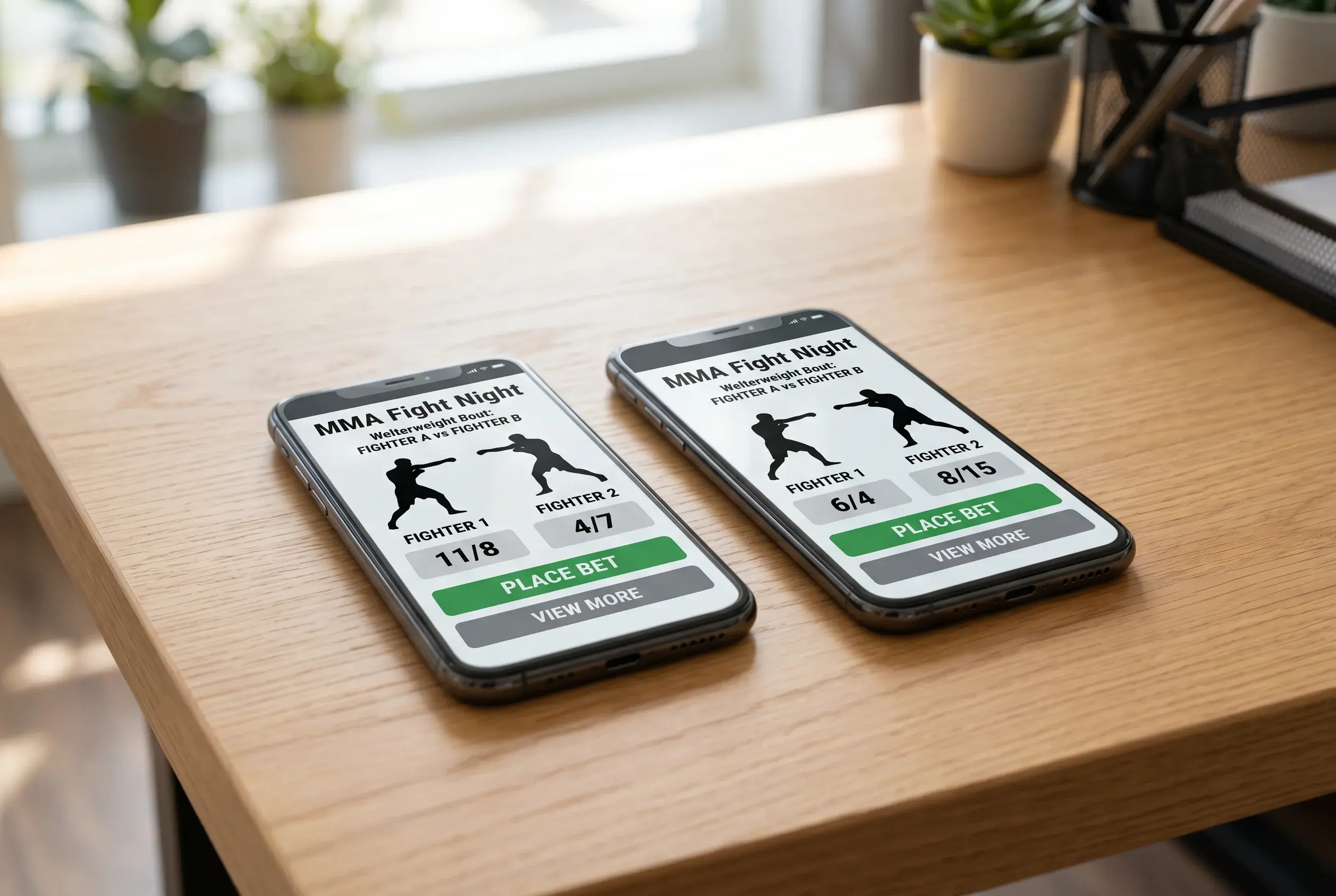
One Saturday in 2024 I opened three browser tabs on three different sportsbooks during the same UFC card. The main-event favourite — a fighter who shall remain nameless — was priced at +365 on one US sportsbook, +400 on another, and 4/1 on a UK book that read out at +400 in decimal. Same fighter, same fight, same minute. A reader emailed me the next week asking which one was right. The honest answer was “all of them and none of them” — the prices were not the same, but they were not lying either. Books disagree, and the format makes the disagreement easier or harder to see.
That is the question this guide answers. Fractional odds are the UK default. Decimal odds dominate in Europe and increasingly in bet builders. American odds slip in through US media coverage and any US-licensed sportsbook a UK reader stumbles across. All three are the same maths in different clothes. The trick is to read the clothes without getting fooled by them. Overround is not a tax — it is the price you pay for the convenience of a sportsbook taking the other side of your wager — and it varies meaningfully across operators, which is the entire foundation of line shopping. By the end of this piece you will be able to glance at any UFC price in any format and translate it into the only thing that actually matters to your bankroll: implied probability.
The three formats and why all three matter to UK punters
I will start with a confession that took me a long time to admit: I used to think fractional was a quirky British tradition and decimal was the “proper” way to do this. I was wrong. Fractional, decimal and American are three coordinate systems for the same underlying probability, and each has a specific job at which it is better than the others.
Fractional odds express profit-to-stake. The numerator is what you win; the denominator is what you stake. 4/1 means stake one, win four, get five back. 4/6 means stake six, win four, get ten back. UK bookmakers default to fractional because the format is rooted in horse racing tradition and reads naturally for British punters who grew up at the racecourse.
Decimal odds express total return per unit staked. The number includes your stake. Decimal 5.00 means stake one, get five back (a four-unit profit). Decimal 1.67 means stake one, get 1.67 back. Decimal is the format you will see in bet builder displays on every UK sportsbook, because compounding decimals is straightforward arithmetic — multiply, do not add. It is also the global standard outside of the UK and the US.
American odds work in two directions from a baseline of 100. Plus odds tell you the profit on a £100 stake. Minus odds tell you the stake required to win £100. American is the format used by every US sportsbook and most US-leaning media coverage of UFC. UK readers encounter American odds when reading US analysis, watching US podcast coverage of upcoming cards, or — and this is the trap — accidentally finding themselves on a US-licensed sportsbook that has no business taking their bet.
Why do all three matter? UFC media coverage straddles the Atlantic. A UK bettor who only reads UK affiliate sites will see fractional. A UK bettor who follows MMA analysts on YouTube, on US podcasts, or on Twitter will see American. A UK bettor who uses a builder display or compares prices on aggregator sites will see decimal. Dana White has said UFC gained a lot of fans during the early-pandemic shutdown of other sports because sports bettors started betting on UFC, and once they started watching they fell in love — and that crossover between US-style sports betting culture and UK racing culture is exactly why the formats now coexist on every English-language UFC odds page. Knowing all three is the difference between informed comparison and constant translation friction.
Fractional odds in depth — reading the slash without doing the maths each time
The first time I tried to teach my dad to bet on UFC, he stared at “13/8” on the screen for thirty seconds and said “I just want to know what I get back if it wins”. Fair point. Fractional odds are the most popular UK format and the least intuitive for newcomers, which is a strange combination but a real one.
Here is the working principle. The slash is a ratio of profit to stake, not a fraction in the mathematical sense. 13/8 means for every £8 you stake, you win £13 in profit if the bet lands, and your stake comes back on top — total return £21. The £8 in the denominator is not a fixed required stake; it is a unit. You can stake any amount and the ratio still applies. Stake £4 on 13/8 and your profit is £6.50; stake £16 and your profit is £26.
UK sportsbooks use a limited vocabulary of denominators. You will see 1, 2, 3, 4, 5, 6, 8 and 10 most often. That is why a fighter priced at decimal 1.61 might appear as 8/13 on one UK book and 4/6 on another — both round the same underlying price to the nearest comfortable fraction, and both miss the exact decimal by a small margin. This rounding is the source of more “why does book A look better than book B” disputes than any other single thing.
Two fractional prices worth committing to memory. Evens (1/1) means double-your-money — stake £10 win £10 profit. Two-to-one (2/1) means triple-your-money — stake £10, win £20 profit, total £30 back. The rest you can interpolate. A 5/2 favourite returns 3.5 times your stake total. An 11/10 selection returns 2.1 times your stake.
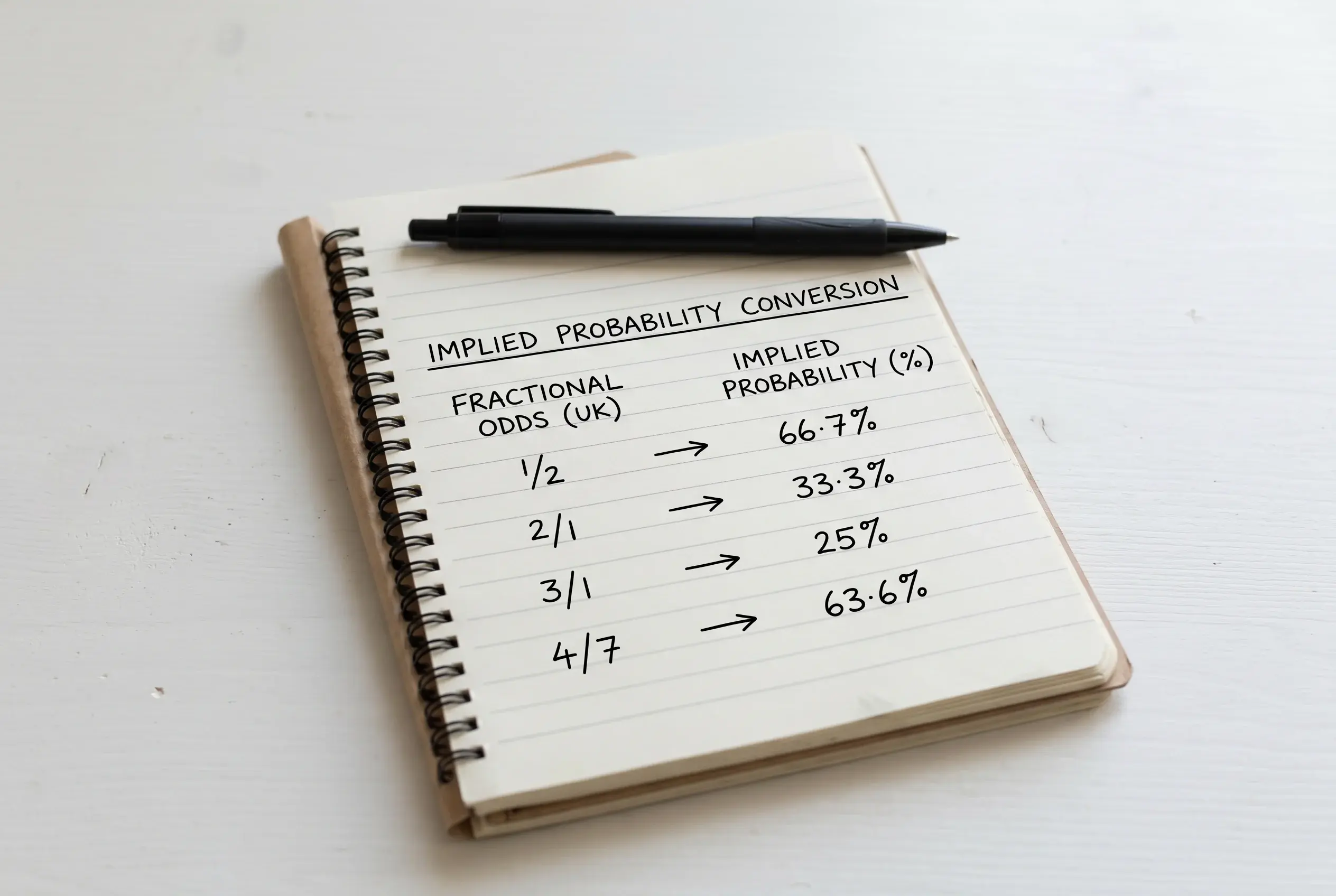
The fractional format gets criticised for “hiding” probability, and the criticism is fair. A casual punter looking at 4/9 and 4/11 has no instinct that those are roughly 69 percent and 73 percent implied probabilities. The conversion is one over (numerator/denominator + 1), but few people do that in their heads. The fix is practice and a printed table. I keep one taped to the wall behind my monitor.
Decimal odds in depth — the format the calculator likes
If fractional is the language of UK racecourse tradition, decimal is the language of calculators and modern bet builders. Every UK sportsbook will let you switch the display to decimal in a settings toggle, and once you do, the maths becomes painless.
A decimal price tells you the total amount returned per unit staked, including the stake itself. Decimal 2.50 means stake £1 and get £2.50 back — £1.50 of which is profit, £1 of which is your returned stake. The decimal-to-profit calculation is “decimal minus 1, times stake”. For 2.50 with a £40 stake: (2.50 – 1) × 40 = £60 profit, £100 total return.
Where decimal shines is multi-leg bets. To calculate a three-leg parlay, you multiply the three decimal odds. Three fights at 1.80, 2.10 and 1.60 produce a parlay priced at 1.80 × 2.10 × 1.60 = 6.048. Try doing that with fractional and you will be reaching for a pen and paper. Bet builders rely on this property — every leg is converted to decimal internally, multiplied, and converted back to display. Some UK books show the builder price in fractional but the engine underneath is decimal.
Decimal also collapses the “favourite vs underdog” mental flip. A favourite has a decimal price between 1.01 and 2.00. An even-money selection is exactly 2.00. An underdog has a decimal price above 2.00. The number tells you instantly which side of the line you are on without needing to remember that “1/4 is short and 4/1 is long”. I find this especially helpful at the prop bet level where the same fight will have one fighter at 1.30 to win, the other at 3.70 to win, a method-of-victory line at 4.50, and a Round 1 finish at 7.00 — four numbers, each ordered against the rest in a single intuitive sequence.
The downside of decimal is the precision can mask the meaning. 1.91 and 1.95 look almost identical and they are — but on a £100 stake the difference is £4 of profit. Over a long betting season those four pounds per bet compound. Decimal does not hide the margin; it just makes you do the comparison maths actively rather than passively.
American odds and where they leak into the UK conversation
The first time I read an American sportsbook’s UFC price page, I assumed someone had transposed digits. The favourite was -180 and the underdog was +155 and nothing on the page told me what those numbers meant. Twenty minutes of squinting later, I had it. Now I can read American odds at a glance, and I want you to be able to do the same — because they show up in UK reader’s faces more often than the affiliate guides will admit.
American odds use 100 as the baseline unit. A minus sign means “this is the stake required to win 100 units of currency”. -180 means stake $180 to win $100 profit, total return $280. A plus sign means “this is the profit on a 100-unit stake”. +155 means stake $100 to win $155 profit, total return $255. The currency unit is conventionally dollars in US contexts, but the format is currency-agnostic — replace “dollars” with “pounds” and the maths is identical.
Two quick translation rules. To convert American minus to decimal, divide 100 by the absolute value of the American number and add 1. -180 becomes (100/180) + 1 = 1.555. To convert American plus to decimal, divide the American number by 100 and add 1. +155 becomes (155/100) + 1 = 2.55. Going the other way, decimal to American: if decimal is greater than 2.00, the American is (decimal – 1) × 100 with a plus sign. If decimal is less than 2.00, the American is -100 / (decimal – 1) with a minus sign.
UK readers run into American odds in three places. First, US-based MMA media and podcasts — every betting analyst on a US show talks in American odds because that is what their audience expects. Second, social media — fighter accounts, betting tipsters and odds-comparison Twitter accounts often default to American. Third, US-licensed sportsbooks that a UK reader accidentally visits while travelling, or via a VPN, or via a casino-style affiliate page.
That third case deserves a warning. If you are a UK resident with a UKGC-licensed account, a bet placed on a US sportsbook outside the UK is not protected by the UK regulator. The 2025 reforms strengthened consumer protection inside the UK perimeter — financial vulnerability checks introduced in February 2025, the statutory levy of 0.1 to 1.1 percent of GGY in force since April 2025 — but those protections stop at the border. If a US sportsbook stops paying you, the UK Gambling Commission is not the right place to complain. American odds are useful as a reading skill when consuming US-origin coverage. They are a warning sign when they appear on a sportsbook page asking for your card details from a UK postcode.
Implied probability — the language behind every format
Here is the test I run on every UFC bet before I stake. I convert the price to implied probability, compare it to what I think the actual probability is, and only stake if my number is meaningfully higher. The format does not matter for this test. Implied probability is the universal translator.
From decimal odds: divide 1 by the decimal. Decimal 2.50 implies a 40 percent probability (1/2.50 = 0.40). Decimal 1.55 implies 64.5 percent. Decimal 4.00 implies 25 percent.
From fractional odds: divide the denominator by the sum of numerator and denominator. 4/6 implies 6/(4+6) = 60 percent. 11/4 implies 4/(11+4) = 27 percent. 1/4 implies 4/(1+4) = 80 percent.
From American odds: for plus odds, divide 100 by (American + 100). +150 implies 100/250 = 40 percent. For minus odds, divide the absolute value of American by (absolute value of American + 100). -180 implies 180/280 = 64.3 percent.
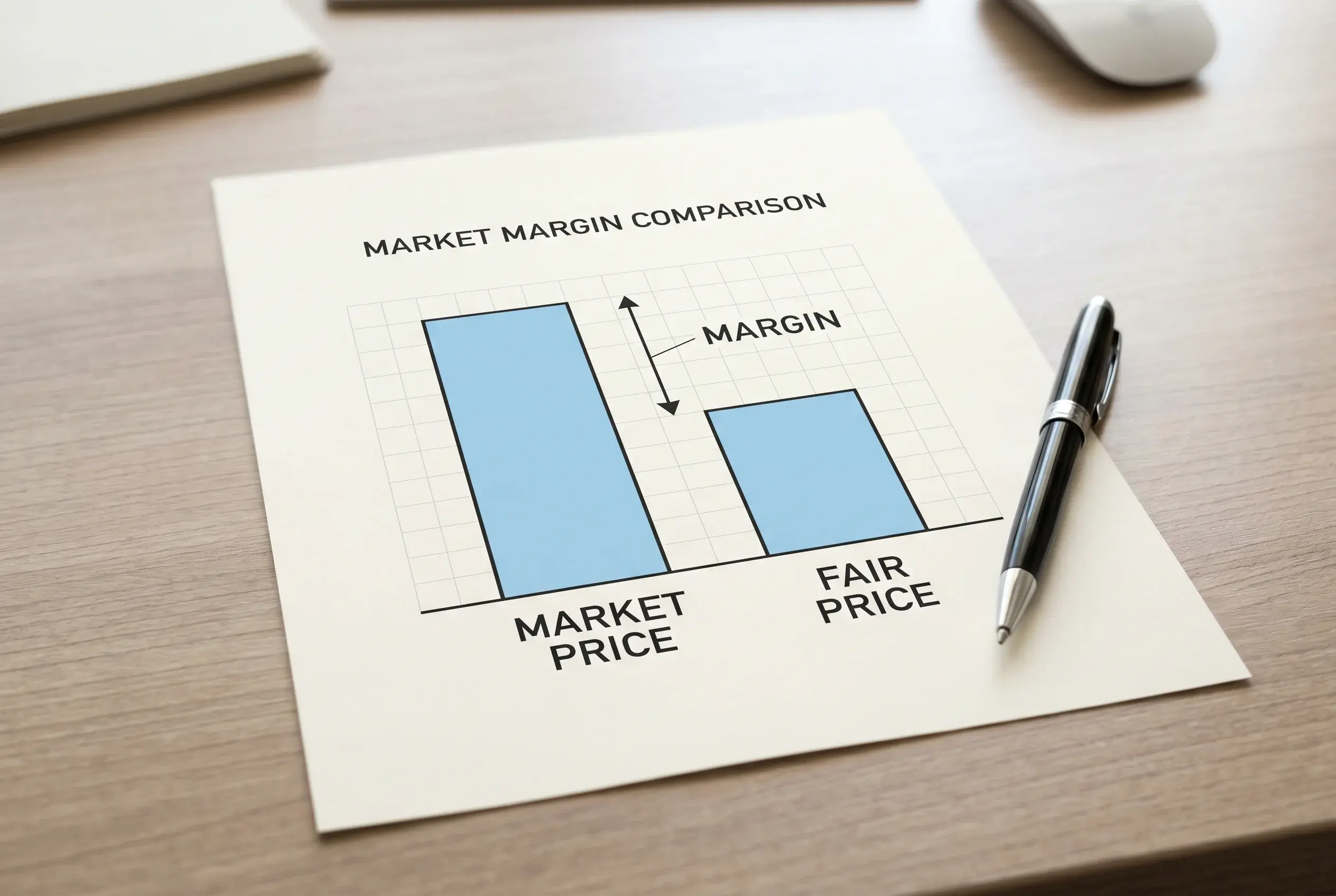
Now the inconvenient truth. If you sum the implied probabilities of both fighters in a UFC moneyline, you will not get exactly 100 percent. You will get something like 104 to 108 percent. That excess — the overround — is the bookmaker’s margin built into the prices. To get a “fair” implied probability you have to strip the margin. The simplest method is to divide each side’s implied probability by the total. If the favourite implies 64 percent and the underdog implies 41 percent, the total is 105 percent. The favourite’s de-margined probability is 64/105 = 61 percent. The underdog’s is 41/105 = 39 percent.
This matters because what you actually want to know is “does the book think this fighter wins 61 percent of the time, or 64 percent of the time?” The answer is 61 — the de-margined number. The 64 percent shown by the raw conversion is overstated by the operator’s cut.
Three-way markets (with a Draw) need a small adjustment because three implied probabilities sum to more than 100 percent. The de-margining method is the same: divide each by the total. UFC moneylines almost never include a meaningful Draw price because draws happen in well under 1 percent of bouts, but Method of Victory markets often have a Draw line that you need to strip out alongside the two main fighters.
I keep a small spreadsheet that does all this in one click. When the spreadsheet says my probability is 6 percentage points higher than the book’s de-margined number, I stake. When it says I am within 1 or 2 percentage points either way, I pass.
Bookmaker margin — the toll on every UFC bet
I have a friend who refuses to bet UFC props because he says “the book is robbing me”. The book is not robbing him. The book is charging him a toll for the convenience of taking the other side. The toll is real, it is measurable, and it varies hugely between markets and between operators — but it is not theft.
Overround is the technical term for that toll. Calculate it by adding the implied probabilities of every outcome in a market. If they sum to 105 percent, the overround is 5 percent. If they sum to 112 percent, it is 12. The difference is the operator’s expected gross margin on a perfectly balanced book — what they expect to keep regardless of which side wins.
UFC moneyline overrounds on UK books typically sit between 4 and 6 percent on main events. The numbers tighten on bigger fights where competition between books is fierce and the public is paying attention. On a heavyweight title main event with global coverage, I have seen overrounds as tight as 3 percent. On a small Fight Night main event between mid-tier contenders, I have seen 7 percent overrounds without anyone batting an eyelid.
Prop markets are different. Method of Victory overrounds run 8 to 12 percent. Round Betting overrounds can hit 15 percent. Specials and ornamental props sometimes price at 20 percent or more, which is why I almost never play them. Every point of overround is a point of disadvantage you carry into the long run.
Here is the practical impact. If you bet £100 on a 4 percent overround market with a perfect read on the fight, your expected long-run return per bet is roughly £96 — you lose four pence on the pound just by playing. If you bet £100 on a 12 percent overround prop, your expected long-run return is roughly £88. Same bet, same fight, three times the margin paid. The maths is unforgiving over the year.
Why do prop markets carry more margin? Liquidity. A UFC moneyline on a main event might see hundreds of thousands of pounds of action across the operator’s customer base, allowing the trader to balance the book by adjusting the line. A bet on whether the fight ends in the first half of Round 1 might attract a few thousand pounds total, leaving the trader exposed to tail risk if too many bets land on one side. The wider margin protects the operator from imbalanced books — risk management, not malice.
Line shopping — why two UK books on the same fight are not the same bet
A fighter I was tracking in 2024 was priced at +365 on one US sportsbook and +400 on another within the same hour. Same fighter, same date. Translate that into pounds. A £100 stake at +365 returns £465 on a win. A £100 stake at +400 returns £500. That is £35 of pure value per bet, free, just by holding two accounts.
Line shopping is the practice of comparing odds across multiple sportsbooks before placing a bet. It is the single highest-impact habit a UK UFC bettor can develop, and it costs nothing except the small admin overhead of holding three or four accounts.
Prices on the same UFC fight differ across UK books for several reasons. Each operator’s MMA trader has their own model and their own opinions. Each operator sees a different mix of customer bets, which moves their lines in different directions. Each operator runs different margin policies and different promotional schedules. The result is that on any given UFC card, you can find moderate differences on the moneyline (1-5 percent of implied probability) and meaningful differences on Method of Victory and props (5-15 percent).
For deeper mechanics on how to find and act on those differences, I have written a dedicated UFC line shopping guide. In short: hold accounts at three or four UK operators with different MMA trading traditions. Check moneyline and Method of Victory across all of them before each bet. Place at the best price. Avoid the temptation to bet exclusively at one book because of brand loyalty or familiarity — your loyalty is to your bankroll.
One caveat I always add. Line shopping pays best on markets that move slowly and on bets large enough to make the difference matter. If you stake £5 on a moneyline at 4/6 versus 8/13, the difference is pennies. If you stake £100 on a Method of Victory at 9/4 versus 5/2, the difference is meaningful pounds. Scale your line-shopping effort to your stake size.
Opening lines versus closing lines — the journey of a UFC price
The biggest underdog winner in UFC history by closing odds was Shana Dobson at +950 against Mariya Agapova at -1400, a 2020 TKO that paid out at around 9.5 times the stake. The closing line told the story — by the time the cage door closed, the market was utterly convinced one fighter was going to win. The market was wrong. The history of UFC closing lines is full of these stories, and they matter for one reason: closing lines are usually the most accurate price the market produces for any given fight.
The opening line is the operator’s first published price when the market launches, usually a week to a fortnight before fight night. It is the result of the trading team’s model plus a layer of caution. The closing line is the price at the moment the cage door closes — the result of every bet placed in between, every news update, every weigh-in result, every late hand-injury rumour. Between open and close, the line moves.
For a UK reader, two facts about line movement matter. First, if you bet at the open and the line moves toward your side, that is a signal you got there before the market. Sharp money — bets from professional gamblers and syndicates — drives most of the meaningful line movement on UFC. If the closing line is shorter than the price you took, you beat the close, which is the closest thing to a long-term skill signal in this game.
Second, opening lines on UFC are softer than closing lines because the trading team has less information than the market will accumulate. If you have a strong view on a fight as soon as the market opens, that is when value tends to be best. Once the closing line forms, the price reflects the collective wisdom of every informed bettor who has staked money. Beating the close after the fact is a thing of luck unless you have a genuine model edge.
The other side of this coin is that books take notice. UK operators are perfectly entitled to limit accounts that consistently beat the close. The line between recreational customer and “sharp” is fuzzy, but consistently beating the close on UFC fights is one of the clearest indicators. If your goal is long-term profitable UFC betting, expect your account life cycle to involve eventual restrictions.
Price boosts and enhanced odds — reading the marketing
UK sportsbooks love a price boost on UFC nights. “Fighter A to win — boosted from 4/5 to evens”, or “Three-leg parlay boosted to 12/1 from 8/1”. The marketing is loud and the maths is sometimes genuine. Sometimes it is not.
A boost takes the operator’s standard price and increases it in your favour. If the standard line on a fighter is 4/5 (decimal 1.80, implied 56 percent) and the boost takes it to evens (decimal 2.00, implied 50 percent), the operator is effectively offering you a 6 percent reduction in implied probability — or, framed differently, a 6 percent reduction in their own margin on that specific selection. That is real value, available because the operator is paying a marketing cost to attract eyeballs.
The catch is that boosts come with restrictions. Maximum stake limits. Single-account limits. Sometimes a requirement to place the boost from a specific app or push notification. Read the conditions before assuming the headline number applies to your stake size.
Single-fight boosts on UFC moneyline tend to be the cleanest. The standard price was real, the boosted price is genuinely better, and the maths is transparent. Parlay boosts are trickier. A “10/1 boosted from 7/1” on a five-leg accumulator might look fantastic until you work out that the unboosted price you would calculate yourself from the five decimal odds is actually closer to 11/1. The book is “boosting” a price that was never the genuine fair price to begin with. The boost is real but smaller than advertised.
The 2025 marketing reforms tightened the rules around how UK operators can advertise boosts. Since May 2025, direct marketing requires per-product and per-channel consent — operators can no longer push a boost notification at you across all channels by default. If you have not consented to SMS marketing for sports betting, that account is not allowed to text you about a boost. The reform was designed to give customers more control over the volume of promotional contact, and it has materially changed the experience of being a customer at UK books. You see fewer boost pushes now than you did in 2023.
One discipline worth keeping. Never bet a boost you would not have bet at the standard price. The boost is a sweetener, not a reason. If you had no interest in backing Fighter A at 4/5 this morning, the fact that the price is now evens does not change your read on the fight.
Frequently asked questions about UFC odds for UK bettors
The four questions below capture the most common stumbling points for UK readers learning to navigate odds across formats. The answers reflect how UK operators actually handle these in 2026.