

Line Shopping Discipline for Consistent UFC Profitability
A 2024 DraftKings study tracked the same UFC fighter on the same fight night. One sportsbook had him at +365. Another had him at +400 for the identical wager. That’s a 9.6% difference in payout on the same bet. If you’d backed that fighter at the worse price and he’d lost – same outcome. If you’d backed him at the better price and he’d won – substantially more money in your bank account. The work to find the better price took 90 seconds.
Line shopping is the single highest-return habit a UFC bettor can build. It costs nothing beyond a few minutes per card, doesn’t require a model or a system, and works on every market – Moneyline, MoV, round betting, props. Every UK punter I’ve watched develop from casual to consistent has the same first habit: they stopped placing bets on the first book they opened.
This piece is about how to do it efficiently. Not which book to use for what – that varies – but the workflow itself. How to identify where prices diverge, how to manage multiple accounts without losing track, when line shopping stops paying enough to justify the friction, and which tools UK punters use to compare odds without browsing every operator manually.
Why two books offer different prices on the same fight
The reason line shopping works at all is that UK sportsbooks don’t operate from a single shared price book. Each operator runs its own trading model, takes its own positions, and adjusts its own prices based on the money it’s seen versus the money it expected. The variance creates the gaps.
The first source of divergence is the underlying model. Different trading desks weight different inputs differently. One operator might lean heavily on recent form. Another might give more weight to grappling profile. A third might use a more conservative durability adjustment for older fighters. The fair-probability estimates spit out by these models can vary by 3-5 percentage points on the same fighter, which translates into measurable price differences.
The second source is positioning. A sportsbook that’s already taken heavy money on Fighter A may shorten Fighter A’s price to discourage further action and lengthen Fighter B’s price to attract balancing money. A book that hasn’t seen much volume on the same bout might still be sitting on its opening price. The two books will diverge purely because of the volume each has absorbed.
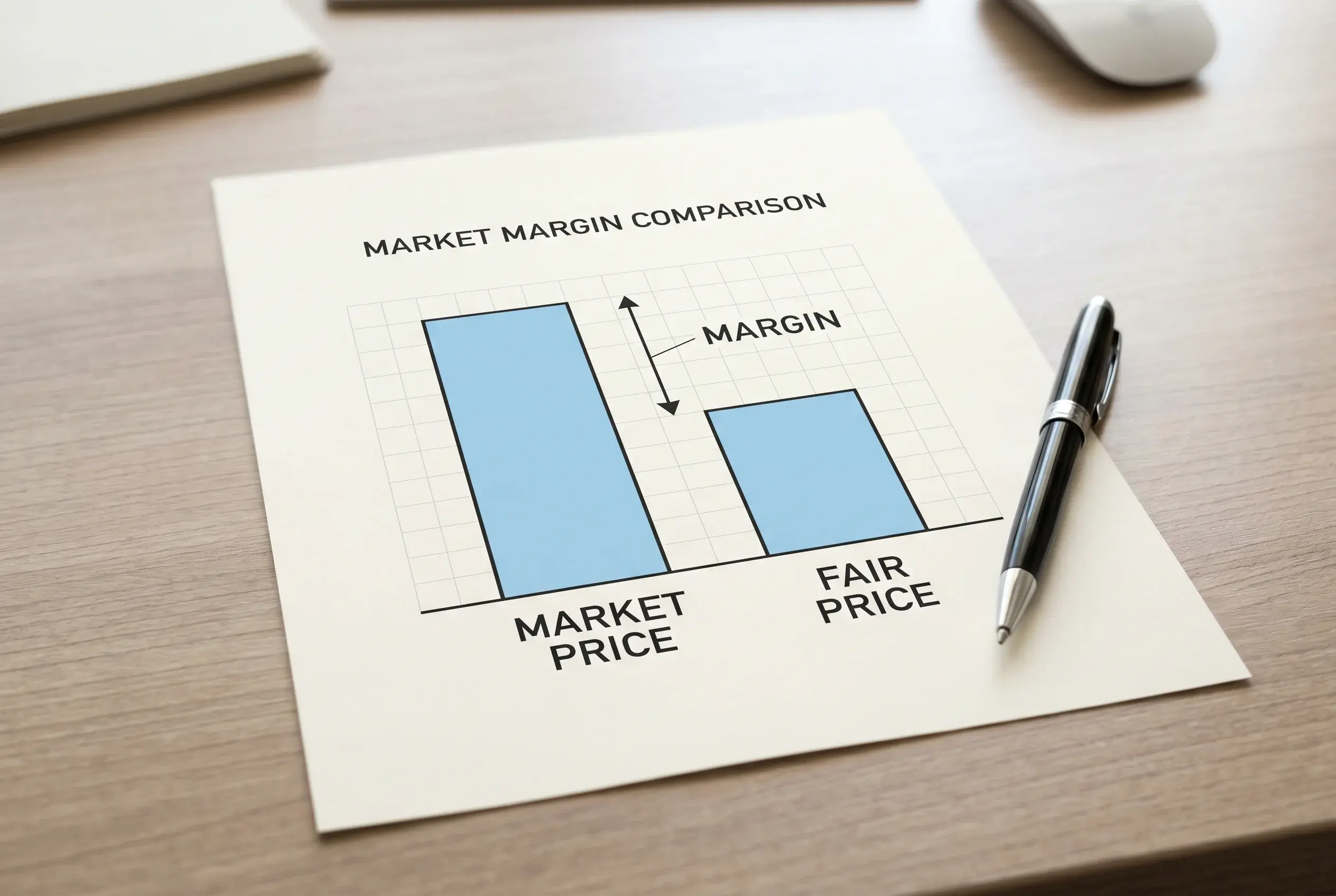
The third source is margin policy. Some operators run tighter overrounds on UFC than others – typically the books that want to position themselves as serious sports betting destinations rather than casino-led operators. A tighter overround on the same fair probability means longer prices on both sides. The 2024 DraftKings example with +365 versus +400 reflects this kind of margin difference combined with model differences.
None of these sources is constant. A book that has the best price on Fighter A today might have the worst price on Fighter B tomorrow. The gaps move with money flow, with model updates, with which trader is on shift. Line shopping isn’t about finding the “best book” once – it’s about checking on every bet.
The actual workflow for tracking prices
The practical question for most UK punters is: how do you do this without it taking an hour per card? My answer is a three-step routine that compresses to about 10 minutes per card.
Step one: pick your shortlist. Three to five UK operators with UFC markets you trust. The exact lineup varies by what you’re betting – high-volume punters need books with deep prop markets and bet builders, while Moneyline-only bettors can get away with fewer accounts. Most serious UFC punters I know maintain accounts on four operators: enough to find variance, not so many that you lose track.
Step two: check the headline fights only. The main event, co-main, and one or two prelims you have opinions on. Most UFC cards have 10-12 bouts. You don’t need to compare prices on every fight – only the ones you might actually bet. For each, open all four accounts in tabs, glance at the prices, note any meaningful gaps.
Step three: place the bet on the book with the best price for the specific selection. This is where new punters lose discipline. They have a favourite book, the price gap looks small, and they go with familiarity instead of value. Don’t. A 5/2 versus 11/4 difference on a £20 bet pays £55 versus £52.50 – small in absolute terms, but the cumulative effect over a year of betting is material. Pay attention to the small ones.
The shortcut: odds comparison sites do step two for you, but they often have a delay of 5-30 seconds on price updates and they don’t always cover every market. They’re good for Moneyline checks, less reliable for prop markets, useless for bet builders. The manual workflow is the only complete one.
Tracking shadow lines and noticing when something moves
The other half of line shopping is recognising when a price has moved significantly relative to its opening. UK sportsbooks publish opening prices typically 5-7 days before a fight card. Watching how those prices evolve over the week tells you what the market is collectively thinking – what’s getting bet, what’s drifting, what’s holding.
The simple version of shadow-line tracking: write down the opening price on a fight you have an opinion on. Check it again 48 hours before the fight. Check it on the day of the bout. Three data points, easy to compare. A price that’s moved from 6/4 to 11/8 to 5/4 has tightened – the market thinks the fighter is more likely to win than it did at open. A price that’s drifted from 6/4 to 7/4 to 2/1 is fading – money has come in on the other side.
These movements aren’t always information you can profit from, but they tell you whether your opinion is consensus or contrarian. If you like a fighter at 7/4 and that price came from 6/4, the market has moved with you and you’re getting better value than the opening offered. If your fighter has tightened from 6/4 to 5/4, you’re getting worse value than the opening but the market agrees with your read.
For systematic line shoppers, the rate of price movement matters more than the direction. A price that moves slowly is responding to small money and trader caution. A price that lurches in a single direction within a few hours is responding to large bets – usually accounts the trading desk respects, sometimes coordinated retail momentum. Lurches are signal; drift is noise.
Managing multiple accounts without losing track
The administrative side of holding multiple sportsbook accounts is where most line shoppers eventually struggle. Keeping bank rolls separated, remembering which book has which balance, tracking deposits and withdrawals across four or five platforms – it’s not hard but it requires a system.
The simplest system I’ve seen work: a spreadsheet with one row per operator and three columns – current balance, lifetime deposits, lifetime withdrawals. Updated weekly. The lifetime numbers tell you whether the operator owes you money or you owe yourself money over the long run. The current balance tells you what’s available without logging in.
The 2025 UK regulatory changes have added friction here. Operators began conducting financial vulnerability checks more systematically from February 2025, and accounts that bounce between deposits and withdrawals at speed sometimes trigger checks. The line shopping workflow can resemble exactly that pattern: deposit on one book, win a UFC bet, withdraw, deposit on a different book for the next fight. Knowing that the checks exist means structuring your activity to look like the recreational pattern it actually is – deposits in line with your normal stake size, withdrawals at reasonable intervals.
The other administrative concern is responsible-gambling tools. Most UK operators offer deposit limits, loss limits and time-out features per account. Setting these consistently across all your accounts keeps your line-shopping activity inside the boundaries you’d set if you only had one. The trap with multiple accounts is the false sense that you’ve “only deposited a little” on this book when the aggregate across all books is significantly more.
When line shopping stops paying enough to bother
There’s a point at which line shopping becomes net-negative on your time, and recognising it matters. The clearest case: low-stake bets where the price gap is small.
If you’re betting £5 on a UFC fight and the difference between the best and worst available prices is from 6/4 to 11/8, the value gap is 27p of profit. That’s not worth opening four browser tabs for. The line-shopping habit pays best on larger bets and on markets with structural price dispersion – props, round betting, bet builders, where book-to-book differences can be 15-20% of payout.
The other case where it stops paying is heavy chalk. A Moneyline price of 1/5 on a heavy favourite isn’t going to vary much across books – the implied probability is 83% and there’s only so far the market can move on a near-certainty. Line shopping on 1/5 favourites is mostly a waste of time. Line shopping on 6/4 favourites and on underdog selections – where small price differences create meaningful payout differences – is where the discipline pays for itself.
The exception is when you bet volume. If you place 100 bets on UFC in a year and you can squeeze 1-2% more value on each through line shopping, the annual return is materially different. For high-volume punters, line shopping is non-negotiable. For 20-bet-a-year punters, it’s worth doing on the bets that matter and skipping on small ones.
Tools, comparison sites and what they actually do
UK odds comparison sites aggregate prices from multiple operators and present them in a table. They’re useful but limited. The major sites cover the Moneyline and most over/under markets reasonably well; they cover MoV and round betting on a smaller selection of operators; they rarely cover bet builders at all because builder prices are dynamically generated and don’t fit a static aggregator.
The trade-off with comparison sites is independence. Many are operated by affiliate companies whose commercial relationships with sportsbooks influence which operators they include and how prominently. The price comparisons themselves are usually accurate, but the editorial framing – “best UFC book”, “top-rated UFC sportsbooks” – should be read with the affiliate context in mind.
For UFC specifically, the comparison sites that maintain genuine independence tend to cover fewer operators in more depth, including price history graphs and movement timestamps. Worth using these for shadow-line tracking even if you don’t trust their editorial recommendations.
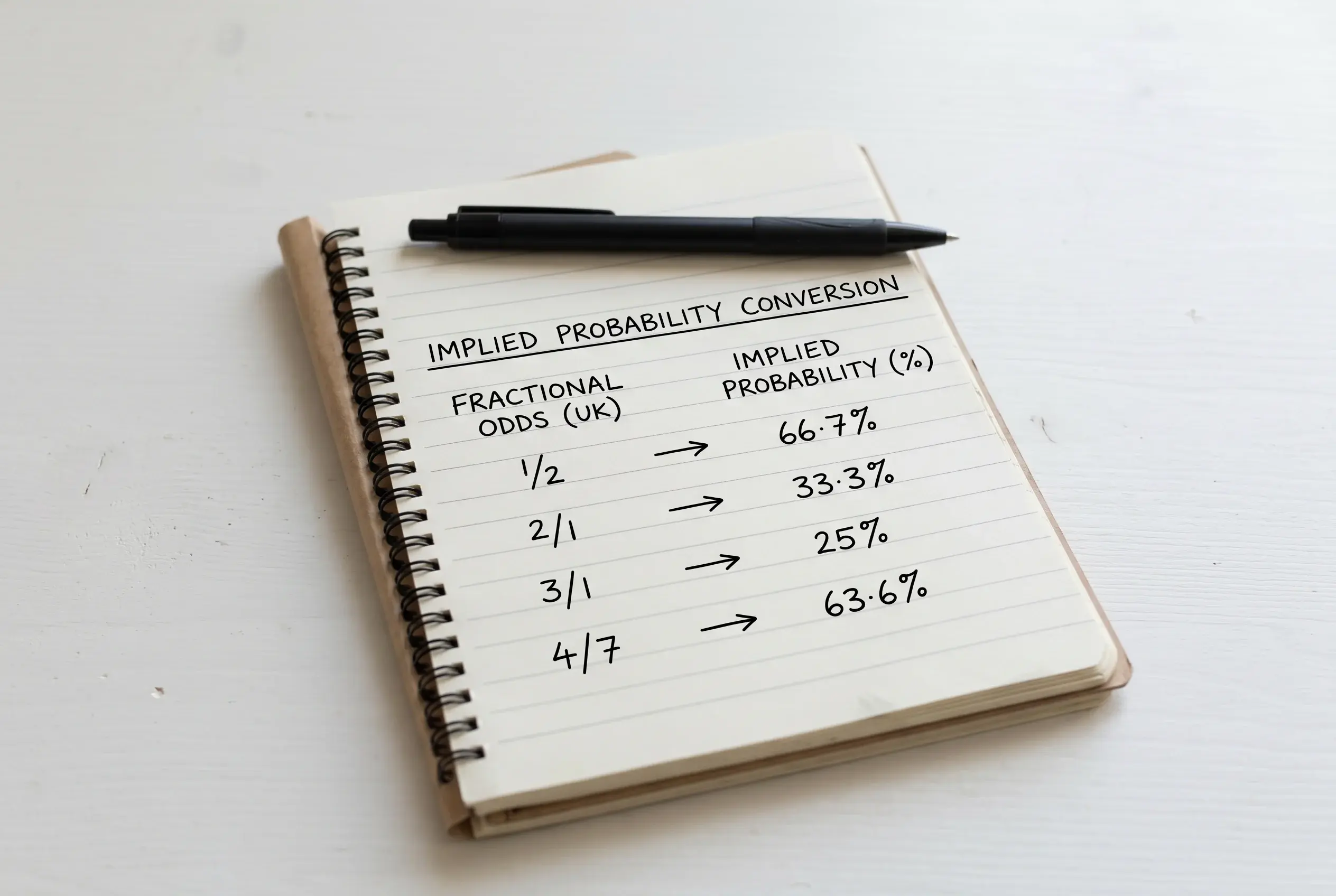
The other tool worth mentioning: dedicated MMA odds trackers. A small number focus only on combat sports betting and offer features the generic comparison sites don’t – closing line value calculators, round-betting comparison tables. They tend to be US-leaning in operator coverage, but the methodology applies regardless. Once you’re comfortable comparing prices, the next layer is interpreting what they mean – converting UFC odds to implied probability lets you compare the same fight across formats and see which book is offering the cleaner read on probability.