

Simplifying Predictions with Go The Distance Markets
I have a friend who has bet on UFC for six years and has only ever placed one type of wager: Fight Doesn’t Go the Distance. He doesn’t care who wins. He doesn’t care how. He picks bouts where he thinks someone will land a finishing blow and backs the No-Distance option. His strike rate over those six years sits a hair above 50% and he’s quietly, persistently profitable. The 2023-2024 underdog cashback rate hovers around 32% on average, but his bet doesn’t depend on picking the right side – it depends on picking the right tempo.
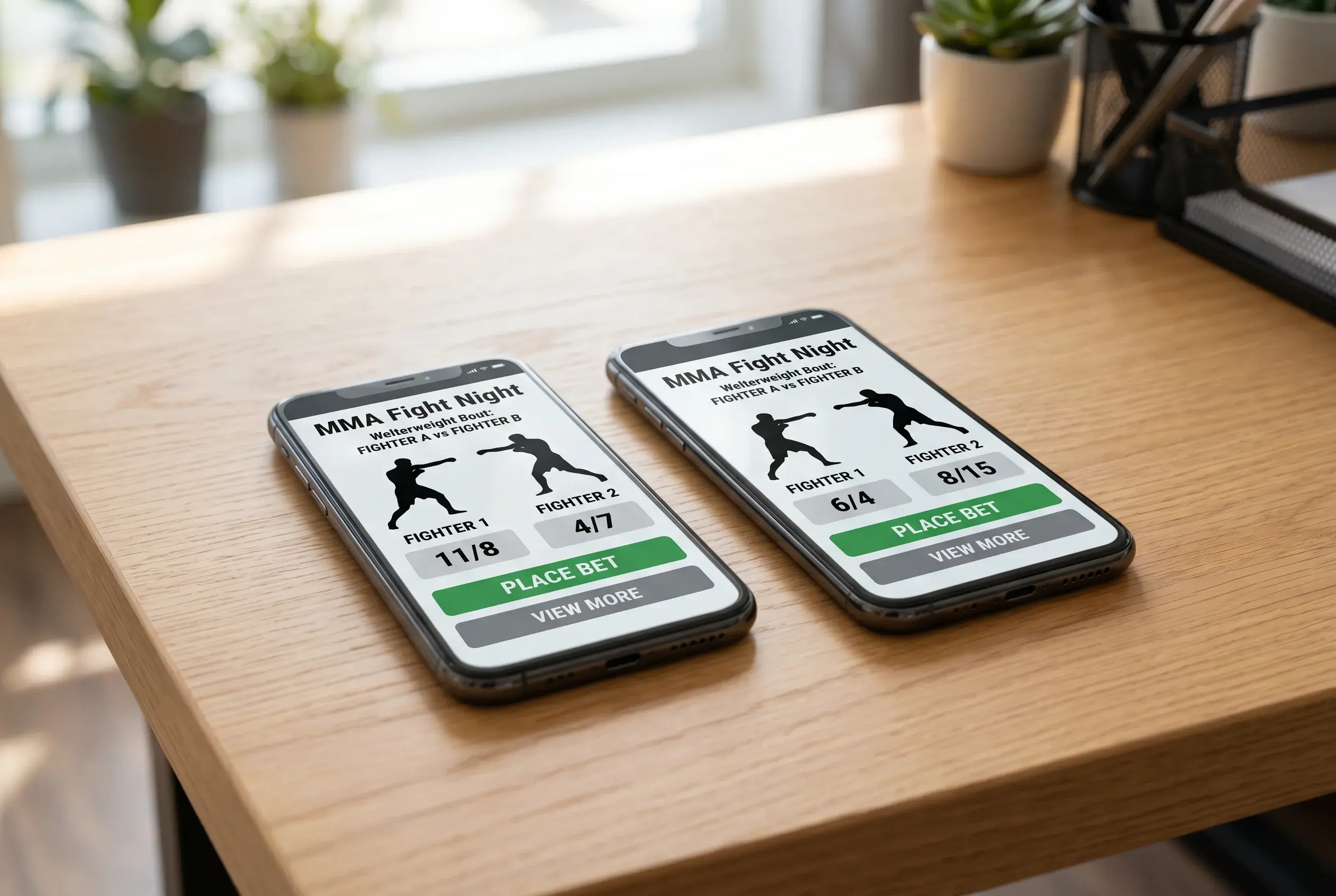
Goes the Distance is the cleanest market UFC sportsbooks offer. There are two options. The fight ends inside the scheduled rounds (No) or it doesn’t (Yes). The wager doesn’t care about winners, methods, rounds – just whether the bout makes it to the final bell. That makes it the easiest market to model and one of the easiest to think about, which is why it draws a particular kind of disciplined bettor.
It also separates cleanly from total rounds in a way that’s worth understanding before you bet it. Over 2.5 rounds and Goes the Distance Yes are correlated but not identical. A fight can extend past 2:30 of Round 3 and still get finished before the final bell – Over 2.5 wins, Goes the Distance loses. The two markets price differently, and the differences sometimes give punters a quiet edge.
What the bet covers and what it doesn’t
The Goes the Distance market is binary. Yes pays out if the fight reaches the official end of the final scheduled round and is decided by the judges. No pays out if any fighter is declared the winner before the final bell – by KO, TKO, submission, disqualification or any in-bout result.
For three-round bouts the final scheduled round is Round 3. The fight must survive past the 5:00 mark of Round 3 – the buzzer – for the Distance Yes to win. A stoppage at 4:59 of Round 3 settles No. A bout that’s stopped between Round 2 and Round 3 in the corner settles No. A bout that goes to a unanimous decision after 15 full minutes settles Yes.
For five-round championship bouts the threshold is the 5:00 mark of Round 5. The same logic applies, just stretched. Notably, the distance probability in a five-round title fight is materially different from a three-round version of the same matchup – generally lower, because there’s more time available for someone to finish, but not as much lower as people intuit.
The grading on No Contest is the usual void: stake returned. A No Contest doesn’t settle the Distance market in either direction because the fight didn’t have a regulated ending in either category. Draws settle Yes – if the bout reaches the scorecards and the judges return a Draw, the fight did go the distance.
The cleanest edge case: a fighter quitting on the stool between rounds. This is a No-Distance result on UK books. The bout ended before the final bell, the cause was a corner stoppage rather than an in-round event, but the outcome category is unchanged. Doesn’t go the distance.
Why distance rates vary so much across the weight classes
If you’re betting Distance markets regularly you’re really betting weight classes, because the distance rates in UFC vary wildly between divisions and the pricing across those divisions reflects the data.
Flyweight, men’s, is the most decision-heavy division in the company. Since 2020, flyweight favourites have built a 30-8-1 record – a 77% winning percentage that’s notably higher than the cross-division average. That favourite-dominance comes paired with a high decision rate. Flyweights throw enormous volume, accumulate lots of small damage, and rarely produce the single decisive shot that ends fights. Distance Yes prices in flyweight are typically short – often 4/6 or shorter for ranked-opponent matchups – because the underlying probability of going the distance can sit above 60%.
Bantamweight, men’s and women’s, sits in similar territory. Strawweight pushes the distance rate even higher in some matchups. Lightweight is the middle of the company – a mix of finishers and decision-grinders that creates the most variance in Distance pricing. Welterweight starts skewing toward more finishes because the size and power increase enough to produce highlight stoppages. Middleweight further still.
Light heavyweight and heavyweight are the finish divisions. Heavyweight in particular: when two big men hit each other, fights end. Distance Yes prices in heavyweight main events often sit at 2/1 or longer, with No being the favourite side even when the matchup features two cardio-questionable veterans. The heavyweight finishing rate is structural, not stylistic.
The practical takeaway: build a default distance probability per division in your head before you look at a specific matchup. Flyweight default is around 60% goes the distance; heavyweight default is around 35%. Then adjust for the fighters in front of you. The division baseline does more work than most punters give it credit for.
How Goes the Distance differs from Total Rounds Over 2.5
This is the single most useful distinction in fight-duration betting and it trips people up regularly. Over 2.5 rounds and Goes the Distance Yes are related but not interchangeable.
Over 2.5 wins if the fight extends past 2:30 of Round 3. Goes the Distance Yes only wins if the fight extends to the full 5:00 of Round 3. The window between 2:31 of Round 3 and 4:59 of Round 3 is what separates them: any finish inside that window settles Over 2.5 as a winner but Goes the Distance as a loser.
That window is small in clock terms – 2 minutes 28 seconds in a three-round bout – but it accounts for a meaningful percentage of finishes. Trading desks estimate roughly 8-12% of finishes in three-round UFC bouts occur in the final 2:30 of Round 3, as fighters press for a stoppage to influence the judges. Knowing this lets you choose between the two markets based on your read.
If you think the bout will be evenly contested but produce a finish in late Round 3 – a tired exchange, an opportunistic submission, a flash KO in the dying seconds – Over 2.5 captures that prediction and Goes the Distance does not. If you think the bout will be evenly contested but probably reach the cards, Goes the Distance is the cleaner bet and the price will be longer to compensate for the additional probability the bet has to clear.
The pricing relationship: Goes the Distance Yes is always longer than Over 2.5 (because it’s the harder condition), and Goes the Distance No is always shorter than Under 2.5 (because it’s the easier condition – covers all the same finishes plus the late Round 3 ones). When the two markets aren’t internally consistent across a book – when the prices don’t reflect that 8-12% gap correctly – there’s a line-shopping arbitrage available for patient punters.
Style pairs that tend to reach the cards
The style overlay on distance probability is where experienced punters separate themselves. Some matchup types produce decisions regardless of the individual fighters; others produce finishes regardless of the underlying skill gap.
Wrestler versus wrestler is the textbook decision matchup. Two grappling-first fighters cancel each other out – the takedowns either don’t land or get scrambled out of quickly, fights spend long stretches in the clinch against the cage, and the round-by-round work ends up close enough that judges decide it. Distance Yes prices on wrestler-versus-wrestler bouts are often shorter than the divisional baseline would imply.
Pure boxer versus pure boxer is another distance-prone pair. MMA-trained boxers tend to be tactical, point-conscious strikers who don’t expose themselves to the wild exchanges that produce knockouts. They fight at range, manage distance carefully, and tend to win on volume. Decisions follow.
Volume striker versus durable counterpuncher is a third. The volume striker accumulates points but rarely cracks the counterpuncher cleanly; the counterpuncher lands sharper shots but at lower volume. Three rounds isn’t enough for either approach to definitively prove dominant, and the cards decide.
The pairs that don’t go the distance: heavy hitter versus chinny opponent (obvious), grappler versus striker where the grappler has high takedown success (back take, submission), and any matchup featuring a fighter with a high pace and a body of evidence showing they break opponents in the second half of bouts. Conditioning gaps in MMA tend to compound non-linearly – once a fighter is gassed, finishing them becomes substantially easier.
The grading rules that catch out late stoppages
The Goes the Distance market has fewer grading edge cases than round betting but the ones it does have are worth knowing because they cluster around fight endings that feel “almost” complete.
A stoppage at 4:59 of the final round. The fight ended 1 second before the buzzer. It feels like the fight went the distance – the punter has watched the full bout, the loser was still on their feet seconds before the bell. The bet settles No. The fight did not reach the official end of the final round. UK books grade strictly by the clock.
A doctor stoppage announced after the final bell. If the fight ends, the bell rings, and then between rounds the doctor declares one fighter unable to continue, the fight has technically already ended by reaching the bell – it goes to decision. Distance Yes wins. The post-bell medical issue doesn’t retroactively un-end the bout.
Disqualifications. A DQ before the final bell settles Distance No. A DQ that occurs effectively after the bell – points deducted retroactively, a referee reversal that doesn’t happen until well after the round ended – is vanishingly rare and the grading depends on when the disqualification is officially declared.
No Contests void Distance markets and return stakes. If an illegal action causes a stoppage that the commission then rules a No Contest, the Distance bet didn’t get a clean answer and is treated as a non-result.
Draws settle Yes. The fight reached the cards, the judges returned a verdict – it doesn’t matter that the verdict was a tie. The bout went the distance. Once you’ve decided the bout will or won’t survive to the bell, the next layer of the prop ecosystem is the bonus market – UFC Performance bonus prop bets price how flashy a fight will be regardless of who wins, and they layer cleanly onto distance opinions.