
Exact Round Betting and Stoppage Timing Strategy
Tom Aspinall holds the UFC record for shortest average fight time among heavyweights at 2 minutes 18 seconds. Read that again. The current heavyweight champion of the world – the man who walked through a generation of giants – has spent, on average, less time fighting per bout than it takes most people to make a cup of tea. Now imagine you’d been backing Round 1 finishes on every Aspinall fight at the prices the books were offering. You’d have done very well.
That’s the appeal of round betting in UFC. You’re not just predicting that a fighter wins, you’re predicting when. The market pays for that specificity, and the prices on round-specific bets – particularly Round 1 – can be eye-watering even on heavy favourites. It also punishes you ruthlessly. Get the fighter right, get the method right, miss the round by 30 seconds, your bet is gone.
This piece is about how the market is built on UK sportsbooks, why pricing in Round 1 differs so much from Round 3, what changes when a fight is for a championship, and the grading pitfalls that cost punters money they assumed they had. By the end you should know whether round betting fits the way you watch UFC – because honestly, it doesn’t fit everyone.
What round betting actually covers
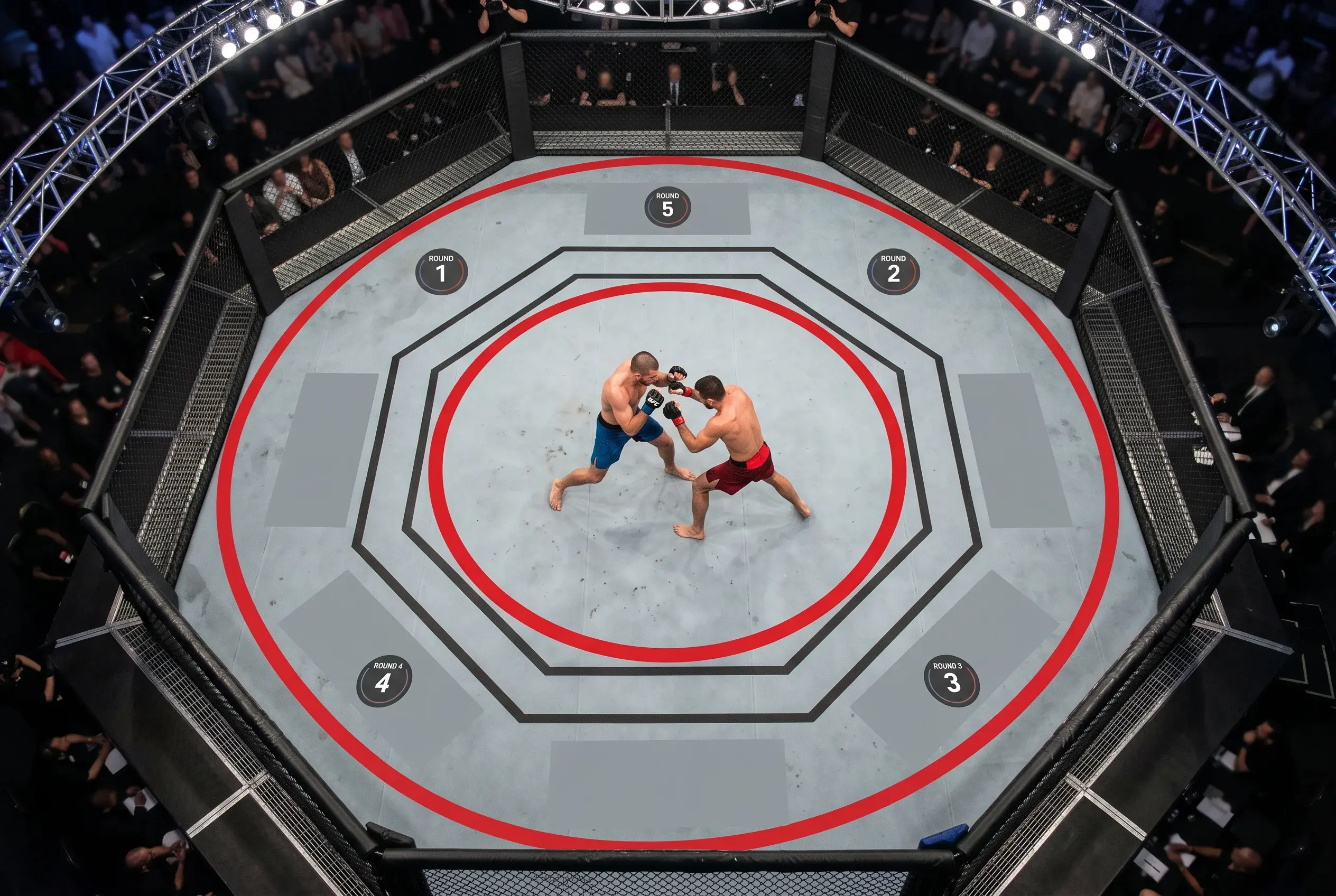
Round betting on UK sportsbooks comes in two main flavours and a couple of variants that float around the edges. The dominant version is Fight Winner and Round, where you pick a specific fighter to win in a specific round. The selections look like this: Fighter A to Win in Round 1, Fighter A in Round 2, Fighter A in Round 3, then mirrored for Fighter B, and a final option of Fight Goes to Decision (sometimes labelled “to win on points” or “decision/scorecards”).
For five-round championship fights you get the same structure extended to five rounds. The Decision option still sits at the end. UK books treat the by-Decision selection as a separate market entry within round betting, even though strictly speaking decision isn’t a round – it’s a state the fight reaches if no round produces a finish.
The second flavour is Round of Finish, also called Exact Round. This strips out the fighter dimension entirely. You just pick which round the fight ends in – either by stoppage, by judges’ verdict if it reaches the cards, or some combination. Round 1, Round 2, Round 3, Goes the Distance. The pricing is shorter than Fight Winner and Round because the bet has fewer ways to lose: a Round 2 finish bet wins regardless of who won.
A few operators offer Group Round Betting – bands like Rounds 1-2, Rounds 3-4, Rounds 5+. These exist mostly to feed bet builders rather than as standalone markets and the pricing is bland because the bands are wide. If you have a sharp opinion on when a fight ends, the standalone exact-round market gives you more upside.
One nuance worth flagging: most UK books grade round betting on the round in which the official stoppage occurs, not the round in which the decisive damage happened. A fighter dropped in Round 1 who’s finished 8 seconds into Round 2 is a Round 2 finish for grading. The clock matters, not the narrative.
Why Round 1 prices are the largest you’ll see
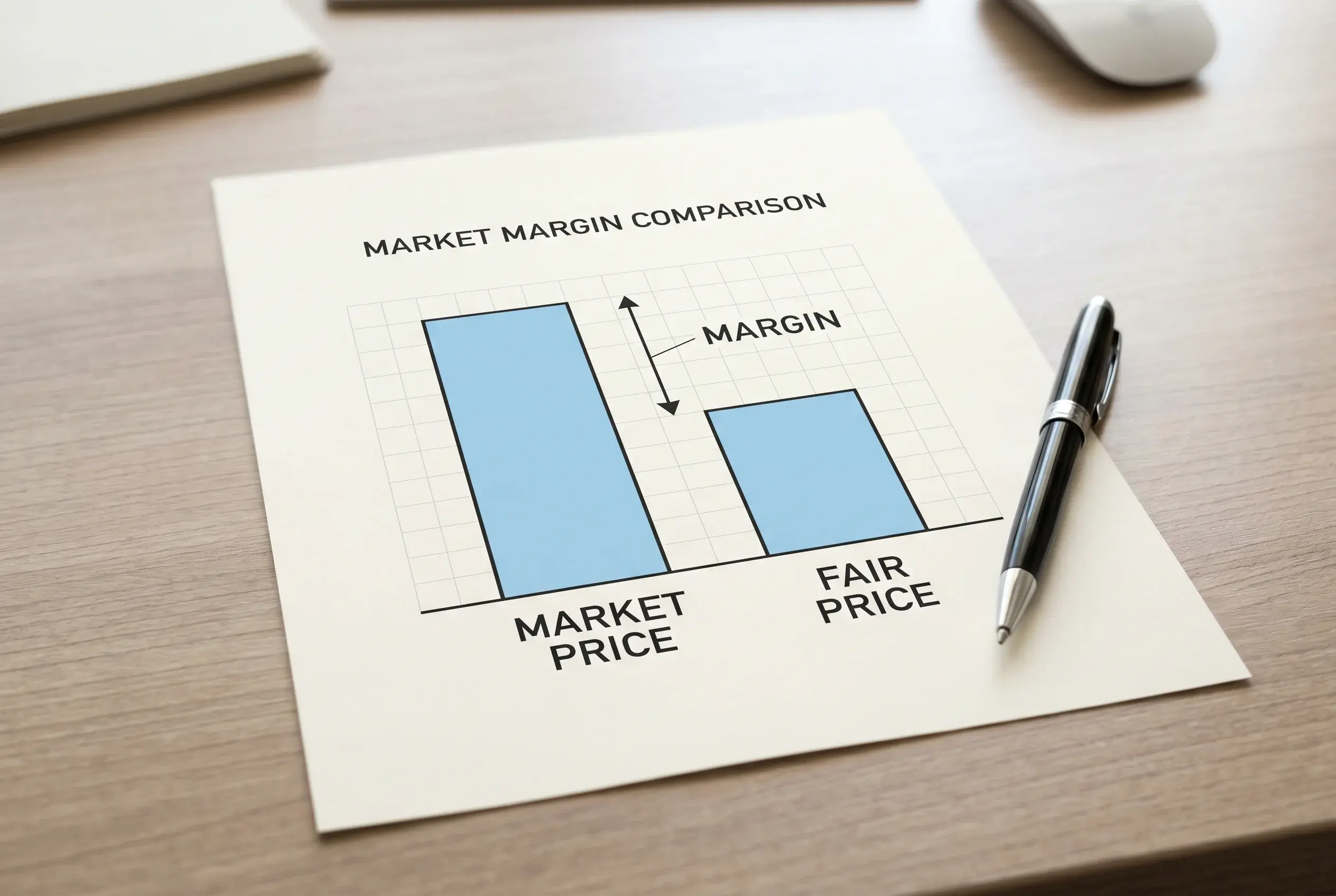
Round 1 is where heavy hitters like Aspinall pay rent. The market for a Round 1 finish is mathematically rich because the trader has to compress a high-variance event – a quick, decisive ending – into a price that accounts for everything that could push the fight past five minutes. The result is prices that look long even on apparent mismatches.
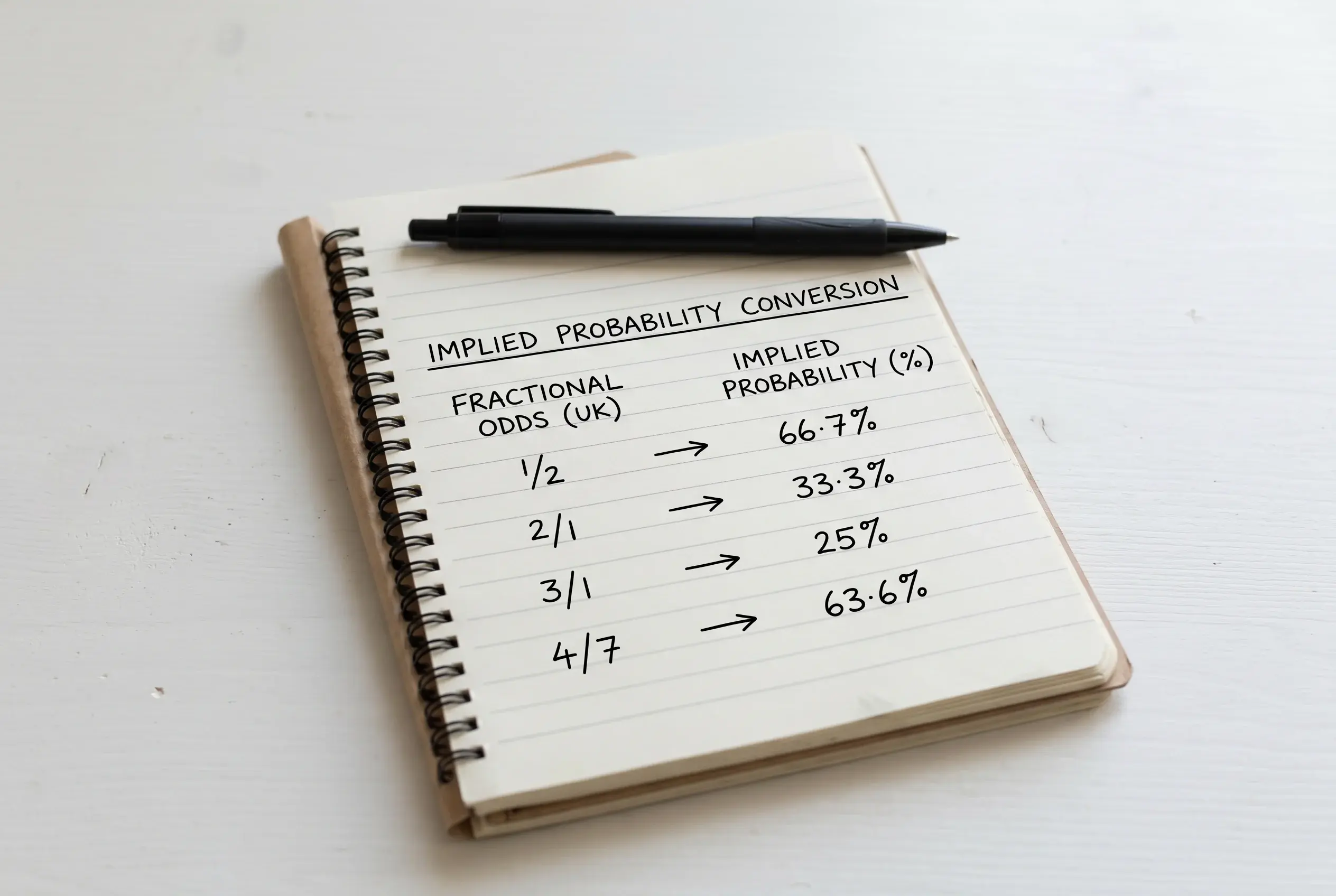
Take a hypothetical: Fighter A is a 1/2 Moneyline favourite. The book’s model thinks A wins around 67% of the time. Of those wins, perhaps 30% come in Round 1, which gives an implied probability of 20% for A by Round 1. Apply margin and convert to fractional, and you’re looking at a price around 4/1 for A to win in Round 1. That’s an enormous difference from the 1/2 Moneyline despite both bets being on the same fighter.
The trader’s biggest variable in Round 1 pricing is finishing rate within the first five minutes. They’re not just looking at how often a fighter finishes – they’re looking at when in the bout those finishes typically arrive. A heavyweight with three career stoppages, all in Round 1, prices very differently from a heavyweight with the same three stoppages spread across rounds 2 and 3.
The Aspinall record at 2:18 average is precisely the kind of pattern that warps Round 1 pricing in a punter’s favour – or against it, depending on which side you’re on. His Round 1 finish prices are short by UFC standards because the model knows the pattern. His opponents’ Round 1 finish prices, conversely, are long because no one has tested how a fight involving him plays out in later rounds with any frequency.
The trap in Round 1 betting is recency bias. A finisher who’s just hit two Round 1 finishes in a row will have their next Round 1 price shortened to reflect that streak. But streaks in MMA regress hard – the same fighter goes the distance more often than people remember in the 12 months after a finishing run. Backing a fighter to repeat a Round 1 finish at a shortened price is usually buying high.
Mid-fight rounds: where the pricing logic shifts
Rounds 2 and 3 in a three-round bout – or Rounds 2, 3, 4 in a five-rounder – are where round betting gets harder. The prices stay attractive but the implied probabilities are spread thinner and the trader has more uncertainty to bake in.
Round 2 is typically the modal finishing round in three-round bouts. Fighters have softened each other up in Round 1, the cardio costs are mounting, and the urgency to win the round before the judges start influencing the scorecard pushes fighters into bigger commitments. UK books price Round 2 finishes shorter than Round 1 finishes for that reason on most matchups – even though Round 1 prices look longer on the board.
Round 3 is the “if neither side has cracked the other yet” round, which makes Round 3 finish pricing weather a different forecast. The probability of finish in Round 3 depends heavily on conditioning gaps: if one fighter clearly cardio-outclasses the other, Round 3 finishes get more likely. Same if there’s a height/reach mismatch that lets a longer fighter accumulate damage and bank a late stoppage as the shorter fighter slows down.
The pricing pattern across the rounds creates a smile shape on most matchups: highest probabilities at Round 1 (finisher vs vulnerable opponent), dipping in Round 2 (still possible but the fight has stabilised), rising again in Round 3 (cardio breaks, urgency, accumulated damage). UK books bake this into their lines and the smile is most pronounced on bouts featuring known finishers.
Championship fights versus standard bouts
A five-round championship fight changes everything about round-betting pricing. There are five round-finish options instead of three, the bout duration is 67% longer, and the dynamics of championship-level fighters are different from rank-and-file UFC pros.
The first change is just arithmetic. The same probability of finish is now spread across five rounds rather than three, which mechanically lengthens every round-finish price relative to a three-round version of the same matchup. A fighter who’d be 5/2 to win in Round 1 of a three-round bout might price at 11/4 or 3/1 in a five-round version of the same fight, because the model is uncertain across more options.
The second change is the championship factor itself. Title fights historically produce a higher proportion of decisions than non-title equivalents. The fighters are more durable, the stakes incentivise caution in the early rounds, and the conditioning is genuinely elite. The Decision option in a title fight’s round betting market is therefore shorter than people often expect.
Late-round finishes – Round 4 and Round 5 – exist in title fights almost exclusively. The prices look juicy because the underlying probabilities are tiny, but when they hit they pay enormously. Strategic value here is limited unless you’ve identified a clear cardio gap or a fighter who’s known to come on late in five-rounders.
A useful mental check on title-fight round betting: don’t compare prices across the round options without converting to implied probability. A 7/2 price on Round 1 and a 16/1 price on Round 5 are not on the same scale. The 7/2 is a roughly 22% chance, the 16/1 is around 6%. Round 5 looks like a lottery ticket because it is one.
The pitfalls that cost round bettors money
Round betting has more grading edge cases than any other UFC market, and the ones that catch people out tend to be the ones that look obvious until they aren’t.
Between-rounds stoppages. A fighter who can’t answer the bell for Round 3 because of accumulated damage – a doctor stoppage in the corner – is graded as a Round 2 finish in UK books. The reasoning: the fight ended before Round 3 began. This trips up punters who watched the fighter survive Round 2 cleanly and assume the stoppage doesn’t count. It does, and it counts in the round before the one that didn’t start.
No Contest in round betting voids the bet. If a Round 1 eye poke ends the bout and the commission rules No Contest, your Round 1 finish bet is voided and stakes returned. Some punters argue the bet should win because the fight did end in Round 1 – but the standard UK ruleset treats No Contest as not-a-result, regardless of when it happened.
Disqualifications. A DQ is a definitive result, not a No Contest, and it grades round betting on the round in which the disqualification occurred. If Fighter A is disqualified in Round 2 for repeated fouls, Fighter B wins in Round 2 for round-betting purposes. Rare but worth knowing.
Late stoppages near round boundaries. A stoppage at 4:58 of Round 2 settles as Round 2. A stoppage at 0:02 of Round 3 settles as Round 3. The clock runs continuously inside the round, and grading is mechanical. If your bet is on Round 2 and the fight ends 2 seconds into Round 3, your bet loses – no matter how clear it was that Round 2 damage caused the finish.
Odd-numbered rounds for heavy hitters look priced shorter than they should sometimes because of book bias toward modal outcomes – finishers tend to finish in Round 1 or Round 3, less commonly in Round 2 where the trader’s lazy default is “rounds even out”. An experienced punter can occasionally find value in Round 1 or Round 3 prices on known early-or-late finishers relative to what the modal-finish pricing implies. If you want to bet on fight length without committing to a specific round, the natural next market is UFC over/under rounds betting, which lets you trade duration without pinpointing the exact finish.