
Analyzing Fight Totals and Over/Under Round Lines
There’s a specific kind of UFC punter who lives almost entirely in the over/under rounds market. They don’t have strong opinions on who wins. They look at fighter pairings and ask one question: how long is this thing going to last? Then they bet accordingly, often putting up larger stakes than they would on the Moneyline because the bet feels insulated from the noise of judging.
The market is called Total Rounds on most UK sportsbooks, sometimes Total Round Bands or Fight Duration. The mechanics borrow directly from football’s over/under goals market – pick a line, bet that the actual outcome will be above or below it. The line in UFC is typically expressed in half-rounds: 1.5, 2.5, 3.5 for a three-round bout, all the way to 4.5 for five-round championship fights.
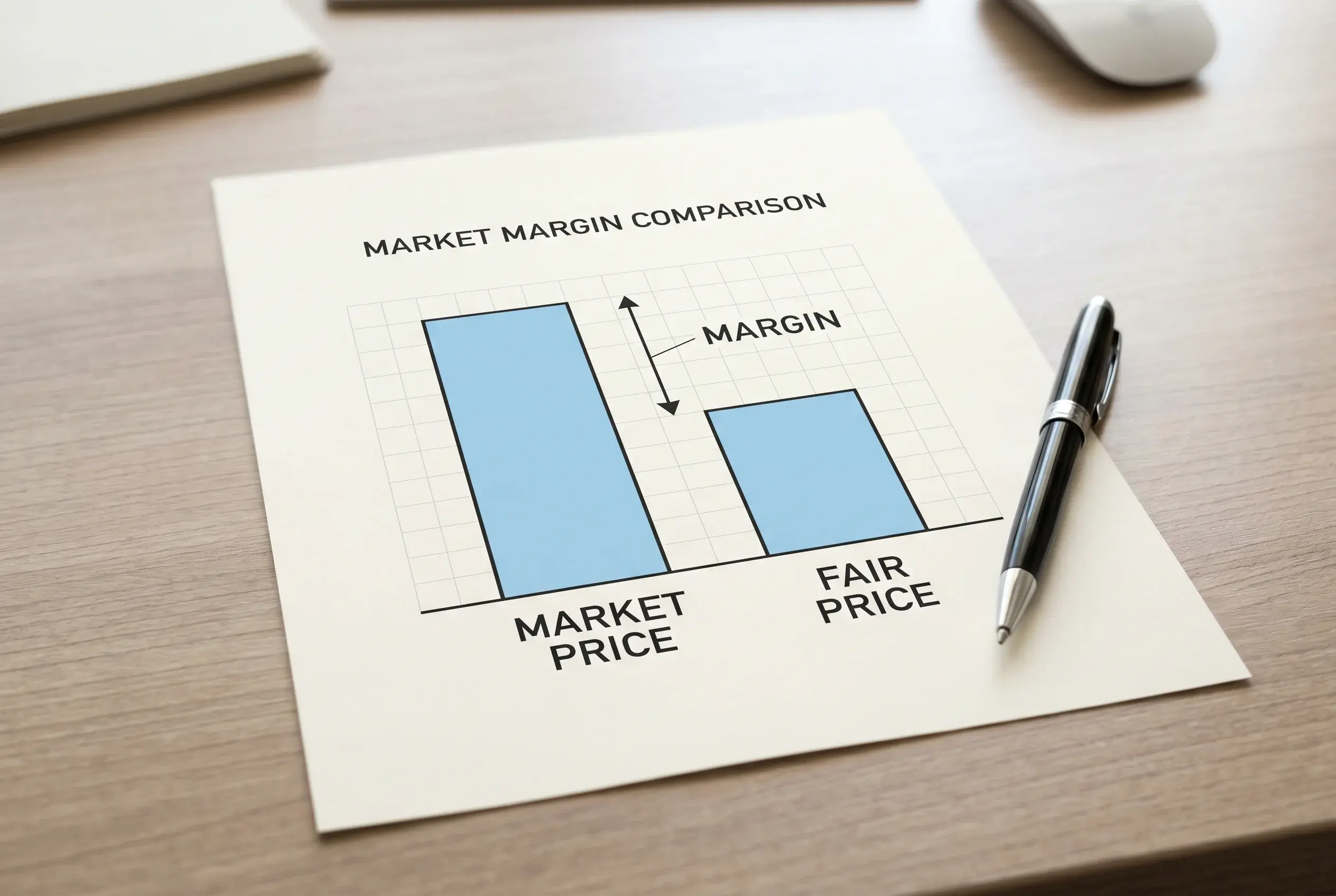
The appeal is that you’re trading a quantity – fight length – rather than predicting an outcome. You don’t need to know whether the favourite has the chin to absorb the underdog’s left hook. You need to know whether either fighter has the cardio and finishing instinct to end the bout before the clock hits a specific moment. It’s a cleaner question than “who wins” and the prices reflect that cleanliness – overrounds on total rounds markets tend to be tighter than on MoV.
The shape of a Total Rounds market
A three-round UFC fight has three round thresholds where over/under bets typically sit: Over/Under 1.5 rounds, Over/Under 2.5 rounds, and Over/Under 4.5 minutes within a specific round (a niche micro-market some books offer). The 2.5 line is the headline market because it sits at the natural midpoint of a three-round bout – the fight either gets past the halfway mark of Round 3 or it doesn’t.
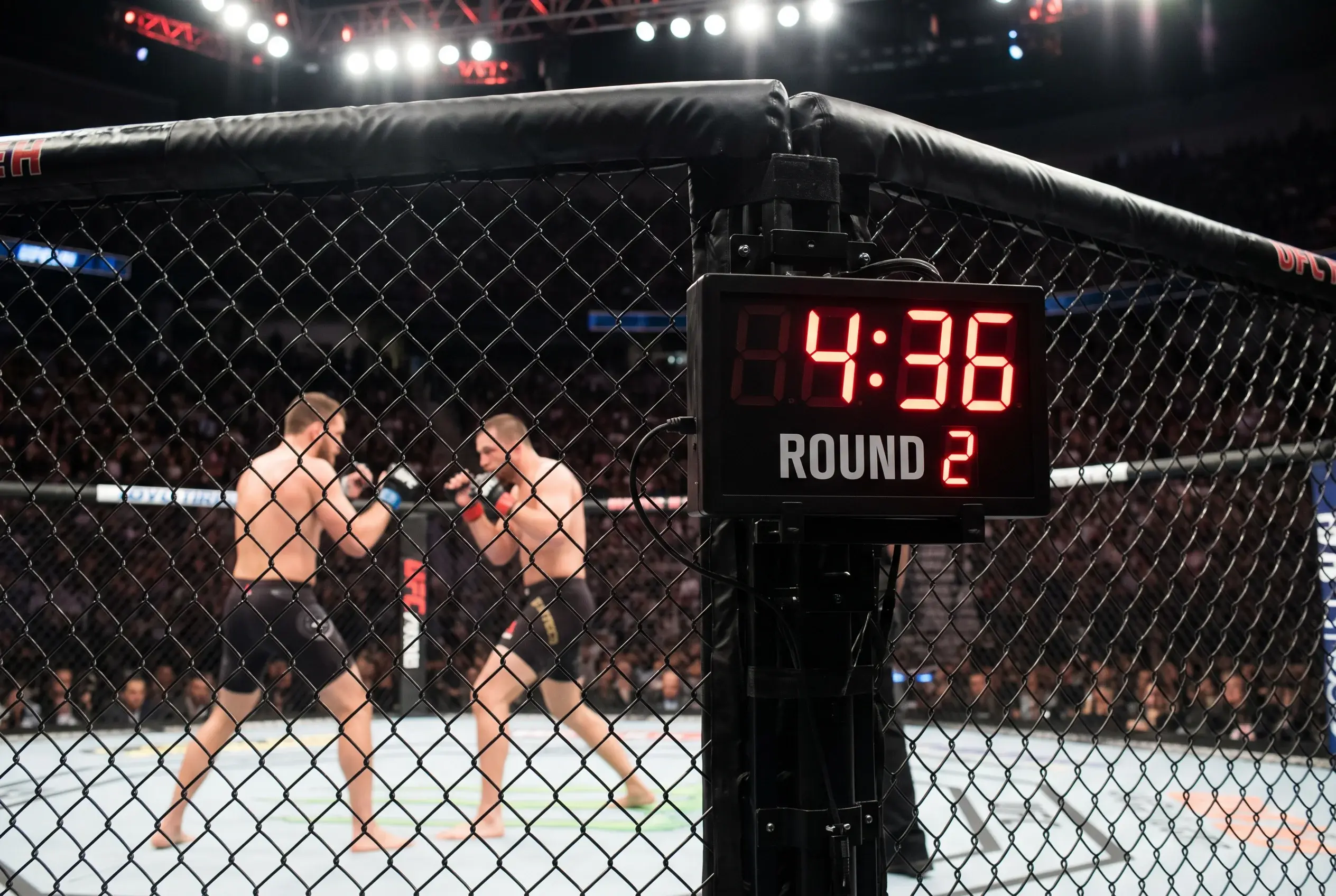
Over 2.5 rounds wins if the fight extends past 2 minutes 30 seconds of Round 3. Under 2.5 wins if the fight ends at or before 2:30 of Round 3, by any means – stoppage, decision is impossible at this stage so it doesn’t apply, or a between-rounds stoppage. The line is precise: a finish at 2:29 of Round 3 settles Under, a finish at 2:31 settles Over. Books grade strictly by the clock.
For five-round bouts the dominant lines are Over/Under 2.5 rounds (same midpoint logic as three-round Round 3, only at Round 5’s halfway mark this time it’s actually the bout’s middle) and Over/Under 4.5 rounds (the question of whether the fight reaches Round 5 at all). Some operators offer a 3.5 line too, but it’s less popular.
The market also includes round-band selections in many books: Fight Ends in Round 1, Rounds 1-2, Rounds 3+, Rounds 3-4, Rounds 5+. These overlap conceptually with round betting and with O/U, and the prices should be internally consistent across the three markets. They rarely are perfectly, which gives line-shoppers something to do.
Why the line gets set at half-round thresholds
The half-round system isn’t arbitrary. It exists to prevent the market from voiding when a fight ends exactly at a round boundary. If the line were set at “2 rounds” exactly, a finish at the 5:00 mark of Round 2 – which is technically the end of Round 2 and not the start of Round 3 – would create a grading nightmare. Half-rounds eliminate the boundary problem entirely.
The half-round logic also reflects how UFC fights actually unfold. The first half of a round is exploratory, with fighters establishing range and looking for openings. The second half is when commitment increases – fighters realise the round is closing and look for a finish or a clear winning moment for the judges. Setting the line at the midpoint of a round captures this rhythm: above the line you’re betting the fight survives a phase of urgency, below the line you’re betting that urgency produces a finish.
The exception is when a book offers exact-time variants like “Fight to last 6 minutes”. These markets are less common on UK sportsbooks but they do exist on some operators, primarily as bet-builder ingredients rather than standalone wagers. The thresholds in those cases are usually set at full-minute marks within a round – 5 minutes, 7 minutes 30 seconds, 10 minutes – and the same boundary logic applies.
What pushes the line down
The Total Rounds line moves like a stock price – it has fundamentals, but it also has momentum, and the books adjust both. Several factors push the line lower, meaning the book thinks the fight is more likely to end early.
First: known finishers. A bout featuring two fighters with high stoppage rates and short average fight times will have a short line by default. The Aspinall heavyweight pattern at 2 minutes 18 seconds average fight time is the textbook case – when he fights, the Total Rounds line sits low and the Under is shorter than the Over even before any matchup adjustments.
Second: weight class. Heavyweight fights produce more first-round finishes than any other division because the strikes are heavier and the chins are no more durable than at lighter classes. The line on a heavyweight main event will typically sit at Under 1.5 or Under 2.5 with Under as the favoured side. Light heavyweight and middleweight share this pattern in slightly less extreme form.
Third: matchup vulnerabilities. A fighter who’s been finished in their last two outings is statistically more likely to be finished again – the model recognises that durability is a brittle quality and trends downward once broken. The Total Rounds line will adjust accordingly even if the favourite isn’t a known knockout artist.
Fourth: short-notice replacements. A fighter stepping in with limited camp time is more likely to be finished, partly because they haven’t fully trained for the matchup and partly because the weight cut compresses everything (UFC athletes lose around 6.7% of total body mass in the 72 hours before weigh-in, and a short-notice fighter doing that on truncated preparation arrives compromised). The Total Rounds line drops for such matchups.
What pushes the line up
The flip side: factors that push the Total Rounds line higher, meaning the book expects a longer fight.
Decision-prone divisions. Flyweight and bantamweight produce a high proportion of decisions historically. Fighters at lower weight classes have less knockout power per strike, more rounds available to absorb damage without crumbling, and faster recovery between rounds. The Total Rounds line on a women’s strawweight or men’s bantamweight bout will typically sit at Over 2.5 even when one fighter is a moderate finisher.
Defensive-minded matchups. Two volume strikers tend to produce fast bouts; a striker against a wrestler often produces grindy ones. When the matchup favours top control and positional dominance over scrambles and stoppages, the line drifts upward. The Decision option becomes the most likely single outcome.
Veteran fighters. A 38-year-old former champion is statistically harder to finish than a 24-year-old prospect on identical power-rating numbers, because durability accumulates from years of taking hard shots and learning to absorb them. Books bake age-adjusted durability into Total Rounds pricing, and veteran-heavy matchups push the line higher.
Championship fights. Five-rounders skew the line upward mechanically – there’s more time available – and skew it upward additionally because elite fighters at the top of a division are harder to finish than mid-card fighters with similar styles. A five-round title fight Total Rounds line will sit considerably higher than the same matchup in a three-round non-title format would.
How the championship line shift actually works
Worth zooming in on the championship-fight shift because it’s where Total Rounds pricing gets misunderstood most often. Punters see a five-round bout and assume Over is the value side because there’s “more time available”. It’s only partly true.
Yes, the additional two rounds create additional finish opportunities. But championship fighters are also more durable, more strategically patient and more conditioned. The Round 4 and Round 5 finish rates in title fights are not the same as Round 1 and Round 2 finish rates extrapolated forward. Late finishes are rarer than they look on paper, and a high proportion of title fights either end early or go to a decision – the middle is hollow.
The practical effect: the Over 2.5 line in a five-round title fight isn’t dramatically different from the Over 2.5 in a three-round non-title fight between the same fighters. The extra rounds matter less than you’d intuit because the bout has different dynamics – fighters who get past the halfway point of a title fight tend to all the way to decision, not finish in the late rounds.
The Over 4.5 line – fight to extend into Round 5 – is where the championship structure creates its biggest pricing question. This line sits at probabilities around 35-45% on most title fights and the books price it tightly. If you have a read that the fight will be cagey and survive into Round 5, Over 4.5 is often a cleaner bet than Decision because it captures the same essential prediction without paying for the very final stoppage probability.
Reading a Total Rounds market in practice
A real-world workflow for evaluating a Total Rounds market on a UK sportsbook: look at the headline Over/Under 2.5 line first. Compare it to the by-Decision price in the Method of Victory market – these two markets should be internally consistent because Over 2.5 essentially means “the fight reaches halfway through Round 3”, which is correlated with going to decision but not identical.
If Over 2.5 is priced at 4/5 and the combined Decision MoV prices imply something materially different, the book has a pricing seam. Either the by-Decision prices are wrong or the Over 2.5 is. Sometimes the seam exists because one market is staler than the other; sometimes because the trader has a clearer view on duration than on outcome. Either way, the discrepancy is information.
Second check: line shopping. Total Rounds prices vary more between UK operators than Moneyline prices do, because the underlying model assumptions on fight length aren’t standardised the way win-probability models are. The same Over 2.5 might price at 4/5 on one book and 10/11 on another for identical fighters. Worth checking.
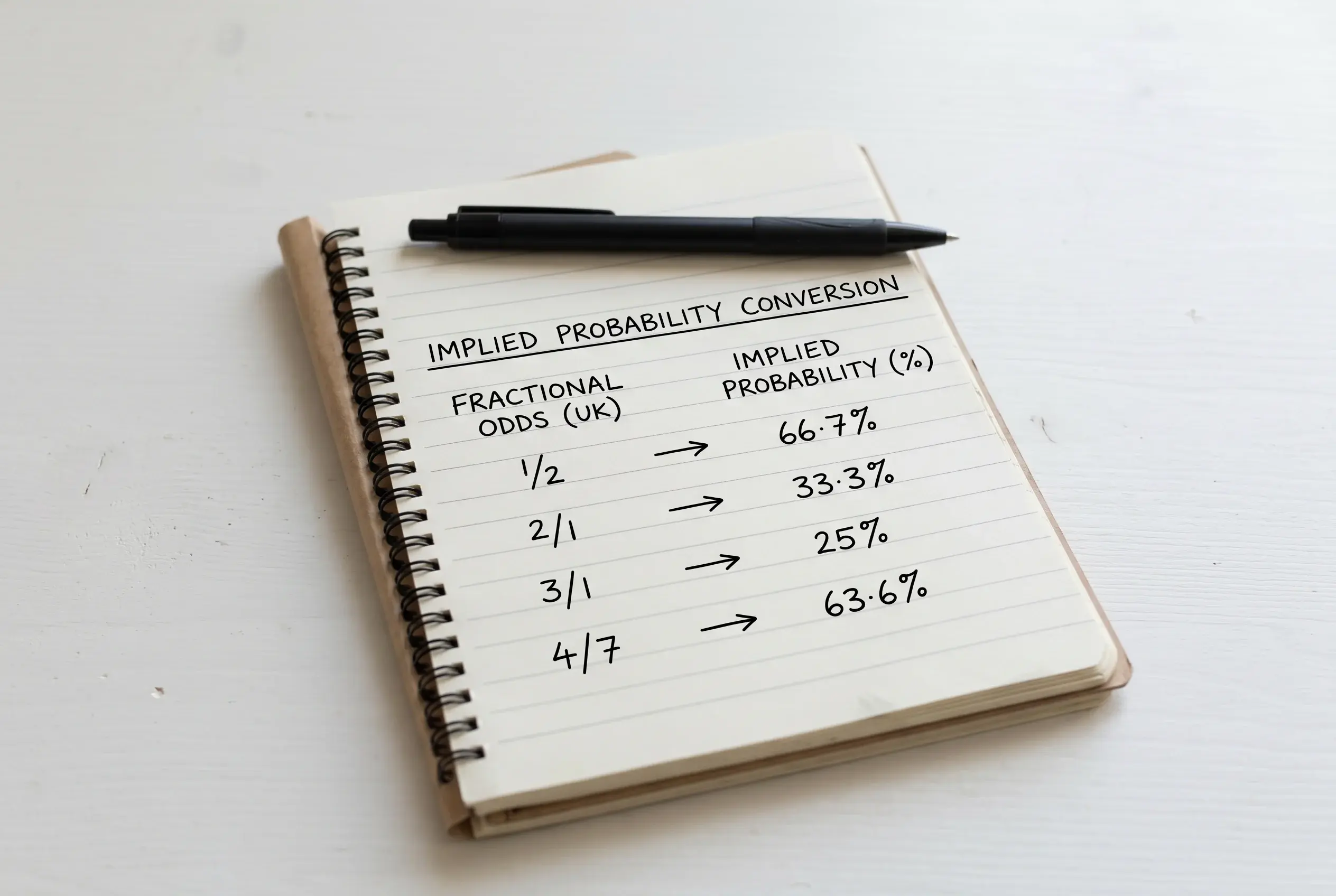
Third: don’t bet the line just because the price looks attractive. The temptation with Total Rounds is to chase the longer side – Over usually pays better than Under on grindy matchups because the casual money piles into early finishes. But “longer price” isn’t “better bet”. Convert to implied probability and compare to your own estimate before staking. If you find yourself consistently picking Over on Total Rounds, the simpler two-way version of the same idea is the Goes the Distance market, which strips out the round threshold and asks one binary question.