
UFC Judging Criteria and Scorecard Mathematics
I once bet a method of victory on a five-round main event. My fighter – clear favourite at the Moneyline – was dominating positionally. He had four takedowns through three rounds, significant control time, and was visibly the fresher fighter heading into round four. I’d bet him by submission. He didn’t submit anybody. He didn’t finish anybody. He ground out the rounds, won 49-46 on all three cards, and I lost my method bet despite my fighter winning the fight by exactly the route that should make method bettors comfortable.
That decision taught me something about UFC judging I’d been ignoring: scorecards reward what the judges value, not what the fighter delivers. The two are correlated but not identical, and the correlation is loose enough that decision-betting bettors have to read the criteria as carefully as they read the fighters. This piece is about what the UFC unified rules actually weight, how judges apply them in practice, and where the gap between the two creates betting value.
What the unified rules actually say
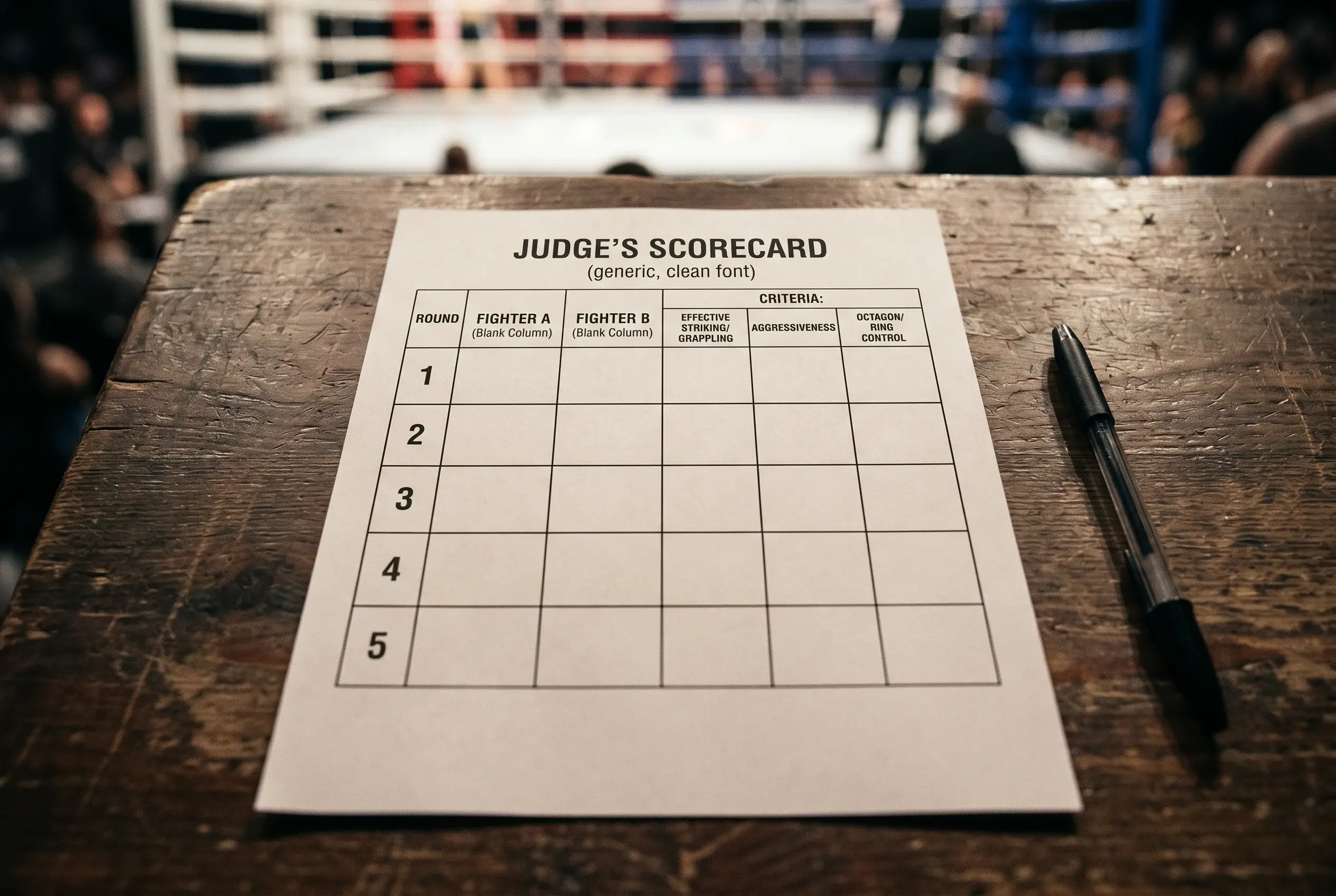
UFC judging follows the Unified Rules of Mixed Martial Arts, with rounds scored on the ten-point must system. The winning fighter of a round receives 10 points; the losing fighter receives 9 or fewer depending on the degree of dominance. The judging criteria, in stated priority order, are effective striking and grappling, effective aggressiveness, and fighting area control.
“Effective” is the qualifier that does most of the work. A round with one fighter throwing 80 strikes and landing 25, against another throwing 30 strikes and landing 20 with a knockdown, will typically be scored for the second fighter – the 20 effective landings, plus the knockdown, outweigh the 25 less-impactful landings. Volume isn’t the criterion; effectiveness is.
Effective grappling is rated by takedowns leading to immediate damage, submission attempts that genuinely threatened to finish the fight, and dominant positions with active offence from them. A takedown into a stalled position with no follow-up isn’t weighted as heavily as a takedown that immediately transitions into ground-and-pound that visibly damages the opponent.
Effective aggressiveness – the third criterion – is rarely the determining factor in modern UFC scoring. Aggression that doesn’t translate into effective offence isn’t scored. The criterion mostly matters in close rounds where the active fighter is favoured over the passive one, all else being roughly equal.
The gap between criteria and practice
Where decision betting gets complicated is that judges don’t apply the criteria uniformly. The same round of activity can be scored 10-9 by one judge and 10-9 the other way by another, depending on which elements of the criteria each judge weights most heavily. The split decisions that frustrate viewers are usually the result of legitimately different criteria-weighting, not of one judge being “wrong”.
Some judges weight control time heavily – a fighter holding top position for three minutes scores well even with minimal damage. Other judges weight damage delivery – the fighter who landed the harder shots wins even if they spent less time controlling position. The same round goes different ways depending on which judge is on the panel.
For bettors, this means knowing the panel matters. UFC commission scorecards are public after the fight, and tracking judges’ historical tendencies – control-time weighters versus damage weighters – gives genuine information about how a likely-decision fight will be scored. The panel is usually announced before the event, sometimes only a few hours before, but the information is available.
Round scoring patterns that bettors should internalise
A 10-9 round is the default. The vast majority of UFC rounds are scored 10-9 because the difference between the two fighters’ performance in the round, while observable, isn’t dominant. 10-9 rounds add up cumulatively across a three or five-round fight, and a 29-28 or 48-47 final score is the result of slight edges across multiple rounds.
A 10-8 round requires “dominance” by the criteria. The 2017 Unified Rules update clarified that 10-8 rounds should be scored when one fighter wins decisively – either by inflicting significant damage, by complete positional control with active offence, or by being substantially more effective across the entire round. The clarification was supposed to make 10-8 rounds more common, but in practice judges still award them sparingly.
The implication for round-by-round betting is that a fighter expected to dominate isn’t automatically expected to win 10-8 rounds. Even dominant performances typically generate 10-9 scores unless the dominance crosses a threshold most judges agree on. Betting “Fighter A to win every round 10-8 across five rounds” is a long-shot proposition almost regardless of how lopsided the matchup looks pre-fight.
The 10-7 round is rarer still – reserved for performances where one fighter is essentially fighting alone, with no offence from the losing fighter and total damage delivery from the winning fighter. The score effectively signals “this round should have been stopped”. A round that ends with the corner considering a stoppage between rounds is the kind of round that scores 10-7.
The decision betting markets and where the value sits
“Fight goes the distance” is the cleanest decision-betting market. The implied probability of a five-round main event going to the cards is typically 50-60% in modern UFC scheduling; for three-round prelims and undercard bouts, the distance rate is lower but still material. The market is well-priced at major UK operators because the underlying probability is reasonably stable across recent UFC seasons.
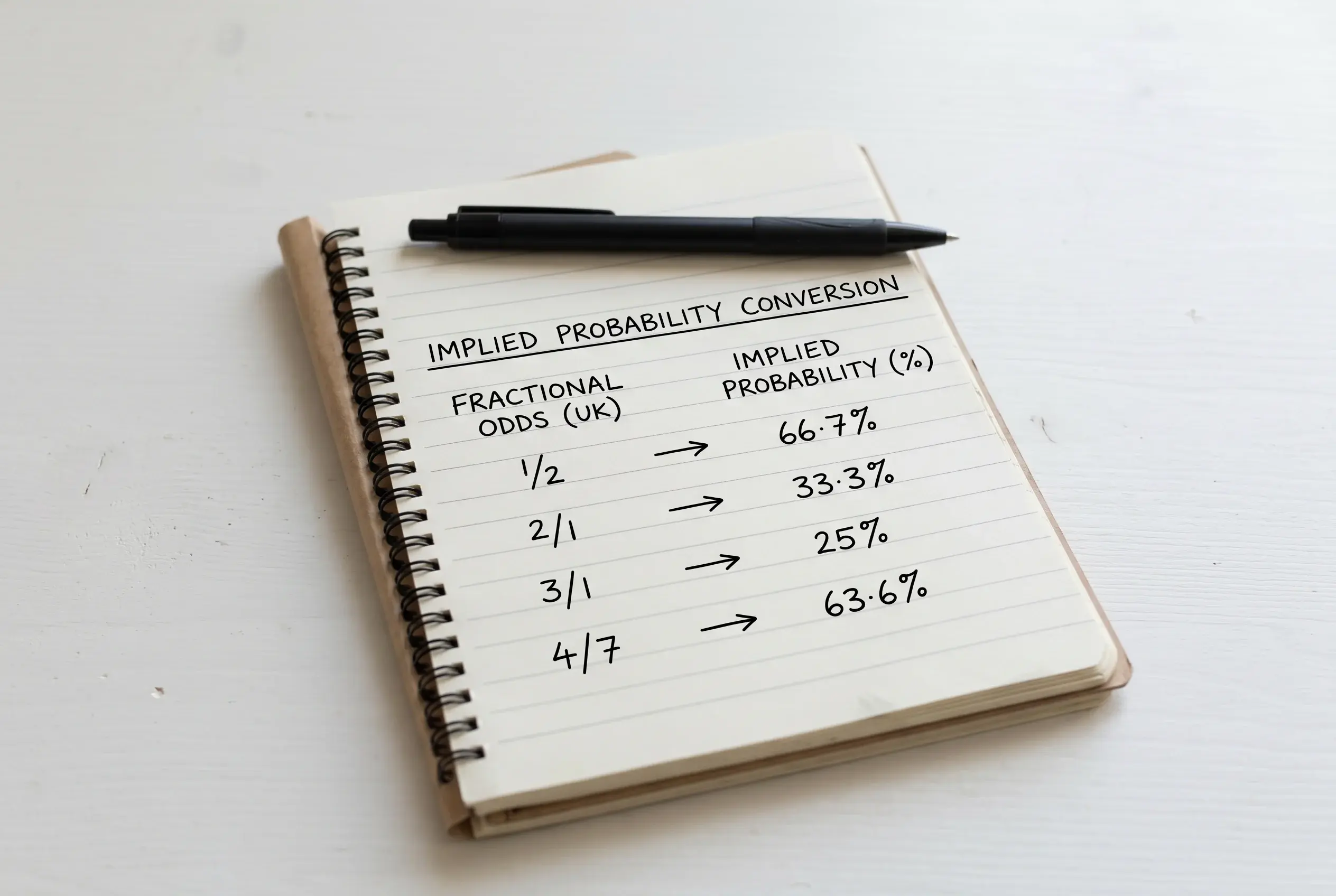
“Method of victory by decision” is the more nuanced market. Decision wins are usually priced at 2/1 to 5/2 for the favourite when the matchup style suggests a decision outcome is likely, and longer prices for the underdog because underdog decisions are statistically rare. UFC favourites win 68.12% of fights historically, but the breakdown by method shows favourites are more likely to finish than underdogs are – favourite-by-decision is a meaningful slice of the win distribution but smaller than favourite-by-finish.
“Win by split decision” or “Win by unanimous decision” are sub-markets some UK operators offer. The split-decision market is the more interesting one for sharp bettors because split decisions correlate with specific fight types – close, competitive, often featuring one fighter with a clear judge-friendly profile (control time, positional dominance) and one fighter with a damage-heavier profile. Bettors who read judging tendencies can sometimes find value when a specific panel composition is likely to produce a split.
The fights most likely to go to decision
Some matchup patterns are strongly correlated with decision outcomes. Two technical strikers with comparable power and good defensive striking tend to produce close-range exchanges that don’t finish – both fighters can hurt each other but neither has the structural advantage to put away the other within 15 or 25 minutes.
Wrestler versus wrestler matchups also trend toward decisions. The neutralising effect of two fighters with strong wrestling produces extended grappling exchanges where neither dominates positionally, scrambles end in standups, and the fight grinds across rounds without a clear finishing window.
The matchups that don’t go the distance – the ones that should never be bet as “fight to go the distance” – are heavyweight fights generally and high-finish-rate strikers against opponents with documented chin issues. Heavyweight fights end inside the distance more often than they go the distance, sometimes dramatically so. Tom Aspinall’s average fight time of 2:18 isn’t an outlier in heavyweight terms; it’s the upper end of a general pattern where heavyweight bouts resolve quickly through finishing power that lighter weight classes can’t match.
The judging tendencies that move betting markets
UFC commission scorecards reveal individual judge patterns over time. Some judges score 90%+ of their rounds 10-9 with rare 10-8s; others award 10-8s more frequently for dominant rounds. Some judges weight grappling control heavily; others discount control time without active offence.
The well-known cases are tracked by sharp bettors and incorporated into pre-fight reads. The reads sometimes affect betting on close fights where the panel composition is known and the matchup style favours one fighter’s profile under one judging style and the other fighter’s under a different style.
The information edge is modest but real. Operator pricing models incorporate judge identity, but the weighting is often crude – the model knows judge X tends to score for the aggressor, but doesn’t always know which fighter qualifies as the aggressor in this specific matchup.
The controversial decisions and what they teach
The UFC has produced a long catalogue of controversial decisions. Some are scoring errors that the commissions have acknowledged after the fact. More are legitimate criterion-weighting disagreements where the same round produced different scores across judges who were applying the rules in good faith.
The pattern across controversial decisions is that they cluster in specific fight types: close decision fights, fights with a clear control-time fighter versus a clear damage fighter, and fights with significant late-fight momentum shifts. Bettors who recognise these patterns can sometimes anticipate where decisions are likely to go in unexpected directions, and either avoid betting unsafe propositions or specifically bet the underdog-by-decision angle when the pattern aligns.
The lesson is that “the better fighter usually wins” is approximately true at the Moneyline level but breaks down at the decision-method level. A fighter who genuinely outperforms across 25 minutes can still lose on the scorecards if the outperformance is in the wrong currency for the judges on duty. Reading the criteria and the panel is part of decision betting, not optional context.
What I look for before betting a decision
The pre-fight checklist starts with the matchup style. Does the fight look like one that’s likely to go the distance based on the fighters’ patterns? If yes, the decision-method bet has a starting point. If no, decision betting is poor value regardless of any other factor.
The second check is the criterion alignment. Does the favoured fighter score well on the criteria judges typically weight – effective striking and grappling, with damage delivery and positional dominance both factoring? Or does the favoured fighter rely on aspects judges weight less heavily – volume without effectiveness, aggression without translation?
The third check is the panel, when the panel information is available. Are the judges likely to favour the favoured fighter’s profile, or the opponent’s profile? The answer can shift a decision bet from value-positive to value-negative without changing anything about the fighters themselves.
The fourth check is the operator pricing. Does the decision-method price reflect the realistic probability based on the first three checks, or is the price drifting based on more superficial considerations? The pricing gap is the bet. The four checks together usually narrow my decision bets to a handful per month – and that selectivity is what makes them work. The judging context extends naturally into how undercard pace and stakes differ from the main event – prelim versus main card betting in the UFC brings out judging behaviours the headlines don’t reveal.