
Sportsbook Void Policies on Fight Week Withdrawals
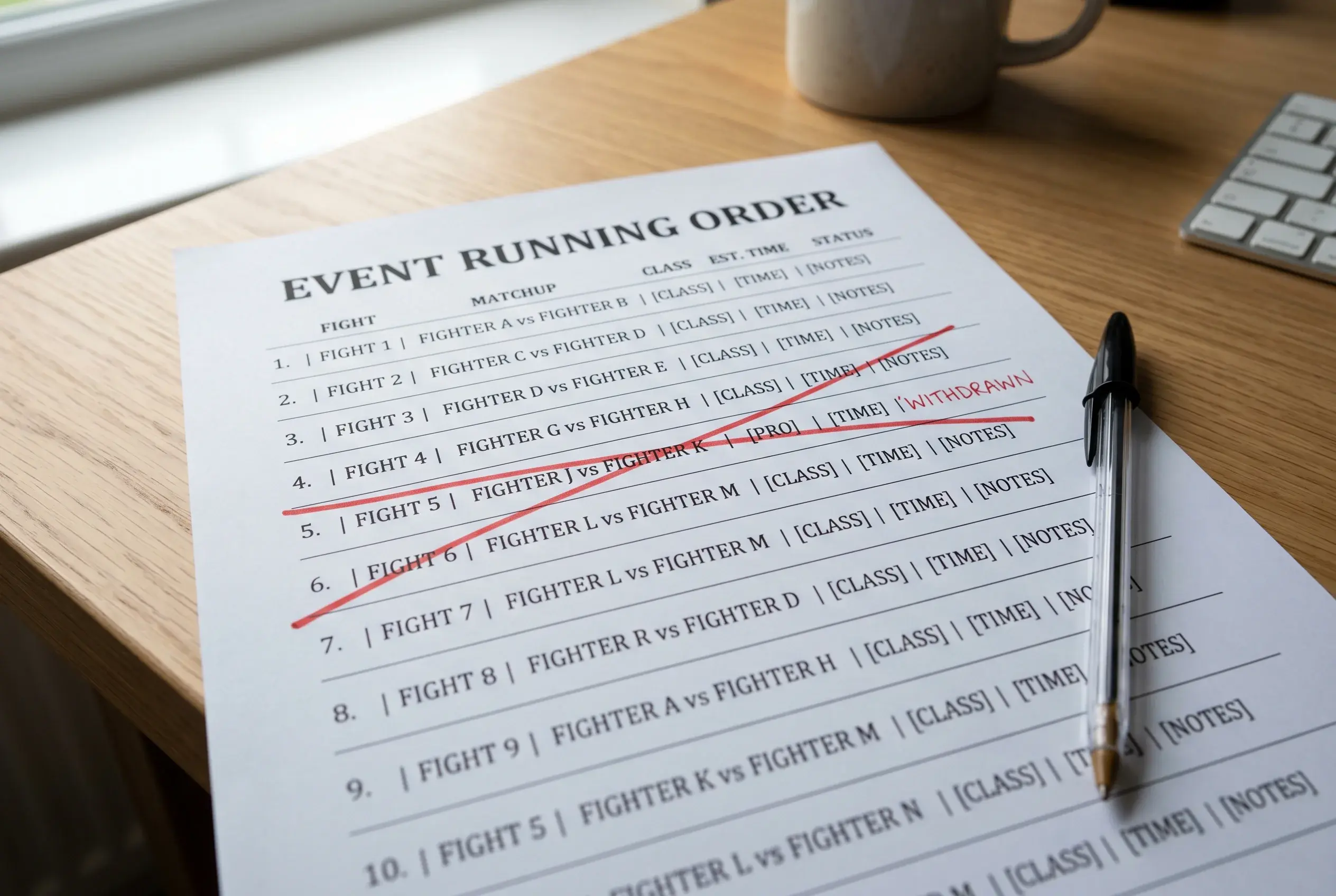
If you’ve bet on UFC for more than a year, you’ve had the experience. It’s Tuesday or Wednesday before a Saturday card. You’re scrolling through MMA news. A scheduled bout gets pulled – someone’s hurt their hand in training, has a viral infection, failed a medical, ran into some immigration trouble. The bout you’d staked on three days ago is gone, possibly replaced, possibly cancelled outright. Now what?
The good news for UK bettors is that the grading framework for these situations is standardised enough across operators that you mostly know what happens before you check. Withdrawal-related voids account for a meaningful share of UFC bet settlements every year, and the UKGC framework requires operators to apply consistent rules disclosed in their terms. The annoying news is that the consistency is partial – different operators handle some edge cases differently, particularly around accumulator legs and prop markets, and the timing of when a withdrawal happens affects how the bet settles.
This piece walks through the grading rules that apply when a UFC fighter withdraws, how the different timing windows produce different outcomes, what happens to multi-leg slips when one leg falls apart, and the small print that occasionally surprises bettors. The headline message is reassuring: most withdrawal scenarios result in stake returns rather than losses, and the UKGC consumer-protection framework backs that up. But understanding the variations matters if you’re betting volume.
The basic principle: voids over decisions
The foundational principle UK sportsbooks apply to UFC bouts that don’t happen as scheduled is to void the bet and return the stake. The bookmaker can’t grade an outcome that didn’t take place, and the consumer-protection default under UKGC standards is that bettors should not lose money on events that didn’t run. The void-and-return rule applies to virtually all withdrawal scenarios where the bout doesn’t reach the cage in some form.
The principle holds regardless of when the withdrawal happens. A fighter withdrawing six days before the bout, three days before, or on fight night itself all produce the same default: void and refund. The bet didn’t have an outcome the book could grade, so the wager is treated as if it never happened.
The reasoning is straightforward when you think about it. Sportsbooks make money on margin built into pricing, not on consumer losses to administrative events. Voiding a bet because a fighter withdrew costs the book the margin it would have earned but doesn’t expose the bettor to a loss they had no way to anticipate. The framework is essentially insurance against the bettor’s commitment becoming worthless through no fault of their own.
The exceptions to this default are narrow and worth knowing about. The bout being replaced rather than cancelled is one. The withdrawal happening after the bout has technically started (the bell has rung) is another. Accumulator legs with specific dead-heat handling rules is a third. Outright and futures markets where the affected fighter is one of many is a fourth. Each has its own treatment.
The replacement-fight grading and where it splits across operators
When a fighter withdraws and the UFC signs a replacement, the bout still happens – just with a different participant. The grading question becomes: does your bet on the original matchup stand on the new matchup, or does it void?
Most UK operators void all original wagers when the matchup changes materially. The reasoning is that you bet on a specific contest between two specific fighters; one of those fighters is no longer involved, so the original wager terms aren’t being honoured. The book voids the bet, returns the stake, and offers the chance to wager on the new matchup at fresh prices.
A minority of operators grade bets through if the original fighter you backed is still in the bout. Their argument is that you backed a specific fighter to win, and that fighter is still competing; the change in opponent is incidental to your wager. This treatment is rare on UK books and tends to apply only to Moneyline bets, not to Method of Victory or round-betting markets where the new opponent’s style could legitimately affect the wager’s chances.
The practical implication is that you should read your operator’s specific terms before assuming a replacement-fight bet has voided. Most have, but check rather than assume. The default UK treatment is void; the exception is operator-specific grade-through, which appears only on certain markets and certain operators.
The other edge case is when a replacement fighter is announced and then themselves withdraws, leading to a second replacement or the fight being cancelled entirely. Every iteration of the bout that doesn’t happen typically voids – UK books don’t grade through multiple replacements in sequence.
The accumulator and bet-builder problem
The trickiest withdrawal scenarios involve accumulator and bet-builder slips where the UFC fight is one of several legs. The question is: what happens to the rest of the slip when the affected leg voids?
The standard UK treatment for accumulators is that the affected leg is voided and the accumulator’s odds are recalculated based on the remaining legs. If you’d built a six-leg accumulator and one leg becomes a void, the bet is restated as a five-leg accumulator at the multiplied odds of the remaining selections, and the rest of the slip stands as normal. The bet doesn’t fail wholesale because of the void; it just shrinks.
Bet builders within a single fight are handled differently. Most operators treat a same-fight bet builder as a single bet rather than an accumulator of legs, which means a fight that gets withdrawn voids the entire bet builder and the stake is returned in full. This is more bettor-friendly than the accumulator treatment because all components of the builder were tied to one bout that didn’t happen.
The exception is multi-fight bet builders, which some operators offer. These combine legs from different bouts into a single bet. The treatment varies by operator – some grade these like accumulators (void the affected leg, recalculate), others like single-fight bet builders (void the entire bet). Reading the operator’s specific terms before placing multi-fight builders matters.
The accumulator situation that catches out bettors most often is the “all UFC main-card winners” multiple. If one of the main-card bouts gets cancelled before fight night, that leg voids and the accumulator becomes a smaller multiple at reduced odds. If the same bout’s replacement fighter then loses (or wins, depending on which side you’d backed), the rest of your accumulator graded normally even though the headline fight you’d built around is no longer the bet you placed.
The timing windows that affect grading
When a withdrawal happens affects how the grading plays out, particularly for bouts that have started in some technical sense but not progressed normally.
Withdrawals before the bell rings – the standard case, where a fighter pulls out anytime between the bout being scheduled and the moment the bout is supposed to begin – produce the default void treatment. The fight didn’t happen; the bet voids. This covers withdrawals during fight week, on fight day, and even minutes before walkouts if the withdrawal is announced before the fighters enter the cage.
Withdrawals after walkouts but before the bell are rare but do happen – a fighter suffering an injury during the walkout or in the cage before the start of the first round. UK books treat these the same as pre-walkout withdrawals: void the bet and return the stake. The bout hasn’t started in a meaningful sense, so there’s no result to grade.
Stoppages after the bell has rung but before any meaningful action – say, a fighter aggravating an injury within seconds of the bout starting – are graded differently. Once the bell has rung, the bout has technically begun, and the grading depends on the official commission ruling. If the fighter who can’t continue is ruled the loser by TKO (because their corner pulled them or they couldn’t continue), the bet on the other fighter wins by TKO. If the cause is an in-bout injury that wasn’t caused by the opponent, the commission may rule the bout a No Contest, in which case the bet voids per the No Contest rules.
The line between “before the bell” and “after the bell” is therefore the critical timing threshold. Most withdrawal voids happen before the bell. After the bell, the situation becomes an in-bout outcome that grades according to the official commission result.
Title-specific and futures-market grading
Outright and futures markets where the withdrawn fighter is one of many entrants get their own treatment, because the bet wasn’t tied to a single bout that can simply be voided.
Outright “to win the upcoming title” markets where a contender withdraws from a scheduled title fight typically continue to run – the fighter is still nominally a contender for the eventual title, just not via this specific fight. Your wager doesn’t void; it simply has a different path to settlement now. The exception is when the futures market is specific to a particular contest. “Fighter A to be crowned champion at UFC 305” is tied to one event and voids if Fighter A doesn’t fight at that event. “Fighter A to be champion at year-end” isn’t tied to a specific event and continues until resolved.
Title-retention markets where the champion withdraws (failing to defend within a contracted timeframe) produce voids on UK books in most cases. The market was framed around a specific defence, and the defence didn’t happen.
What happens when the bout is rescheduled rather than cancelled
Sometimes the UFC reschedules a bout to a later card rather than replacing or cancelling. This happens when the withdrawal is for a relatively minor reason, both fighters are still willing, and the calendar has space.
UK books generally void bets on the original date when a bout is rescheduled. The wager was tied to a specific event on a specific date; that event isn’t running, so the bet voids and the stake returns. If you want to bet on the same matchup at the new date, you can place a fresh wager at the prevailing prices on the rescheduled bout.
The exception applies to a small number of operators who offer “bet to stand if rescheduled” rules on certain markets. These operators carry bets through to the new date if the matchup remains identical and the rescheduling is announced within a reasonable window. The treatment is rare and operator-specific, and the relevant terms are usually buried in the sport-specific section of the rules.
Bettors who’d locked in a particularly good price on the original date sometimes prefer the grade-through treatment, because the wager travels to the new bout at the original price. Bettors who’d reconsidered the bet sometimes prefer the void treatment, because the stake comes back free for redeployment. The choice isn’t usually yours – the operator’s rules apply automatically – but it’s worth knowing what your operator does before placing bets at long lead times. A separate category of grading complication arises when the bout reaches the cage and starts, but ends in a ruling that isn’t a clean win for either fighter – those scenarios fall under how UFC sportsbooks settle No Contests and Draws, which has its own set of rules worth understanding.