

Championship Belt Impact on UFC Betting Prices
The first time I bet a UFC title fight I lost money on a Moneyline I would have won at 70p in the pound on any other Saturday. The favourite I’d backed was a 1/3 chalk in his three-round bouts. The same fighter, in a five-round championship fight against the same general standard of opposition, drifted out to 8/15. I didn’t think about why the price moved. I just thought it was free money compared to the shorter prices I usually saw on him. Then he lost a split decision in Round 5 against a man who’d lost twice in a row coming in. Welcome to championship-fight betting.
Title fights are their own animal in UFC. The format shifts to five rounds. The fighters at the top of a division aren’t the same kind of fighters as those further down. The pace is different, the durability is different, the in-fight strategy is different, and the way bookmakers price the markets reflects all of that. A bettor who hasn’t internalised the differences ends up paying a tax for assuming a title fight is just a longer version of a normal one.
This piece walks through how championship-fight pricing actually works on UK sportsbooks – Moneyline, method of victory, round and totals markets – and where the structural distortions create both traps and opportunities. The headline observation is that title fights are softer markets than the trader output sometimes suggests, because the population of past title fights is small and the variance within it is large. That softness cuts both ways.
The five-round format and what it changes about Moneyline pricing
The most basic structural change in a championship fight is that the bout is scheduled for five rounds rather than three. That’s not a small adjustment – it’s 67% more fight time, with a meaningfully different rhythm of pace, recovery, and risk. The Moneyline price reflects it in ways that aren’t always intuitive.
Favourites in five-round fights win at slightly lower rates than equivalent favourites in three-round fights. The reasoning is that more time creates more opportunities for the underdog to land a decisive blow or to recover from being dominated in the early rounds. The 2024 UFC favourite win rate was 72% across all bouts, but that headline number masks a divisional and format-related spread. Five-round title fights see favourites win at rates closer to 65-68% historically, depending on the era you sample.
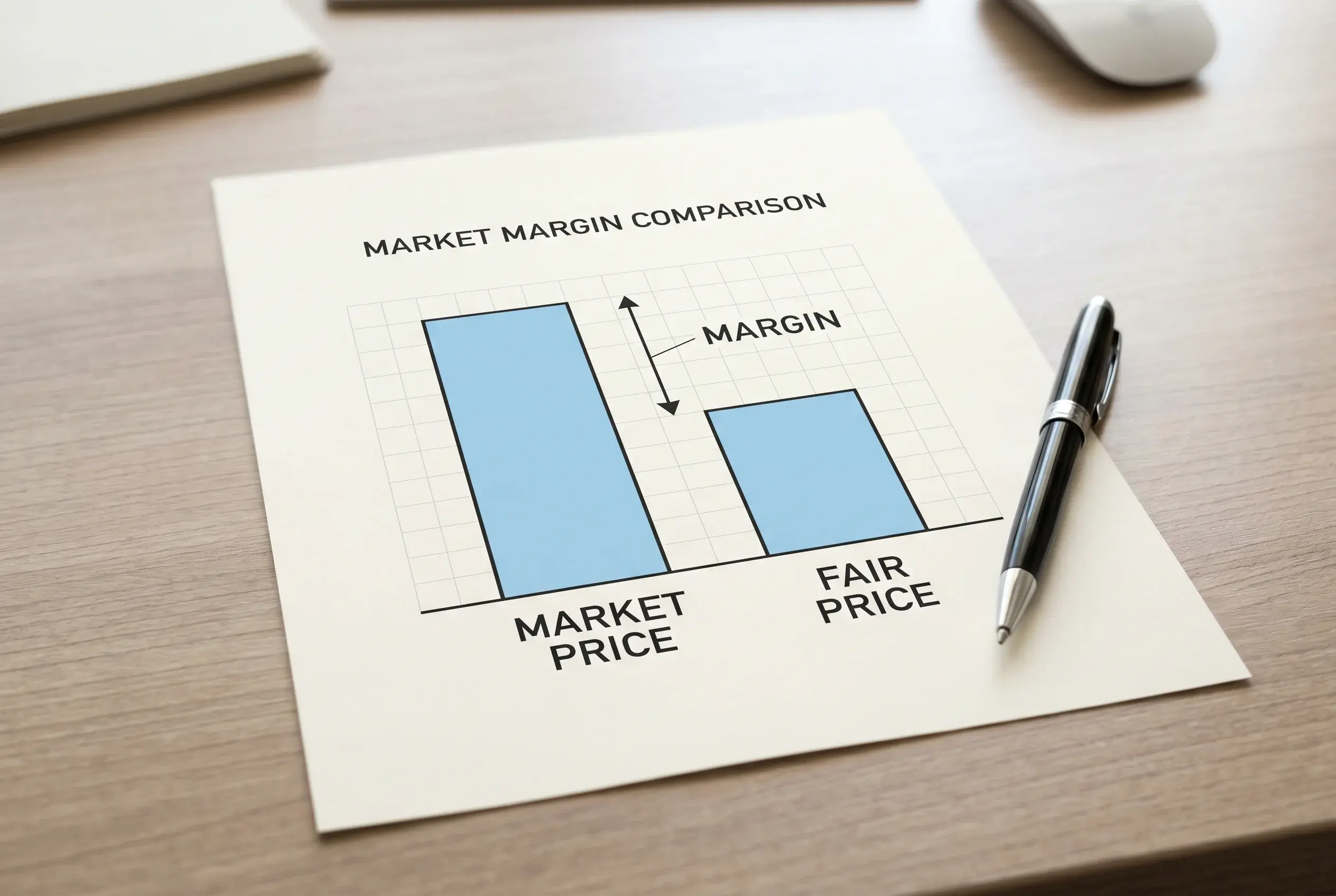
That gap doesn’t fully feed into the prices on UK books. Trading desks make some adjustment for the format, but the adjustment tends to be conservative – partly because the sample size of historical title fights at a given matchup type is small, partly because public money tends to pile onto favourites at title fights regardless of price. The result is that favourite Moneyline prices at title fights are often a few percentage points shorter than the fair-probability estimate would justify, and underdog Moneyline prices are correspondingly a few points longer.
The practical implication: title-fight underdogs at competitive prices are generally a more bettable category than equivalent underdogs in non-title bouts. Not by huge margins, but consistently. The bettors I know who run positive on UFC over multi-year timeframes tend to be net buyers of title-fight underdogs and net sellers of title-fight favourites at the same prices they’d happily back in three-round contexts.
Method of victory in title fights: where the pricing assumptions break
Method of Victory pricing in title fights deserves separate attention because the assumptions trading desks bring to MoV from three-round fights don’t fully transfer. The two key shifts: title fighters are harder to finish than the trader’s general model accounts for, and the distribution of finishes within the longer bout is non-linear.
The first point is durability. Champions and contenders at the top of a UFC division have, almost by definition, been hit harder by more skilled opponents than rank-and-file fighters and survived. They’ve absorbed damage in tough fights and come out the other side. That makes their chins, their composure under fire, and their recovery between rounds materially better than the divisional average. KO/TKO prices on title fighters often look longer than their finishing record would imply, but they’re priced correctly because the opponent they face is also better at not getting finished.
The second point is finish distribution across the longer fight. In a five-round bout, finishes don’t spread evenly across the rounds. They cluster early (Round 1 and Round 2 see most of them, often from the favourite blitzing before the bout settles) or late (Round 5 sees more finishes than Round 4 because of cardio breakdowns and urgency). Rounds 3 and 4 are the hollow middle – competitive but rarely finish-producing rounds in title-level matchups.
This matters for round betting on title fights because Round 4 prices in particular often look like value (long prices, theoretically meaningful probability) but historically underperform. The “this fight ends in Round 4” outcome is rarer than its price implies. Most title fights either get finished in the first three rounds or extend to a decision; the middle-late rounds produce fewer finishes than naive extrapolation suggests.
Total rounds and goes the distance: the championship distortion
Total rounds markets in title fights are where the most predictable pricing distortions live, and where line shoppers can find genuine value if they pay attention.
The headline market is Over/Under 2.5 rounds – does the fight extend past the halfway mark of Round 3? In a three-round bout this is the natural midpoint question. In a five-round title fight, 2.5 rounds is only 30% of the way through the bout, which makes Over 2.5 a much shorter bet than in non-title formats. Trader models adjust for this, but the adjustment is sometimes incomplete on cards where the trading desk hasn’t given the title fight its full attention. The Over 2.5 in a five-round title fight should sit at probabilities near 75-85% on most matchups; if you see it priced shorter than 1/3, the value is on Over.
The market that’s specific to five-rounders is Over/Under 4.5 – does the bout reach Round 5? This is the cleaner expression of title-fight duration prediction. Over 4.5 historically lands on 35-45% of title fights depending on the matchup type, and the price typically sits between 8/5 and 9/4. For bettors who think a title fight will be cagey and survive into the championship rounds, Over 4.5 is more efficient than Goes the Distance because it captures the duration view without paying for the further extension to the final bell.
Goes the Distance Yes in title fights also has its own dynamics. Five-round title fights actually produce decisions at higher rates than three-round bouts in the lighter divisions, partly because the fighters are more durable and partly because the strategic incentive shifts – winning two rounds clean and surviving three is a viable championship strategy in ways that don’t translate to three-round contexts. Flyweight title fights in particular often reach the cards: flyweight favourites have built a 30-8-1 record since 2020 (77% win rate) and a disproportionate share of those wins came on the scorecards.
The traps come on heavyweight and light heavyweight title fights, where the variance is so high that the trader’s averages don’t apply. A heavyweight title fight can end in 67 seconds or extend to the final round; the in-between is rare. Total-rounds pricing on these bouts is noisier than the displayed line suggests, and line shopping pays for itself almost every card.
Interim titles, unified titles, and what they mean for grading
UFC has multiple categories of title fight, and the difference matters for some markets. The standard is an undisputed title fight – the recognised champion of the division defends against a top-ranked challenger. Then there are interim title fights, where a champion is unavailable (injury, suspension, contract dispute) and the UFC creates an interim belt to keep the division active. Then there are unification bouts where an interim champion fights the returning undisputed champion to consolidate the belts.
For Moneyline and MoV betting, the title category doesn’t affect the wager – a winner is a winner regardless of which belt was contested. The format is always five rounds. The Method of Victory grading is the same.
Where it matters is in title-specific prop markets. UK books sometimes offer markets like “Fighter A to win and retain the title” or “Fighter A to win and become champion”. These resolve based on the official title status after the bout. An interim champion winning unification becomes the undisputed champion; bets on “Fighter A to become undisputed champion” settle Yes. An interim champion losing unification gives up the interim belt; bets on “Fighter A to retain interim title” settle No.
The edge cases concern stripped titles. If a champion misses weight, they’re typically stripped of the title before the fight begins, which means only the challenger can win the belt. UK books usually adjust these markets in advance and announce the change, but punters who don’t follow weigh-in news closely can end up holding bets that have been silently re-graded. Always check the bout’s official title status on the morning of the fight if you’ve bet a title-specific prop.
Why title fights are the softest markets on a UFC card
The final structural observation: title fights at major UFC events draw more public money than any other bout on the card, by a wide margin. Casual punters who place one UFC bet per quarter often place it on the championship fight. That recreational money skews the market toward the popular fighter, the name-recognition fighter, the storyline fighter – regardless of underlying probability.
Trading desks know this and lean into it slightly. They’ll price the popular favourite a fraction short of fair, knowing that the public money will absorb the imbalance. They’ll price the contrarian underdog a fraction long, hoping to balance the book without losing sharper money. The result is title-fight pricing that has more positional bias than non-title pricing – and more opportunity for bettors who’ll back the unpopular side of a competitive matchup.
The principle is most reliable on the second tier of title fights – interim championships, vacant title bouts, lighter-division belts that don’t generate the same fan engagement as the heavyweight or welterweight championship. These markets see less retail volume relative to liquidity, so the trader’s positional adjustments are smaller, but the genuine value gaps are also smaller. Heavyweight title fights at flagship PPV events are the polar opposite: maximum retail volume, maximum positional bias, maximum value opportunity for contrarian bettors with strong reads.
None of this means title fight underdogs are automatic bets. The biggest underdog winner in UFC history, Shana Dobson, hit at +950 American (a 9.5% implied probability) in 2020 – these things happen, but they’re rare. The reasoning is structural: the public money imbalances create marginal pricing distortion, not free money. The bettors who profit on title-fight underdogs do so by waiting for matchups where the underdog has a specific stylistic angle the public is undervaluing, not by backing every underdog blind.
The next category worth thinking about, particularly for bettors looking for systematic edges in unusual matchups, is when a fighter is making their UFC debut against an established opponent. The line-setting dynamics there are surprisingly similar to title fights in some respects, and the value structure rewards the same kind of contrarian approach. Betting on UFC debutants covers how books price unknown fighters and where the systematic mispricing tends to live.