

Late Replacement Dynamics and Short-Notice Odds Shifts
Short-notice replacements are the bet I’m most cautious with and most interested in at the same time. The cautious half is obvious – a fighter stepping in with two weeks of notice, or in extreme cases two days, is competing under a different set of conditions than the bout was originally scheduled for. The interested half is that books often misprice the change. The original line had a specific shape because of the original matchup. The replacement creates a new matchup that wasn’t sitting on the trading desk’s main spreadsheet, and the trader has to build a new price under time pressure, with thin information.
The result is a window. For maybe 24-48 hours after the replacement is announced, the line sits in a state where some bettors with strong reads on the new fighter can find prices that don’t reflect the actual probabilities. Then sharp money tightens things up, public money piles in, and the value evaporates. Bettors who pay attention during fight week sometimes catch these windows.
This piece is about how short-notice replacement fights actually work – the categories of replacement, what the trader is doing under pressure, where the systematic mispricings live, and the structural disadvantages that genuinely do hurt the short-notice fighter regardless of price. Understanding these factors is the difference between treating replacement bets as long-shot lottery tickets and treating them as identifiable value opportunities.
The categories of short-notice replacement and why they matter
Not every replacement fight is the same. The label “short notice” covers a wide range of preparation gaps, and the betting implications vary by category.
The first category is the late-week replacement, signed within 7-10 days of the bout. The replacement fighter has been informed early enough to do a basic camp, refine some matchup-specific game-planning, and complete a controlled weight cut. They’re disadvantaged versus a fighter who had a full eight-week camp, but the gap is manageable. Bettors should treat this category as similar to a fighter coming off a short layoff or returning from minor injury.
The second category is the 72-hour replacement, signed within three days of the bout. This is where the structural disadvantages get severe. The fighter hasn’t been training specifically for this opponent. The weight cut is compressed – UFC athletes typically lose around 6.7% of total body mass in the 72 hours before weigh-in, which is hard enough with proper preparation and brutal on truncated notice. The fight-night cardio is whatever happened to be there in general condition, not bout-specific peaked condition.
The third category is the same-day or 24-hour replacement, signed within a day of the bout. Rare, but it happens – usually when a scheduled fighter fails medicals at the last minute and the UFC needs anyone willing to take the fight. The fighter in this slot is often a regional veteran, a cornerman with fighting credentials, or a UFC reserve. They’re not bringing anything resembling a normal fight-week routine, and the price reflects that.
The fourth category – and the one most often underpriced – is the active-camp replacement. This is a fighter who was already in camp for a different scheduled bout, perhaps the following week or month, and gets moved up to fill an opening. The fighter has had real preparation, has cut weight before (or is in the process of doing so), and is in fight shape. The “short notice” label gets applied because of the matchup change rather than the conditioning gap.
What the trader does when a replacement is announced
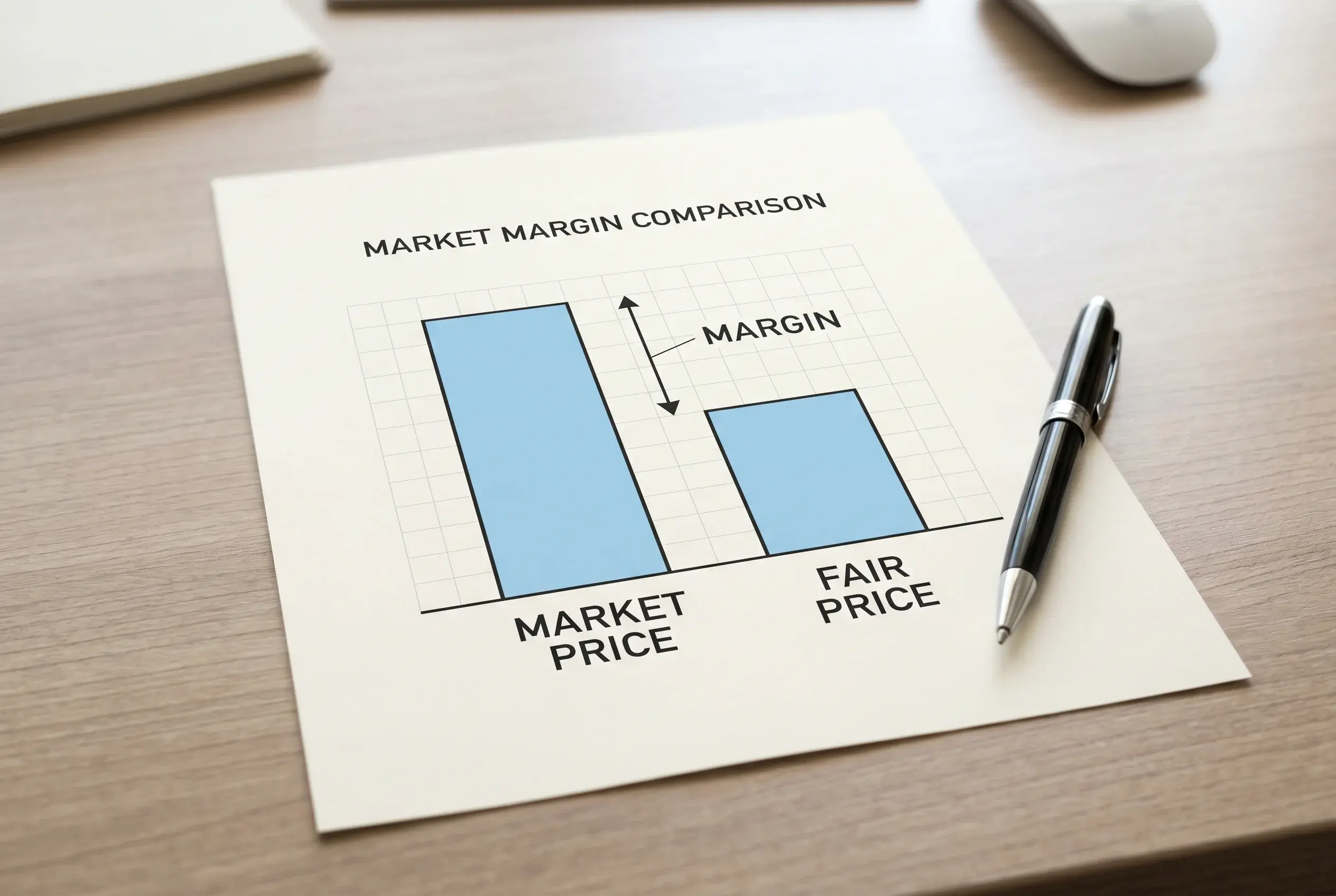
The trading desk’s response to a replacement announcement is more reactive than predictive. The original line is suspended within minutes of confirmation. The trader pulls up the replacement fighter’s available data – recent fights, basic profile, weight class history – and constructs a new line, usually with a heavier margin than normal because of the uncertainty.
The first version of the new line is conservative. The trader doesn’t want to be overexposed if the replacement turns out to be much better or much worse than the initial assumption. So they open with a price that sits a bit wider than they actually think the fair line is, and they wait to see how the market reacts. Sharp money piling onto one side tightens the line in that direction. Public money piling onto a name fighter doesn’t usually move the line much.
The first 12-24 hours after the line reopens is the window. During that period, sharp accounts that have done their homework on the replacement fighter are taking positions. By the time the line has been live for a full day, the price has typically absorbed most of the available information and the value has tightened. Bettors who can react quickly to replacement announcements – and have done preparatory work on the replacement fighter before the bet became available – sometimes find clear edges in this window.
The systematic adjustments traders make are conservative on both sides. The replacement fighter’s price is typically lengthened more than the fair-probability estimate would suggest, because the trader doesn’t want to take losses if the replacement is actually competent. The original fighter’s price is typically shortened less than the fair-probability estimate would suggest, because the trader doesn’t want to take losses if the matchup change creates problems for them. Both adjustments slightly under-correct, which is where the systematic value lives.
The compressed weight cut and what it does to performance
The single most underestimated factor in short-notice betting is the weight cut. A normal UFC weight cut runs across a 6-8 week camp, with the fighter gradually reducing carbohydrates, manipulating water intake in the final week, and arriving at weigh-in dehydrated but recoverable. UFC athletes typically rebound the 9.7% body mass they regain in the 24-36 hours after weigh-in, restoring full hydration and most of their fight-day conditioning.
A short-notice fighter does this on compressed timeline. Three days of notice means trying to cut weight that’s typically lost over weeks. The fighter might not have been training at the contracted weight at all – they might have been walking around 10-15 pounds heavier than fight weight when the call came. Making the limit on short notice often requires extreme measures (saunas, lengthy bath cuts, severe dehydration) that affect recovery in ways even the fighter doesn’t fully experience until fight night.
The performance effects are measurable. Cardio takes the biggest hit – the body’s ability to recover between exchanges depends on hydration and electrolyte balance, both of which are compromised by aggressive weight-cutting. Strength is reduced relative to the fighter’s natural state. Mental sharpness, particularly defensive awareness and pattern recognition, declines under the physiological stress.
The exception is the active-camp replacement category mentioned earlier. A fighter who was already preparing for a different opponent at the same weight class might already be at or near the limit, with the weight cut already underway or completed. These fighters don’t face the compressed-cut problem and their performance ceiling is materially higher than the price often suggests.
The matchup-specific preparation gap and how it shows up
Beyond the cardio and weight cut, the gap that’s hardest to overcome is matchup-specific preparation. A normal UFC camp spends weeks studying the opponent – their patterns, their typical openings, the looks they show in different positions, the holes in their defence. The training partners are selected to mimic the opponent’s style. The game plan is drilled until specific responses become automatic.
A short-notice fighter has none of this. They’ve watched whatever footage they could get to on the plane and through the hotel TV. Their training partners during the truncated preparation have been generic – striking partners, grappling partners – rather than style-matched. The game plan is whatever the head coach can sketch in two days.
This hurts most against opponents with distinctive looks or specific weaknesses that require preparation to exploit. A southpaw against an orthodox opponent who hasn’t trained for southpaws is at a real disadvantage. A high-level grappler against a striker who hasn’t drilled takedown defence for this specific entry is at a real disadvantage. A volume striker against a counterpuncher who hasn’t watched film on the counter timing is at a real disadvantage.
The fighters who suffer least from this gap are those whose game travels well across opponents. A dominant top-position wrestler can apply their skill against most opponents without bout-specific preparation, because the takedown game is mostly about your own technique rather than reading the opponent. A heavy puncher with a single dominant weapon can apply that weapon against any opponent. These fighter types are the bettable short-notice replacements when prices look long; finesse strikers and technical-game-plan fighters are the ones whose short-notice prices, even when lengthened, often turn out to be accurate.
Line movement patterns on replacement fights
The line movement on a replacement fight tells you what the market is collectively thinking, and the patterns differ from regular fight movements in ways worth understanding.
The first 24 hours after the line reopens tend to be the most volatile. Sharp accounts are piling in on whichever side they think the trader has mispriced. Public money is starting to react to the news but hasn’t fully settled into a position. The line can move 10-20 percentage points in a direction during this window if the sharp action is one-sided.
The next 48-72 hours stabilise. The line settles at a level where the available money is roughly balanced, and small movements happen based on weigh-in news and any reported issues. The final 24 hours often see another wave of movement driven by public money – the favourite gets bet, the popular fighter gets bet, the storyline fighter gets bet. The replacement underdog often drifts slightly during this window as recreational money piles in against them. Bettors who like the underdog can sometimes find the best price of the week in the final hours before the bout.
Grading edge cases that catch out replacement bettors
A few grading issues come up specifically with replacement fights that don’t apply to regular bouts. Worth knowing before you stake.
If a scheduled lightweight fight loses one fighter and the replacement is a welterweight, the UFC sometimes negotiates a catchweight. The bet you placed on the original fight may be voided and reissued at the new weight, or it may stand depending on operator rules. Most UK books void all original bets when a replacement causes a weight class change; some grade through if the original opponent and a new weight are still being honoured.
If a scheduled title fight has the champion withdraw and a non-ranked fighter replace them, the bout almost always loses title status. Title-specific prop markets (to retain title, to become champion) void in this case. Moneyline and method-of-victory markets typically stand. When the replacement is announced after wagers have been placed, UK books generally void bets on the original opponent that was scheduled when the bet was placed, returning stakes if the matchup changes materially. The exception is bet builders or accumulators where the affected leg may be voided while the rest of the slip stands.
When a bout doesn’t reach the cage at all for any reason, the question of how exactly the bet settles depends on the type of cancellation and the precise stage of the lead-up. How UFC bets settle when fighters withdraw or pull out covers the variations across operator rules and the timing-based grading.