
Market Depth Variances Between Fight Nights and PPVs
It took me an embarrassingly long time to notice that my hit rate on Fight Night cards was meaningfully different from my hit rate on PPV cards. I’d been treating them as the same product – Saturday night UFC, same broadcast formula, same approach to picking bets. The numbers, when I finally segmented them, told a different story. My Fight Night results were running about 6 percentage points above my PPV results across a multi-year sample. Same selection method, same staking, different outcomes.
The reason turned out to be structural rather than coincidental, and once I understood it, my betting approach changed. Fight Night cards and PPV cards aren’t the same product wearing different branding – they’re different products with different fight quality distributions, different operator pricing dynamics, and different bettor crowds. This piece is about the differences and how UK bettors should let them inform their card-by-card approach.
The structural differences between the two formats
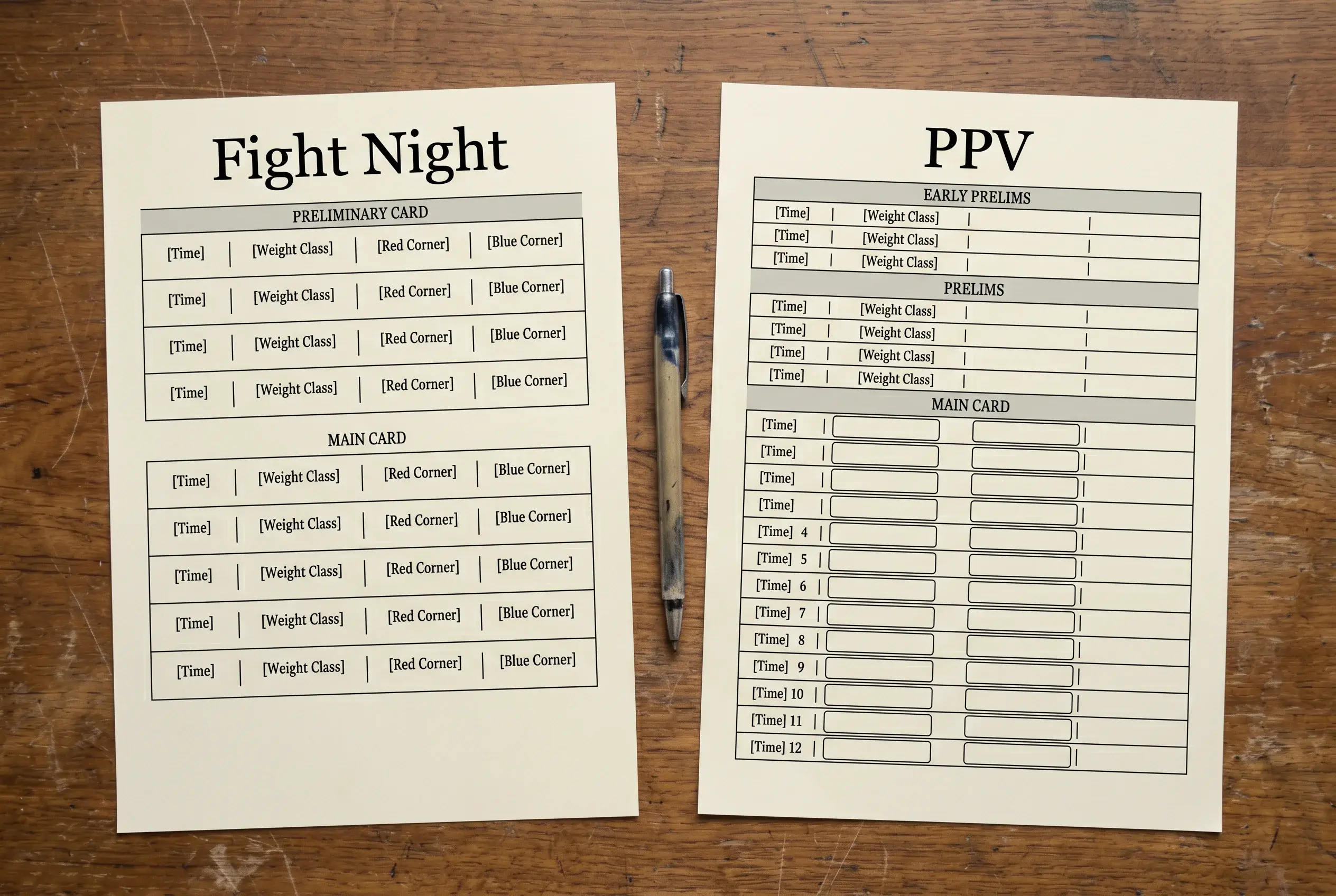
UFC pay-per-view cards are the marquee events of the calendar – typically 12-15 per year, headlined by title fights or main events between top-ranked contenders, with a card structure built around maximum commercial impact. The main event is almost always five rounds, the co-main is high-profile, the main card features ranked fighters across multiple divisions, and the prelims feature established names or rising prospects.
Fight Night cards run more frequently – typically 25-30 per year – and have a different commercial logic. Fight Nights are broadcast on subscription channels rather than pay-per-view, so they don’t carry the per-event revenue pressure that drives PPV matchmaking. The main events are sometimes title fights but more often contender or top-15 matchups, the cards are typically lighter on marquee names, and the prelims often feature UFC newcomers or fighters returning from layoffs.
The matchmaking difference is the key starting point for betting analysis. PPV cards are built to maximise commercial appeal, which means the main event is usually a tightly-priced matchup with both fighters perceived as having a real chance. Fight Night main events are more often mismatches by Moneyline standards – favourites at 1/4 or shorter – because the marketing pressure to balance the main event is lower.
What the Moneyline distribution looks like across the two
The aggregate Moneyline distribution on PPV main events sits more often in the 2/5 to 6/4 range – competitive matchups where the favourite is meaningful but not overwhelming. Fight Night main events more often feature 1/3 or shorter favourites, where the matchmaker has prioritised a particular fighter’s promotion over balanced competition.
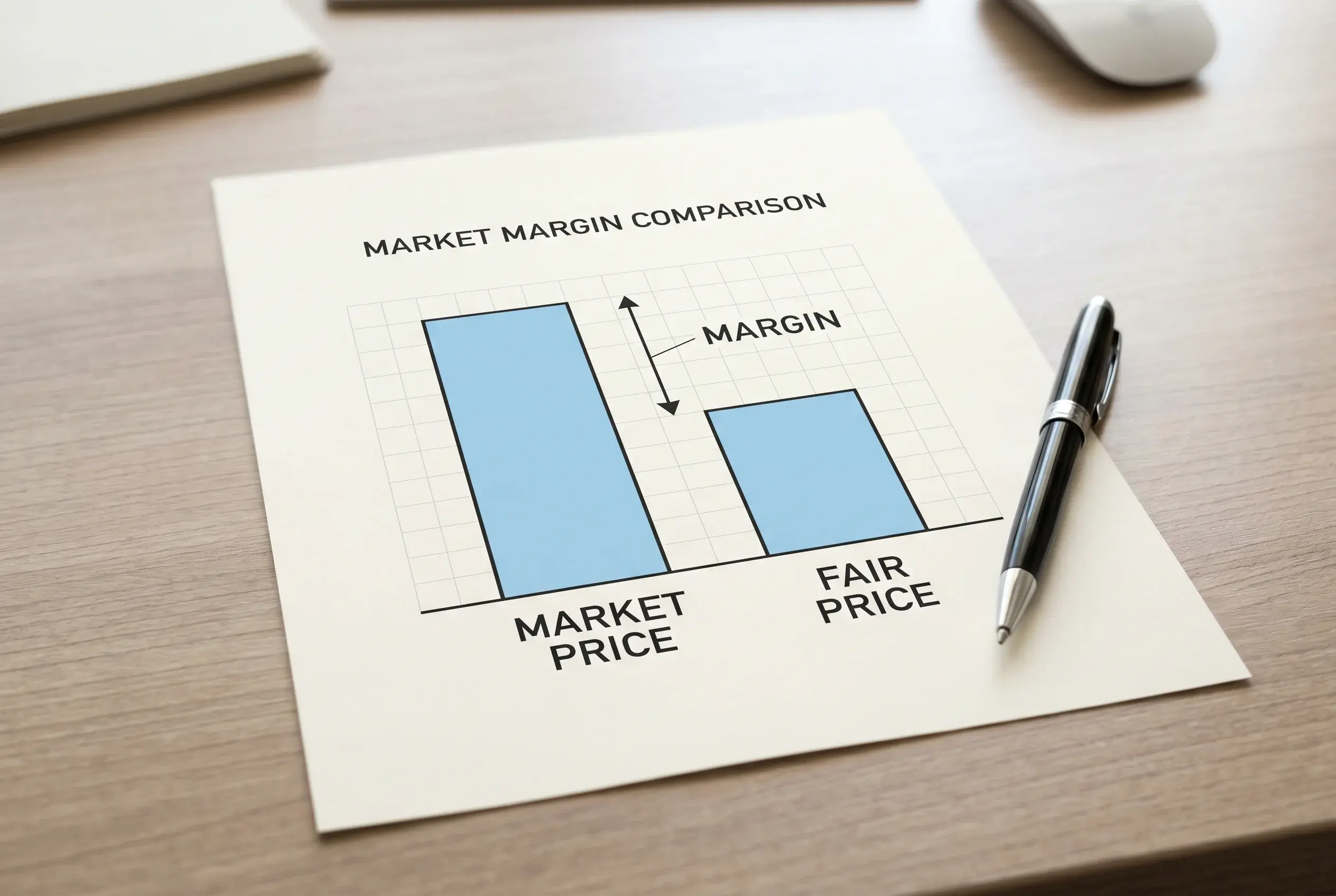
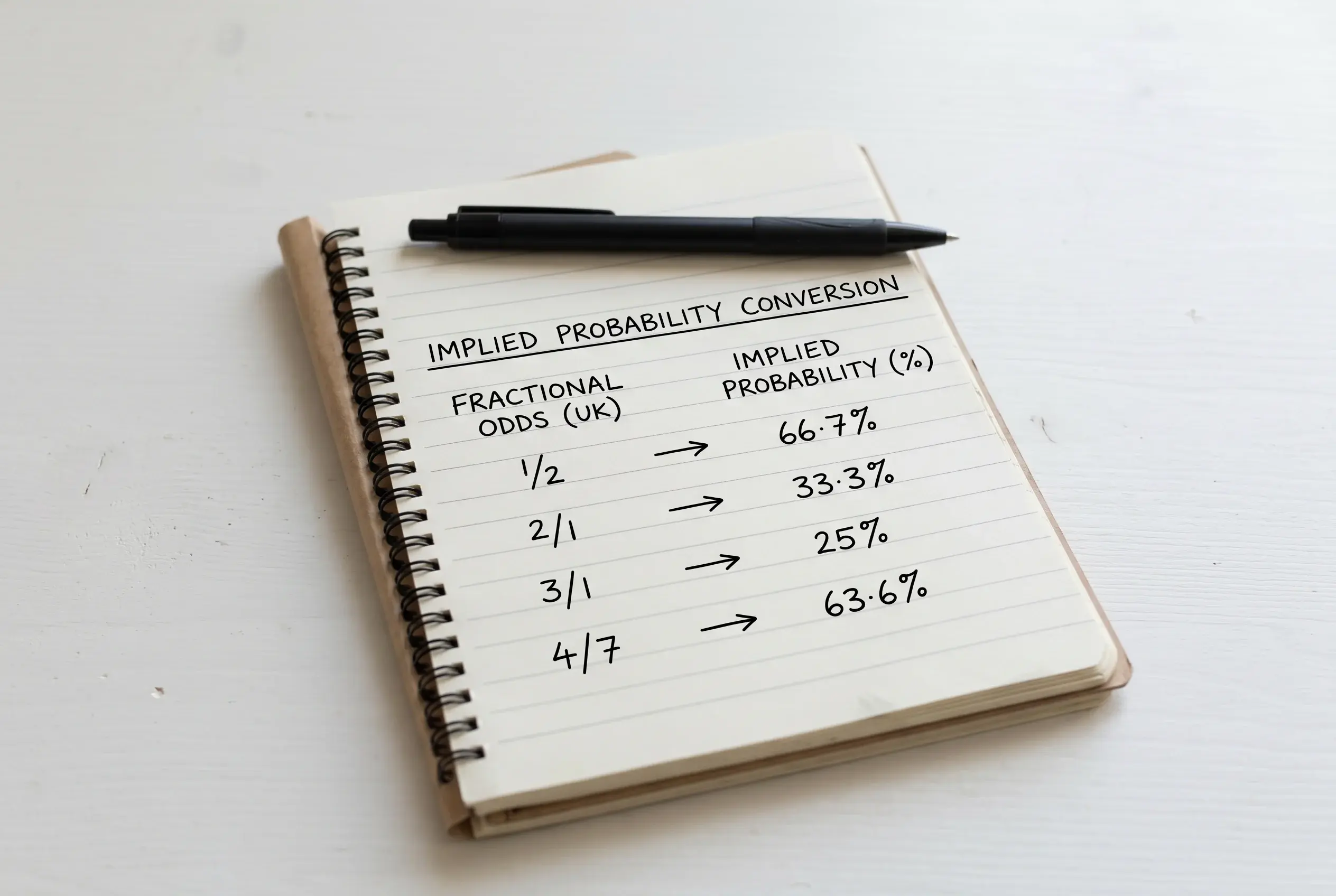
This difference matters for betting because short favourites at 1/4 or shorter offer essentially no Moneyline value regardless of how confident the read is. The win rate UFC favourites achieve historically – 68.12% across the dataset, 72% in 2024 – exceeds the implied probability of even the shortest typical PPV favourite, but the price gap on a 2/5 line versus the realistic 72% probability is too narrow to bet through with stake limits and overround.
The implication: PPV main event Moneylines have more bettable price points than Fight Night main event Moneylines, even though Fight Night cards are more frequent. The bettor’s edge from picking PPV main event Moneylines, when the edge exists, tends to be larger because the price range is wider.
The bonus pool difference
Performance bonuses are paid on every UFC card at $50,000 each – two Performance of the Night awards plus one Fight of the Night award split between the two fighters in that bout. The total bonus pool is roughly $200,000 per card whether it’s a Fight Night or a PPV.
What differs is the bonus competition. PPV cards feature higher-quality fighters across the board, so the bonus pool is distributed across a wider range of viable contenders. Fight Night cards feature more variability – sometimes the bonuses go to lower-profile fighters delivering spectacular performances, sometimes the main event consumes most of the bonus attention because the rest of the card was less spectacular.
For betting purposes, this affects performance bonus markets when they’re offered. Bonus markets on PPV cards are more competitive – most named fighters have a real shot at a bonus, prices reflect that, and edges are smaller. Bonus markets on Fight Night cards are less competitive in expected outcomes, but the pricing sometimes doesn’t reflect the structural likelihood that a single dominant performance will sweep the bonuses. The angle: when a Fight Night card features one heavy favourite expected to finish dramatically, the performance bonus price on that fighter can be undervalued relative to the realistic conditional probability.
The prelim differences across card types
PPV prelims tend to feature more established UFC names – fighters who’ve been on the roster for years, have meaningful divisional standing, and have substantial fight tape available. The operator pricing on these prelims is sharper because the model has more data to work with.
Fight Night prelims more often feature UFC newcomers – fighters making their second or third UFC appearance, with thin model data and uncertain probability estimates. The operator pricing on these prelims is correspondingly noisier, and the bettor’s research edge from doing the regional-promotion tape work is larger.
This pattern reinforces the prelim-focused betting approach. The Fight Night card prelims are where the data thinnest, the operator models least precise, and the bettor’s research edge largest. The PPV card prelims are interesting but less reliably edge-positive because the model has more to work with.
The five-round versus three-round implications
PPV main events are five rounds. Fight Night main events are also typically five rounds, but the implication is different because Fight Night main events more often feature heavy favourites who finish early. The “five rounds” structure exists but doesn’t fill out as often.
For total-rounds and over/under betting, this matters. PPV main events have a higher probability of going late into the championship rounds because the matchups are more competitive. Fight Night main events have higher probability of resolution within the first three rounds because the favourite-versus-underdog gap is wider on average.
The card-wide implication is that PPV cards tend to have more late-finishing fights – fights resolved in rounds three through five – than Fight Night cards. Bettors looking at total-rounds markets across the full card should factor this in. The over 2.5 rounds market on a PPV undercard fight is structurally different from the same market on a Fight Night undercard fight, even when the individual matchup looks similar.
The bettor crowd and public money patterns
PPV cards attract more casual betting volume. The cultural visibility of a PPV main event – particularly a title fight or a high-profile grudge match – pulls in bettors who don’t engage with UFC betting regularly. The Moneyline on the main event consequently moves more in response to public sentiment than to sharp money, especially in the final 24-48 hours.
Fight Night cards attract a more committed bettor base. The Saturday night Fight Night audience is more often consistent UFC fans who follow the sport closely, and the betting volume reflects that. Sharp money has more proportional weight, and prices move more efficiently toward fair value before the cards run.
The pricing implication: PPV main events can have late mispricing driven by public money, which sharp bettors can exploit if they catch the gap. Fight Night cards are more efficiently priced going into the final hours and offer fewer late-window opportunities. The pre-event window – Thursday through Saturday morning – is where Fight Night card edges typically have to be found. The PPV final-day window has additional opportunities the Fight Night final-day window doesn’t.
The marketing and consent context
UK operators promote PPV cards heavily – main event Moneyline boosts, special accumulator promotions, parlay offers tied to specific fight outcomes. The May 2025 UKGC marketing consent changes apply to this promotional activity, meaning customers who haven’t opted in to specific marketing channels for betting products no longer receive the PPV promotional push.
The effect on PPV pricing is minimal – the boosts and offers still exist for customers who’ve engaged with them – but the reach is narrower. Fight Night promotional activity is generally lower-key, focuses more on the regular weekly schedule, and is less affected by the consent changes because the volume of push communications was lower to begin with.
For bettors who are opted in to operator marketing, the PPV cycle still produces the larger volume of price boosts and enhanced odds opportunities. The earlier-cluster discussion of price boosts applies primarily to PPV cycles, where the boosts are most abundant. Fight Night cycles see fewer boosts but generally cleaner base pricing.
The annual rhythm and bankroll planning
The UFC calendar runs roughly 40-45 cards per year, distributed across the two formats. PPV cards cluster around specific dates – major fight weekends in March, June, July, October, December – while Fight Night cards fill out most other Saturdays plus occasional special slots.
For bankroll planning, this rhythm matters. A 1.5% unit on a £1,000 bankroll is £15. A typical year of UFC betting at the prelim-focused approach I use produces 2-3 unit bets per card across 40-45 cards – call it 100-130 bets total across the year. That’s roughly £1,500-£2,000 in total stake against the £1,000 bankroll, meaning the bankroll turns over 1.5-2x per year. The variance has to be absorbed against this turnover.
The PPV concentration matters because PPV cards typically generate more bets per card than Fight Nights do – there’s more attention, more research time invested, more identified bettable opportunities. A PPV weekend might produce 5 unit-bets; a typical Fight Night might produce 2-3. Across the year, PPVs account for a disproportionate share of total bets despite being a minority of cards.
How I structure my attention across the calendar
The approach I use is roughly: heavy research and bet selection on PPV cards, more selective and prelim-focused on Fight Nights. PPV cards justify the time investment because the bet count is higher and the cultural energy supports staying engaged with the card across the full prelim-to-main-event arc. Fight Nights get less total time but more concentrated research on specific fights where my edge is clear.
This isn’t a rule everyone should follow – bettors with different research bandwidth or different edge sources may find different rhythms work for them. But the principle that the two card types reward different approaches is consistent across the bettors I know who profit from UFC over multi-year timeframes. The card type isn’t just a label on the broadcast; it’s a structural factor that affects everything from line quality to value distribution. One specific case where this becomes especially sharp is when title implications are explicit – UFC championship fight betting brings its own pricing distortions that PPV vs Fight Night categorisation only partially captures.