
Method of Victory: Specialized MMA Prop Markets
I once watched a friend bet a UFC main event correctly four times in a row and lose money on three of them. He’d been picking winners on the Moneyline and switching to Method of Victory because the prices looked juicier. He kept backing decisions on fights that finished in round two, and submissions on fights that went to the cards. The fighters he chose won every time. The way they won never matched the bet he’d placed.
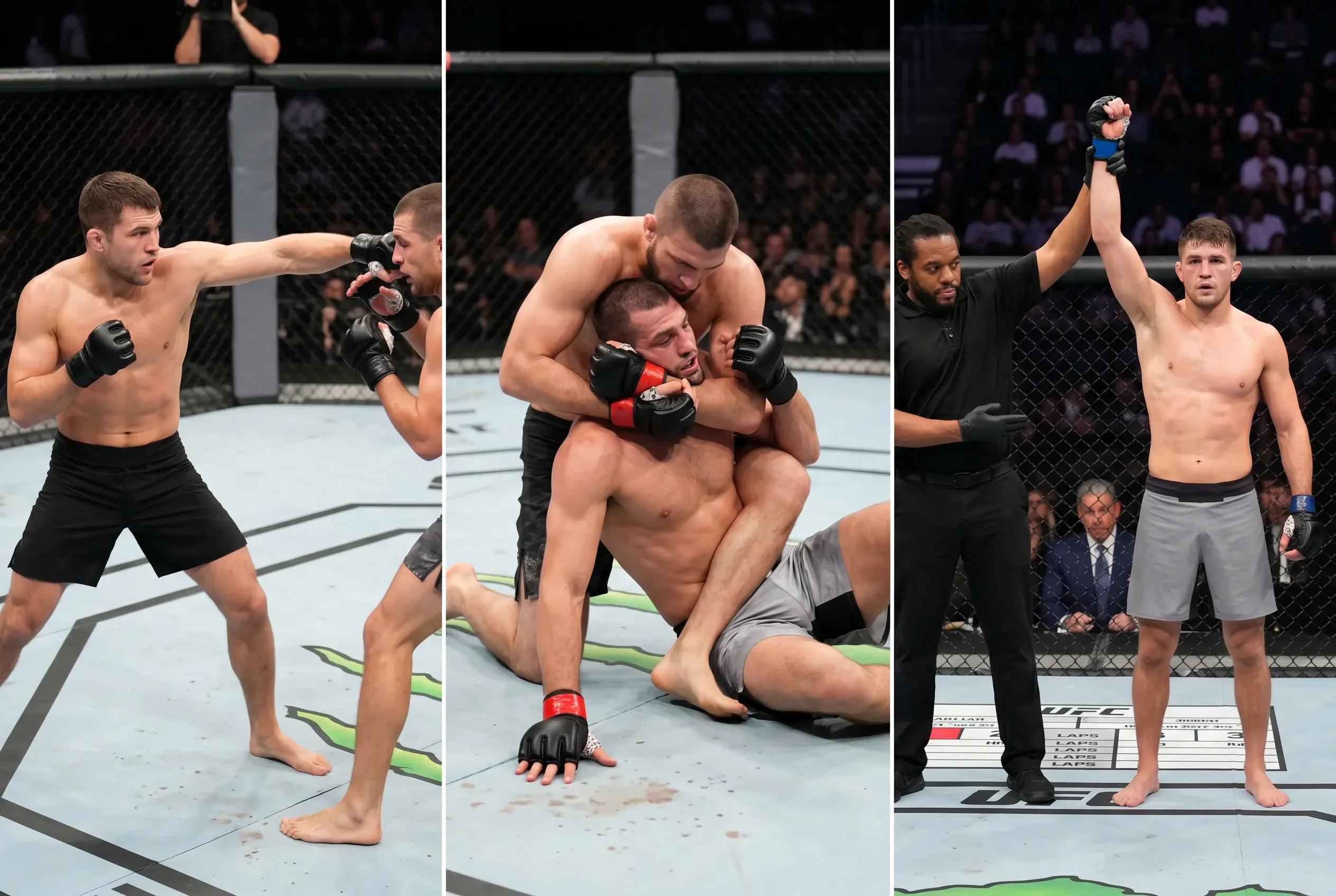
Method of Victory is where UFC betting starts to feel genuinely different from football. You’re not just predicting who wins – you’re predicting how. A bet on Fighter A by KO/TKO loses if Fighter A wins by submission. A bet on Fighter B by decision loses if Fighter B finishes in round one. The wager carves a fight outcome into four specific options and forces you to pick one, which is harder than it looks and pays more than the Moneyline because of that difficulty.
The data tells a clear story about why MoV is worth understanding rather than dabbling in. In 2024, UFC favourites won 72% of their fights, but the distribution of finishes within those wins was anything but uniform – some divisions are stoppage-heavy, others trudge to decisions, and the way prices reflect that varies between operators. This piece walks through every option you’ll see on a UK Method of Victory market, how the pricing logic works for each, and the variant – Method of Victory Double Chance – that smooths the rough edges.
The four options on a standard UK Method of Victory market
Open any UK sportsbook’s UFC market on a Saturday afternoon and the MoV market will offer you, for each fighter, the same four selections. The vocabulary is slightly different across operators but the substance is identical.
Fighter A by KO/TKO covers any stoppage by strikes. The official scorecard might say knockout (a clean unconscious finish) or technical knockout (referee stoppage because the fighter can no longer intelligently defend themselves, or doctor stoppage between rounds). UK books almost always merge these into a single selection because the line between KO and TKO is judgement-call territory in real time and books don’t want grading disputes.
Fighter A by Submission covers any tap-out, verbal submission, or referee stoppage due to a submission hold causing unconsciousness (a choke that puts the opponent to sleep). The grading is unambiguous: if the official ruling is submission, the bet wins. The grading dispute zone here is positional – a submission attempt that turns into ground-and-pound and stops the fight will settle as TKO, not submission, even if the choke set up the finish.
Fighter A by Decision covers any judges’ verdict in that fighter’s favour: unanimous, majority or split. UK books generally treat all three as the same MoV outcome. A few operators split decision into separate sub-markets (unanimous decision, split decision) but those are deeper niches, not the main MoV market.
The fourth option is Draw – technically a MoV outcome since it’s how the bout ended, though it’s priced like a long-shot side bet on every market. Most punters ignore it. The implied probability is rarely above 2% and the price reflects that. A scattered minority of UK operators omit Draw from MoV entirely and void all stakes if the fight ends drawn; check the rules of your specific book.
How KO/TKO prices form
Of the four MoV options, KO/TKO is the one where the public has the strongest opinions and the trading desks have the cleanest models, which means the prices tend to be the tightest. The book wants this price right because retail money piles into it on every main event.
The starting input is finishing rate by strikes. Trading desks track, per fighter, what proportion of their professional wins came by KO/TKO and how that rate has held up against quality opposition. A fighter with 70% of wins by knockout against ranked opponents looks very different to a fighter with the same overall stat padded by low-tier opposition. The model also weights recent form heavily – knockout power tends to translate forward, but knockout vulnerability also does. A fighter who got finished in their last two outings will be a longer price to win by KO themselves and a shorter price to lose by KO than their career numbers suggest.
The second input is the matchup. A heavy-handed striker against a chinny opponent prices very differently from the same striker against a durable wrestler. Style overlay matters: an orthodox boxer versus a southpaw kickboxer creates more knockout traffic than two grappling-first fighters who’ll spend the bout in the clinch. Operators that price UFC seriously will move KO/TKO prices materially based on these matchup factors, often more than they’ll move the Moneyline.
The third input is the round count. Three-round fights produce a higher proportion of decisions than five-rounders because there’s simply less time for a finish. Five-round main events shift KO/TKO probability upward by a few percentage points across every weight class, which is why championship-fight MoV prices tend to be slightly shorter for finishes than co-main equivalents.
How Submission prices form
Submission pricing is where the trading desks have the smallest sample sizes and the public has the weakest intuition, which creates more dispersion between books than any other MoV selection.
The fundamental input is grappling profile. A fighter with a Brazilian jiu-jitsu black belt and a high submission rate in their UFC career – say, 60% of finishes by tap – will have submission prices that sit well below their Moneyline price. The model wants to express: this fighter doesn’t just win, they win specifically by submission. Pricing operators then check the matchup: against a wrestler with strong takedown defence and a top-position-first style, submission opportunities don’t open up the same way as against a striker who scrambles loose and gives up the back.
The trickier variable is finish vs control. Some grapplers dominate position without finishing – they ride out three rounds in top control and win a decision rather than submitting. Their Submission MoV prices are longer than their Moneyline despite their grappling-heavy style, because the book is pricing what actually happens, not what looks likely on paper. Knowing which grapplers finish and which control is the single biggest edge a recreational punter can build on Submission markets.
Submission prices on underdog fighters often look enticing – 6/1, 9/1, sometimes longer – but the implied probability is usually accurate. Underdog submissions happen, but at lower rates than the prices imply unless you’ve identified a stylistic mismatch the book hasn’t.
How Decision prices form
Decision pricing is the most mechanical of the four. It’s largely a function of expected fight length: if the book thinks a bout is more likely to go the distance, both fighters’ Decision MoV prices come down. If it thinks a finish is likely, both come up.
The inputs are well-established: weight class baseline (flyweights and bantamweights go to decision more often than heavyweights), age and durability of both fighters (older or chin-questioned fighters lose by stoppage more), and recent fight length patterns. A fighter who’s gone to decision in five of their last six is unlikely to suddenly start finishing – their Decision MoV price reflects that pattern.
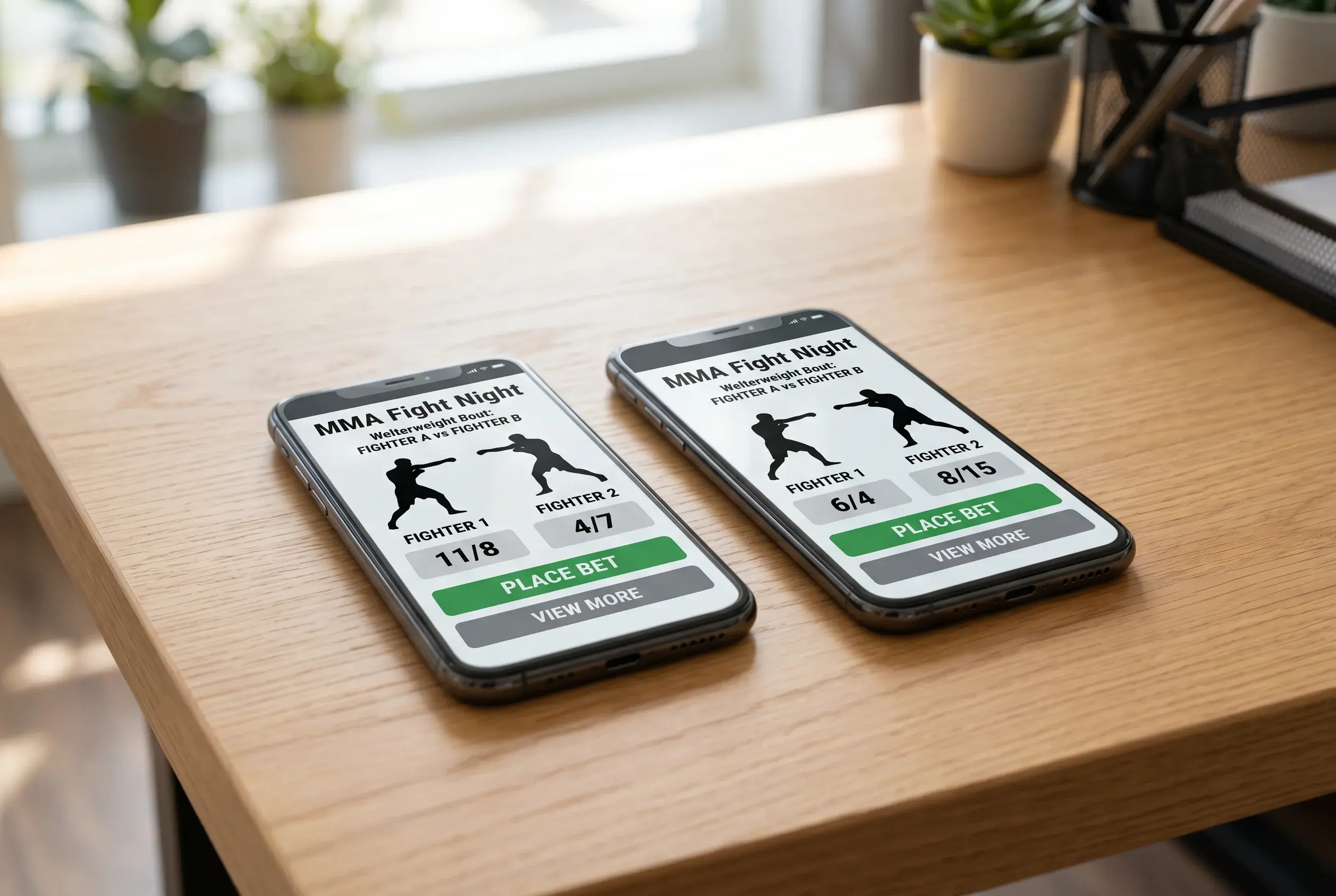
The bias point worth knowing: Decision prices are where casual punters lose money most often because the bet looks safer than it is. A 6/4 price on a strong favourite by Decision feels like a tame, sensible wager – but if the favourite finishes in round two, the bet is gone. The wager isn’t “this fighter wins comfortably”, it’s “this fighter wins AND the bout reaches the scorecards”. Two conditions to satisfy, not one. Price it accordingly in your head.
Championship fights skew Decision prices upward because five rounds create more time for a finish. But oddly, title fights also produce a high proportion of decisions historically – partly because the fighters are elite and harder to finish, partly because the durability bar at championship level is higher. The trader balances those factors and usually settles on a price slightly longer than the equivalent three-round bout would offer.
Method of Victory Double Chance: the safety net that costs you upside
Method of Victory Double Chance is the most underrated and most often misunderstood market on UK sportsbooks. It combines two of the four MoV options into a single selection at a lower price than either individually.
The standard configurations on UK books are: Fighter A by KO/TKO or Decision (covers any non-submission win), Fighter A by Submission or Decision (covers any non-KO win), and Fighter A by KO/TKO or Submission (covers any finish, regardless of method). You back one of these combined options and you win if the fight settles in either of the two ways listed.
The use case is when you have a strong Moneyline opinion but a weak finish opinion. You think Fighter A wins, you don’t know how. Backing Fighter A by KO/TKO or Decision essentially says: I’m confident A wins, but I think they’re more likely to outpoint or hurt the opponent than to grapple to a submission. It’s a Moneyline bet with a slight edge carved out, at a slightly better price than the straight Moneyline.
The cost is upside. The combined market always pays less than the highest of its component MoV markets. If KO/TKO is 5/2 and Decision is 7/4, the Double Chance KO or Decision will sit somewhere around 11/10 – better than the Moneyline price for that fighter (which might be 4/9) but materially worse than either component standalone. You’re trading downside protection for ceiling.
Where Double Chance genuinely shines is on five-round championship bouts where the most likely paths to victory are spread across multiple methods. A heavy-handed striker facing a durable opponent in a five-rounder might finish by KO in rounds three to five or grind out a decision – but is unlikely to submit. KO or Decision is the bet that captures both realistic paths. Once you start thinking about which round a finish might land in rather than just whether it lands at all, you’re ready for UFC round betting strategy, which takes MoV one step deeper and pins your bet to a specific point in the bout.