
Moneyline Betting Basics and Match-Winner Odds
The first UFC bet I ever placed was a Moneyline. I’d watched maybe six fights in my life, I didn’t know what a triangle choke was, and I still walked into a high street shop and asked for the favourite at 4/9. Nine years later I’ve helped hundreds of UK punters work through every esoteric market the sport has to offer, and the honest truth is this: most of them still bet the Moneyline. It’s the spine of UFC wagering, and everything else – Method of Victory, Round Betting, bet builders – is really just a Moneyline opinion dressed up in additional clothing. Once you grasp the basic moneyline, the next step is learning how to calculate implied probability from betting odds to find true value.
The reason is straightforward. A UFC fight has, in practice, two outcomes that actually settle bets the way most people expect: Fighter A wins or Fighter B wins. The Moneyline pays you for picking the right one. No spreads to wrestle with, no over/under to interpret, no parlay legs to balance. And the data backs the importance: across UFC history, favourites win roughly 68.12% of fights and underdogs the remaining 31.88%, which means every single price the books put up has a baseline expectation you can interrogate. The Moneyline isn’t simple – it’s clean. There’s a difference.
In this piece I’ll walk you through what the market actually is on UK sportsbooks, why operators use different names for the same wager, how the prices form, how to read them in fractional odds without doing mental gymnastics, and the edge cases that catch experienced bettors out. By the end you should be able to glance at a UFC card on a Saturday morning and know exactly what you’re being offered.
What it’s called and why the name changes depending on where you look
Try this experiment: open three UK sportsbook tabs on a Saturday morning, find the same UFC main event on each, and look at the headline market. One will say Moneyline. One will say Match Winner. One will say Fight Winner or simply To Win Fight. They’re identical bets. Different naming conventions, same wager.
“Moneyline” is the American import – the term migrated to the UK through ESPN-era coverage, US-facing affiliate content and DraftKings expanding into international markets. “Match Winner” comes from football betting heritage, where UK books historically treated every two-sided sporting contest with the same vocabulary. “Fight Winner” is the most literal and you’ll see it on operators that want their UFC pages to feel native rather than ported from a football template.
The practical implication: when you’re comparing prices across books, don’t assume different market names mean different bets. If the wager pays out on one fighter being declared the winner by official UFC ruling – by KO, TKO, submission, decision or disqualification – it’s the Moneyline regardless of the label. The grading rules are also functionally identical across UK operators: if the fight ends in a Draw or No Contest, the Moneyline is usually voided and your stake returned. I say usually because there’s a thin minority of sportsbooks that offer a three-way Moneyline including Draw, and I’ll come back to that under edge cases.
The naming question matters more than it should because newer punters often think they’ve found a price discrepancy when really they’ve just found two operators using different words. Always compare the actual decimal or fractional number, not the market header.
How UK sportsbooks build a UFC Moneyline price
Pricing a UFC Moneyline is the most opinionated thing a trading desk does on fight week, and the process tells you a lot about why prices move the way they do once the market opens.
The starting point is a power-rating model. Most major UK operators run some version of an Elo-like fighter rating that ingests striking output, defensive metrics, takedown numbers, recent results and quality of opposition. The model spits out a probability – say, Fighter A wins 64% of the time. The trader then layers on context the model doesn’t see well: camp reports, weight cut history, layoff length, judging tendencies for that division, whether the fight is a five-rounder. They might shade the probability up to 67% or down to 61% based on that human read.
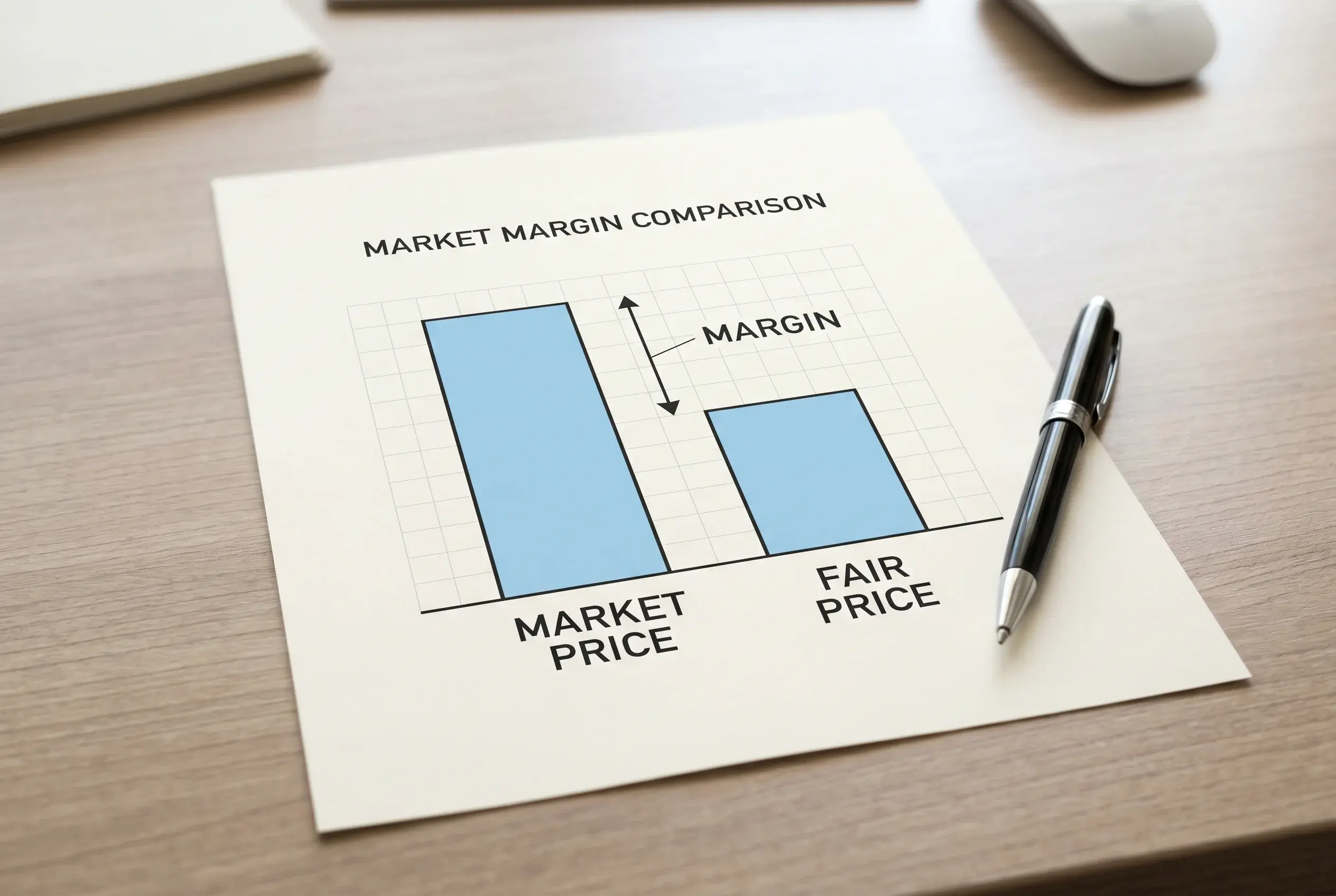
Once a fair probability exists, the book applies its margin – the overround – and converts to a price. If the fair number is 65% for Fighter A and 35% for Fighter B, those are decimal odds of 1.538 and 2.857. Apply a 4% margin and you might see 1.50 and 2.70 on the board, which translates to 1/2 and 17/10 in UK fractional. That’s the price you’ll see on opening, and from there it moves with money. Sharp opinions on day one, recreational money in the 24 hours before the bout, weigh-in news in between.
The thing UK punters underestimate is how much weight moves an opener. A trader at a high-street UK book once told me their UFC openers tend to attract maybe a tenth of the volume their football openers do, but the bets that come in are sharper on average. Which means UFC lines can move fast on small ticket sizes if a few respected accounts hit the same side. By Saturday night the closing line tends to be efficient – not perfect, but tight enough that beating it consistently is genuinely hard.
Reading a UFC Moneyline on a UK sportsbook
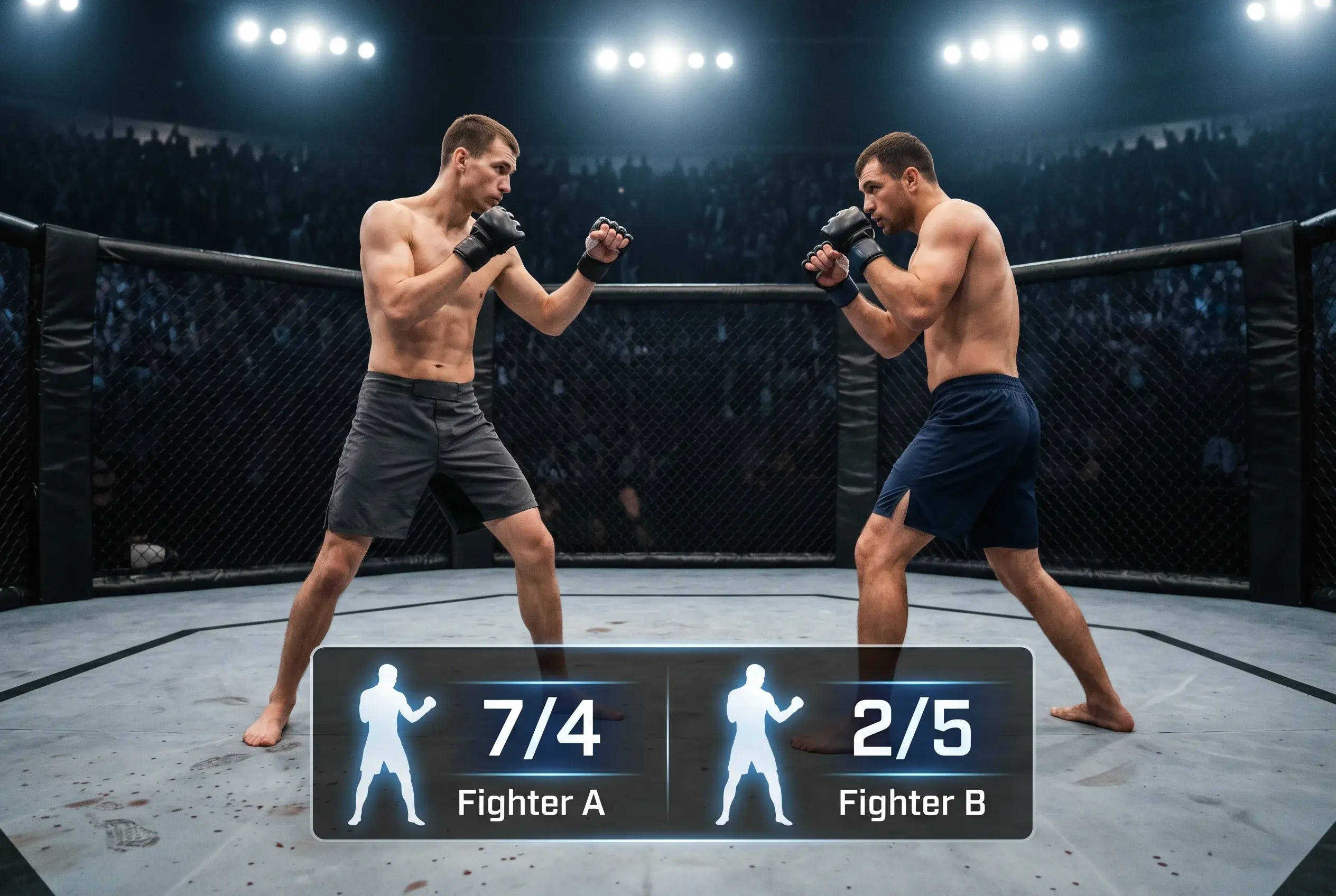
UK books default to fractional odds, and on UFC that means you’ll see prices like 4/9, 5/2, 7/4 and occasionally something monstrous like 14/1. Here’s the quick mental shortcut that saves you from doing maths under stress.
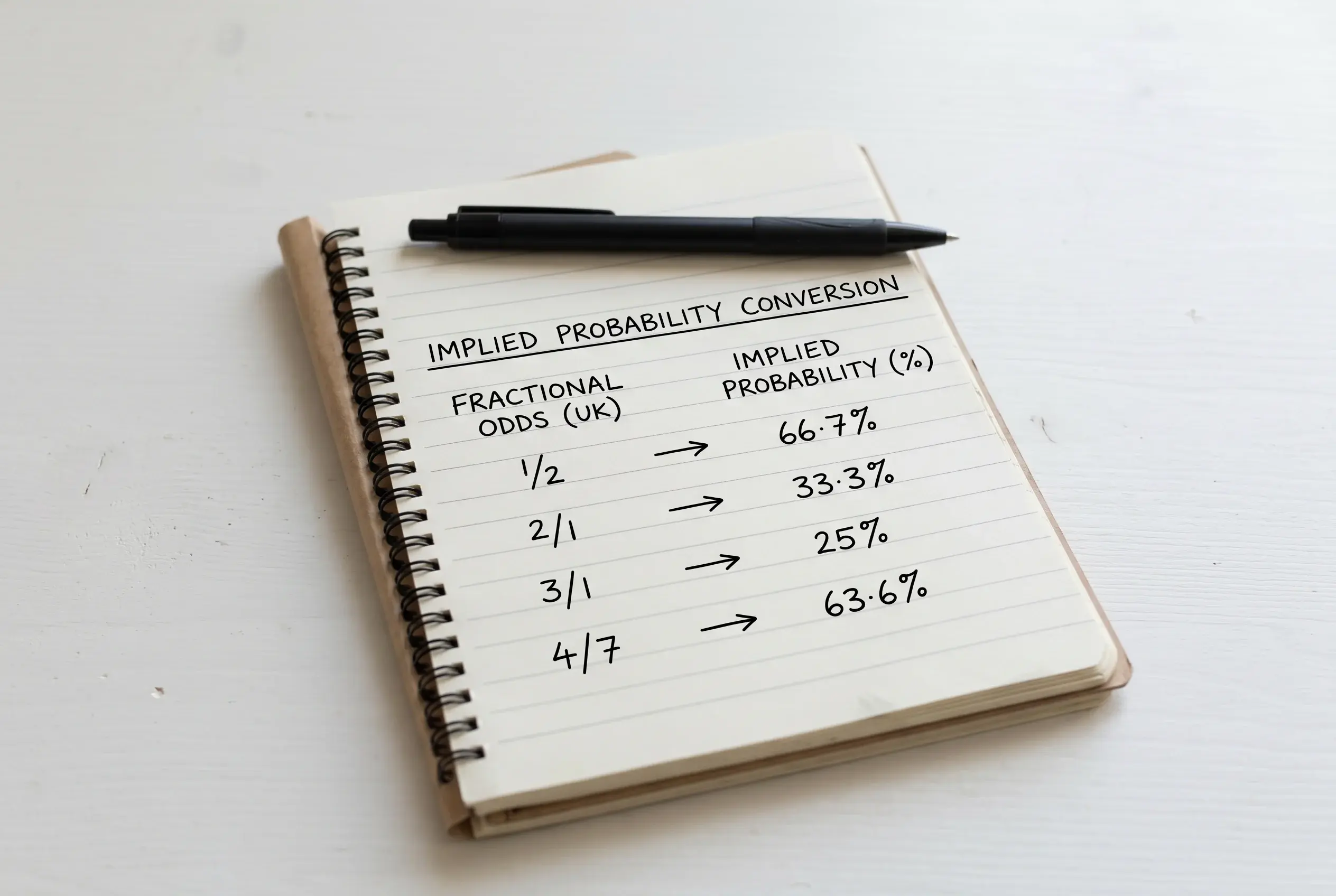
For favourites, fractional odds tell you what you win for what you stake, in that order. 4/9 means stake £9 to win £4. So a £20 bet pays £28.89 total (£20 stake plus £8.89 profit). Anything where the first number is smaller than the second is a favourite. The closer those numbers get to each other – 8/11, 4/5, 10/11 – the closer the fighter is to a coin flip in the book’s eyes.
For underdogs, the relationship flips. 5/2 means stake £2 to win £5, so a £20 bet pays £70 total. Underdog prices are easier on the eye because the upside is obvious. The trap is psychological: a fighter at 11/4 looks like a steal compared with one at 4/9, but the book is saying the 4/9 fighter wins about 69% of the time while the 11/4 fighter wins about 27%. The price gap reflects the gap in expected outcomes, not a hidden value pocket.
Decimal toggles exist on every UK operator now – settings, account preferences, sometimes a button on the bet slip itself. Decimal is genuinely easier for parlay maths and for converting to implied probability, and if you’re going to be serious about UFC betting I’d switch over. Fractional has tradition behind it and not much else.
One more reading habit worth building: glance at both prices, not just the side you fancy. The two prices together tell you the implied margin and give you a sense of whether the book is confident in its number or hedging. A market with prices like 4/7 and 6/5 has a tighter margin than one priced 1/2 and 13/8 – and that tightness usually signals the trader has a clear opinion on the fight.
The edge cases that catch experienced punters out
Most UFC Moneyline bets resolve cleanly. The ones that don’t tend to cost people money they assumed they had, so a short tour of the unusual stuff is worth your time.
Draws happen, just rarely. UFC fights end in a majority or split draw maybe a handful of times a year across hundreds of bouts. On UK sportsbooks the standard two-way Moneyline is voided in that case and your stake is returned – same outcome as a No Contest. A No Contest happens when an illegal action makes a result impossible: an eye poke that ends the fight, an unintentional groin strike where the doctor stops the bout. Your bet doesn’t lose, it doesn’t win, you get your money back.
Then there are the genuinely extreme underdogs. The biggest closing-line winner in UFC history was Shana Dobson at +950 in American odds – that’s 19/2 in UK fractional – when she beat Mariya Agapova in 2020. Agapova was −1400, which translates to a stomach-churning 1/14. A £100 bet on Dobson at those prices paid £1,050 in pure profit. Long-shot winners do happen and they’re part of why MMA markets stay interesting, but they’re not a strategy. They’re a reminder that probability isn’t certainty.
Another wrinkle UK punters often miss: a fight stopped due to injury where one fighter cannot continue. If the cause is legal (a clean head kick, a takedown that lands awkwardly, a cut from a strike), it’s a stoppage win and the Moneyline settles normally. If the cause is illegal and the bout is ruled a No Contest, it voids. The distinction is made by the official ruling, not by what you saw on the broadcast, and it can take 24-48 hours for a commission to finalise.
Finally – disqualifications. They’re vanishingly rare in UFC but they do happen, usually for repeated fouls or illegal strikes from a downed opponent. The Moneyline settles on the official winner regardless of how the win came, which means a DQ pays out the same as a finish. Good to know if a fighter you backed is winning ugly. Once you’re comfortable with the Moneyline, the natural next step is learning how Method of Victory pricing works in UFC betting, because every MoV price you’ll ever see is essentially a Moneyline opinion sliced into specific finishes. Always ensure you are getting the best prices by checking the recommendations on our expert UFC betting portal.